
Inquiry Basket
 Loading ......
Protein–protein interactions are fundamental to cellular responses. There are many methods one can use to investigate such interactions in cells, ranging from commonly used coimmunoprecipitation (Co-IP) to more advanced fluorescence-based methods such as FRET (fluorescence resonance energy transfer). Each method has limitations, and most depend on genetic modification of the cells or cloning of genes, which are not feasible with patient samples. Therefore, a suitable and sensitive assay is needed to detect direct protein–protein interactions at endogenous levels of expression and without genetic manipulation.
PLA was first described in 2002, and is able to detect the interaction between two proteins at endogenous/physiological levels of expression with high sensitivity and specificity.
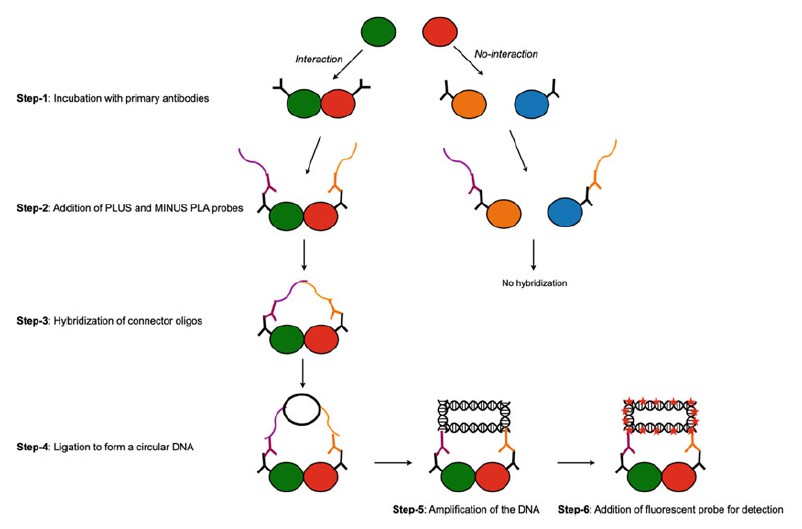 Figure 1. The schematic diagram of Duolink® proximity ligation assay (PLA).
Cells need to be stained with two immunohistochemistry- or immunofluorescence-compatible primary antibodies to the target proteins. The two primary antibodies must be generated from different species (i.e., mouse/rabbit, rabbit/goat, or mouse/ goat). Cells are then stained with secondary antibodies (2°-Ab) known as PLA probes (one PLUS and one MINUS). Each PLA probes that bind to the constant regions of the primary antibodies contains a unique DNA strand. If the proteins of interest interact with each other, the DNA probes hybridize to make circular DNA. This DNA can be amplified and visualized by fluorescently labeled complementary oligonucleotide probes. The interactions are visualized as dots, and the number and intensity of the dots can be quantified by fluorescence microscopy.
(d) In situ mounting medium with DAPI. The solution needs to be stored at 4°C.
1. Plate 50 μl cells per well (1–5X10⁵ cells depending on the cell size) in a ibidi μ-angiogenesis plate.
If cells need to first be stimulated, the plate can be coated with the antibody or other reagents at the appropriate concentration. Plates can be washed before applying the cells. If stimulation is not needed after applying the cells onto the wells incubate the cells in 5% CO2 incubator for 20 min to attach the cell into the wells.
2. Aspirate off media and fix cells with 4% PFA in PBS for 20 min at room temperature (RT). A low speed aspirator would work best but pipette aspiration would also work to decant the solution.
3. Aspirate off PFA and wash twice with PBS.
4. Stain cell membrane with 5 μg/ml WGA in PBS and incubate at RT for 5 min at dark. From this step, the cells need to operate in dark. Staining with WGA (wheat germ agglutinin, stains the plama membrane) is optional but better to determine specific dots within the cell.
5. Aspirate off PBS and add 50 μl of ice-cold 100% methanol to cells. Incubate at -20°C for 15–30 min to permeabilize. Although methanol works perfectly to permeabilize many cells/cell lines to stain with different antibody combinations, it can be changed depending on the cells or antibody combinations.
6. Wash cells twice with PBS.
7. Block cells with block solution for 1 h at RT.
8. Dilute primary antibodies in antibody dilution buffer and stain overnight at 4°C.
The dilution of the antibody is usually the recommended dilution for immunohistochemistry or immunofluorescence applications. Optional: For negative control, at this point cells can be stained with antibody of different species. For instance, in case of mouse/rabbit pair, cells can be incubated with anti-goat antibody.
9. Wash twice with large volume of 5% BSA in PBS for 10 min each.
10. While washing prepare the PLA probes (or antibody) according to the following procedure:
15μl total volume per reaction: 3 μl PLUS antibody +3 μl MINUS antibody +9μl ab dilution buffer.
Mix and let stand for 20 min at RT.
It is better to prepare a master mixture for multiple samples and mix well before applying to the wells.
11. Add 15 μl of secondary antibody mix to each sample and incubate at 37°C for 1 h.
12. Gently aspirate the secondary antibody mix and wash slides in 1Xbuffer A 2X5 min twice for 5 min.
13. Prepare ligation mix according to the following procedure:
15 μl total volume per reaction: 3 μl (5X) ligation stock +11.63 μl distilled water +0.375 μl ligase.
It is better to prepare master mixture for multiple samples and mix well before applying to the wells.
14. Add 15 μl of ligation mix to each sample and incubate at 37°C for 30 min.
15. Wash slides twice with 1Xbuffer A each for 2 min.
16. Prepare amplification mix according to the following procedure:
15 μl total volume per reaction: 3 μl (5X) amplification stock +11.81 μl distilled water +0.1875 μl ligase.
It is better to prepare a master mixture for multiple samples and mix well before applying to the wells.
17. Add 15 μl of amplification mix to each sample and incubate for 100 min at 37°C.
18. Aspirate off amplification mix and wash twice with 1Xbuffer B each for 10 min.
19. Wash slides once with 0.01Xbuffer B for 1 min.
20. Aspirate buffer B and then mount Prolong Gold mounting medium with DAPI.
The images can be taken instantly, or the plates can be stored at 4°C in the dark until images are taken. The plates should be good for up to 4 days.
For fluorescence applications, store slides in the dark at 4°C after mounting with Mounting Media with DAPI for up to 4 days. The fluorescent images can be analyzed by Blobfinder or Image-Pro Premier software. Images should be produced with the same acquisition parameters between experimental and control samples.
Detection of protein–protein interactions is one of the major objectives in studies of cell biology. It has been estimated that over 80% of proteins function in complexes to elicit biological responses. Therefore, it is crucial to investigate protein–protein interactions to understand mechanisms underlying cellular functions.
Coimmunoprecipitation (Co-IP) is the gold standard to identify protein–protein interactions, where an antibody to one protein is used to immunoprecipitate it and its partners in a complex, which are typically detect by immunoblotting with antibodies to proteins of interest. However, Co-IP may require large amounts of the proteins of interest, is not well suited to observe interactions in nuclear lysates and reveals protein associations in a complex but not necessarily direct interactions.
Tandem affinity purification (TAP) provides high-throughput screening of the binding partners of a particular protein. In this method, the protein of interest needs to be tagged with an epitope and affinity purification of the complex performed, followed by mass spectrometry (MS). However, the protein purification procedures can detect nonspecific proteins that can give false positives. Moreover, the tag can interfere with protein–protein interactions, resulting in failure to detect transient interactions.
Yeast two-hybrid assays allow for detection of interacting proteins based on transcriptional activity. The assay is performed with genetically modified yeast strains, in which the interaction of two proteins leads to transcription of a reporter gene. However, this method is prone to false positives, revealing interactions that do not occur under physiological condition.
FRET (Fluorescence Resonance Energy Transfer) is an advanced technology that analyzes interactions between two fluorescently tagged proteins, such as cyan fluorescent protein (CFP) and the yellow fluorescent protein (YFP). If the two fluorescent proteins are in close proximity (<10 nm), the absorbed energy of the light-excited CFP transfers to the YFP, which then emits light at a higher wavelength. The major limitation of FRET is the low signal-to-noise ratio associated with imaging. Furthermore, fluorescent proteins are sensitive to changes in the local environment such pH, ion concentrations, oxidation, and temperature.
In situ PLA offers an advanced method to detect protein interactions in cells or tissues as long as suitable antibodies are available. The method depends on the recognition of target molecules in close proximity (<40 nm) by pairs of affinity probes, giving rise to an amplifiable detection signal. Because the assay detects the amplified DNA as dots, a few interacting molecules can produce a very strong, robust, and visible signal, making the assay highly sensitive. PLA cannot be used for live cells because permeabilization is necessary for the antibodies and probes to find their targets. Furthermore, some PLA reagents like enzymes or DNA oligonucleotides might destroy active mechanisms of cells. However, it provides a highly sensitive and quick assay of protein interactions without any manipulation of cells.
Recently, a modified method of PLA has been established by engineering the PLA probe, named UnFold probe. In this method, one antibody carries a circle forming oligonucleotide, while the other antibody carries the template oligonucleotide required to create the circular DNA. The circle-forming oligonucleotide contains a hairpin-loop structure with cleavable DNA uracil (U) residues to release the 50 end of the loop, while the template probe contains a hairpin with several U residues in the distal 30 portion of a DNA hairpin attached to an antibody. After both antibodies bind to the target proteins, an enzymatic (uracil- DNA glycosylase) unfolding step of the probe needs to be performed to remove U bases that facilitates the formation of circular DNA. The circular DNA is then ligated, amplified and visualized by fluorophore labeled oligonucleotides.
Blocking
Primary Antibodies
Washing
Incubation
Make sure to incubate samples in a good humidity chamber to avoid dryness of the cells.
Cell Density
Perform the PLA in 50–70% confluence, which is optimal for efficient reagent penetration. Over confluent cells give lower signal.
Standardize the fixation and permeabilization conditions optimal for primary antibodies.
Incubation Temperatures
Perform all steps at the appropriate temperatures, in particular the blocking and the enzymatic steps (ligation and amplification).
Use of Wash Buffers
Reagent Storage and Activity
Make sure that the ligase and polymerase are active and stored at -20°C.
Filter Used for Acquisition
Make sure to use appropriate filters to acquire the images in microscope depending on the kit used.
Primary Antibodies
Use standardized concentration of primary antibodies as high concentration cause signal coalescence.
Amplification Duration
Follow recommended amplification times as extended amplification duration can cause signal coalescence.
Image Capture
Over-exposure during image capture can result signal coalescence. Use appropriate setting during image capture.
Understanding Results
Stable Jurkat cell clones expressing HA-NFAT1 were stimulated with anti-CD3/CD28 for 1 h, fixed with 4% PFA followed by permeabilization with methanol. Cells were stained with anti-HA and anti-calcineurin antibody. Alexa Fluor 488 (green)-conjugated wheat germ agglutinin (WGA) was used to stain plasma membrane and DAPI is for nucleus. Scale bar=100 pixels.
Time Considerations
The PLA assay requires ~2 days. Once developed the plate can be kept in the dark at 4°C for up to 4 days until images are collected by the fluorescence microscope.
Reference
Loading ......
