
Inquiry Basket
 Loading ......
PIVKA-II is also known as des gamma carboxy prothrombin (DCP), is an abnormal prothrombin molecule, which is caused by the acquired defect of post-translational carboxylation of prothrombin precursor in malignant cells. Prothrombin in hepatocytes is a vitamin K-dependent prothrombin, which consists of three different domains, namely fragment 1, fragment 2 and a protease domain. The N-terminal domain has 10 glutamate residues at positions 6, 7, 14, 16, 19, 20, 25, 26, 29 and 32, respectively. Normal prothrombin converts 10 glutamate residues into γ-carboxylated glutamate, which is called Gla domain.
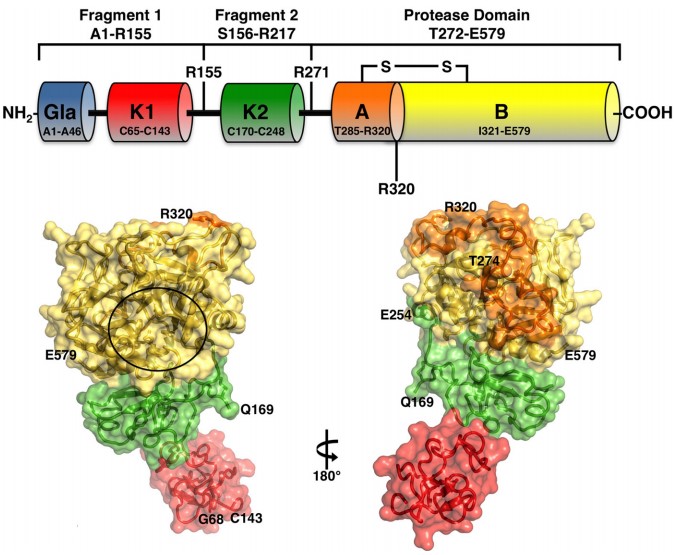 Figure 1. Schematic representation of prothrombin composed of fragment 1 (residues 1–155), fragment 2 (residues 156 –271), and a protease domain (residues 272–579).
(Source: Pozzi N, et al. 2013)
The post-translational carboxylation modification of prothrombin precursors depends on vitamin K-dependent γ-glutamyl carboxylase. When vitamin K is deficient or drugs that inhibit the action of vitamin K are taken, γ-glutamyl carboxylase cannot carboxylate all glutamic acid residues. The remaining Glu residues are called des-γ-carboxy prothrombin. PIVKA-II contains less than 10 Gla residues, resulting in insufficient thrombogen synthesis. Due to the lack of structural integrity, PIVKA-II cannot play a role in the activation of blood coagulation.
 Figure 2. Diagram representing the order of carboxylation of Gla domain in human prothrombin
(Source: Uehara S, et al. 1999)
PIVKA-II is a potential autologous growth stimulating factor for hepatocellular carcinoma (HCC) proliferation. Promotes biological processes by regulating cell proliferation, extracellular matrix (ECM) synthesis, and angiogenesis. Hepatocyte growth factor (HGF) is involved in the biological process of liver cancer binding to transmembrane receptor tyrosine kinase (c-Met). PIVKA-II can also bind to cMET through phosphorylation similar to hepatocyte growth factor (HGF) and then activate downstream signals, including JAK1-signal transducers and activators of transcription (STAT3), extracellular signal-regulated kinase (ERK1/2), and mitogen-activated protein kinase (MAPK). The activated signaling pathway promotes HCC proliferation, metastasis and invasion.
The key signaling pathway of HCC proliferation is c-MET-JAK-STAT3, which is activated through overexpression of PIVKA-II/c-Met, thereby enhancing DNA synthesis and cell proliferation in HCC.
The increase of PIVKA-II is related to the bad behavior of tumor metastasis and invasion, which leads to poor prognosis. Current studies have found that PIVKA-II stimulates EGFR phosphorylation and activates Raf serine / threonine kinase. PIVKA-II may also induce Raf-MEK1/2-ERK1/2-MAPK signal pathway and increase the levels of matrix metalloproteinase-2 and matrix metalloproteinase-9.
PIVKA-II is also considered to be an angiogenic factor. PIVKA-II not only promotes the secretion of other angiogenic factors in hepatocellular carcinoma cells, but also induces KDR-PLC-γ-MAPK signal pathway in vascular endothelial cells, resulting in extracellular matrix degradation and cell migration.
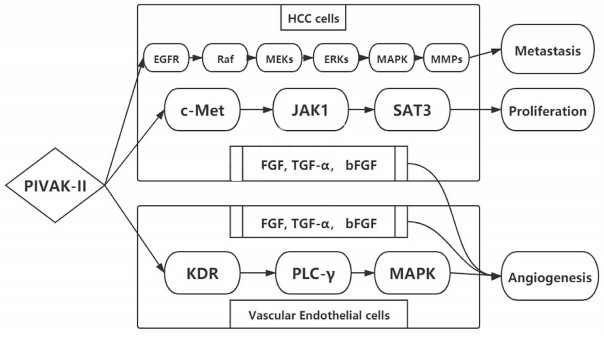 Figure 3. Mechanism of PIVKA-II in HCC progression.
(Source: Yang Y, et al. 2021)
In 1984, the researchers detected serum PIVKA-II levels in patients with hepatocellular carcinoma by radioimmunoassay and found that 91% of the patients showed a significant increase. This discovery has been successfully applied to clinical practice.
Many studies have evaluated its value in predicting prognostic related pathological parameters and evaluating therapeutic efficacy in hepatocellular carcinoma. In recent years, PIVKA-II has shown great promise in the detection and prediction of other tumors, such as primary gastric cancer and pancreatic cancer.
The results showed that PIVKA-II combined with Golgi protein 73 (GP73) was more accurate than alpha fetal protein (AFP) in the early diagnosis of hepatocellular carcinoma. In the United States, PIVKA-II has been approved by the FDA for risk stratification of hepatocellular carcinoma (not yet monitored). The diagnostic value of PIVKA-II is still controversial. Researchers are discussing whether there is a correlation between PIVKA-II and alpha fetal protein, and whether PIVKA-II can completely replace or complement the role of alpha fetal protein in the diagnosis of hepatocellular carcinoma.
At present, it has been found that increased PIVKA-II is related to tumor proliferation, metastasis and invasion, especially with HCC. In 91% of HCC patients with abnormal clotting activity, PIVKA-II was significantly elevated.
The number and location of Gla residues determine the biological activity of the tumor. If it is less than 5, liver disease has a higher malignant tendency. The role of different location deletion in the occurrence and development of hepatocellular carcinoma needs to be further verified.
Monitoring of high-risk groups is an effective measure for early diagnosis of HCC. The commonly used monitoring methods are abdominal ultrasonography and serum markers, such as alpha fetal protein (AFP). The sensitivity of ultrasonography examination is low and depends on the skills of operators; the diagnostic accuracy of AFP is insufficient, and 35% of HCC patients have normal AFP performance. PIVKA-II is becoming a supplementary means of HCC monitoring. At present, the clinical practice guidelines for hepatocellular carcinoma monitoring in Japan have adopted the combined measurement of PIVKA-II and AFP.
A study that evaluated the efficacy of PIVKA-II in 459 patients with hepatitis B virus infection showed that its sensitivity, specificity and area under the curve (AUC) were 0.71,0.93,0.91, respectively. Compared with the traditional monitoring methods of hepatocellular carcinoma, the combined detection of PIVKA-II and AFP can improve the diagnostic accuracy. PIVKA-II is more effective in differential diagnosis of regenerative / dysplastic nodules and neoplastic nodules. Related studies have shown that the specificity of combined detection of PIVKA-II and AFP is 94%, but the sensitivity is low. In general, the combination of PIVKA-II and AFP is expected to better monitor the possibility of HCC in high-risk groups.
Early diagnosis of HCC is difficult, and only 20% of 30% of asymptomatic patients have a chance of radical resection. Compared with AFP, serum PIVKA-II has better diagnostic performance and higher specificity, and is considered to be a supplementary tool for early diagnosis of HCC. Many studies have shown that the combination of PIVKA-II and AFP can improve the diagnostic effect of HCC, and the sensitivity and specificity are more than 67% and 90% respectively. However, whether the combination of biomarkers can improve the accuracy is still controversial. Some studies have found that the combined use of PIVKA-II and AFP can not increase the possibility of early detection of HCC, which is contrary to the previous results.
Currently, available treatments for HCC included hepatectomy, transarterial chemoembolization (TACE), radiofrequency ablation (RFA), liver transplantation, targeted therapy, and immunotherapy. With the progress of the treatment strategy of liver cancer and the deepening of people's understanding of the molecular pathogenesis, accurate treatment evaluation at the molecular level is the key to select the best treatment strategy. PIVKA-II is thought to influence the evaluation of treatment response in patients with hepatocellular carcinoma both preoperatively and postoperatively.
It is reported that the increase of preoperative PIVKA-II is an independent predictor of recurrence and metastasis after liver transplantation. Patients with AFP+PIVKA-II ≤ level of 300 mAU/ml are better after liver transplantation. In addition, a meta analysis shows that the increase of PIVKA-II indicates an increased risk of recurrence of hepatocellular carcinoma after liver transplantation.
Hepatocellular carcinoma has a poor prognosis and a high degree of malignancy, the overall survival time ranges from 3 months to more than 60 months. Factors such as the number and size of the tumor and whether there is vascular invasion will affect the prognosis of HCC patients. A new staging system has been developed to predict the prognosis of HCC in different etiology through real-time dynamic monitoring of residual liver function and serum biomarkers (PIVKA-II, AFP, etc.).
PIVKA-II is considered to be a predictor of microvascular invasion (MVI) in hepatocellular carcinoma, but there is no statistical cutoff value to determine it. Some researchers regard 90 mAU/ml PIVKA-II as the critical value of MVI, while others think that the critical value is 55 mAU/ml. In addition, PIVKA-II can also assist imaging examination to predict macrovascular invasion. A study of 31 patients with macrovascular involvement showed that PIVKA-II > 166 mAU/ml was an important indicator for predicting macrovascular invasion in hepatocellular carcinoma.
References
| Target | Cat. No. | Product Name | Size | Species | Application | Detection Sample | |
| PIVKA II | DEIA-JY2132 | Human Des-gamma carboxyprothrombin ELISA Kit | 96T | Human | Quantitative | Serum, plasma, tissue homogenates and other biological fluids. | Inquiry |
| Target | Cat. No. | Product Name | Host | Isotype | Application | |
| PIVKA II | CABT-B9009 | Mouse Anti-Human PIVKA-II monoclonal antibody, clone N12455N | Mouse | IgG1 | ELISA | Inquiry |
| CABT-L2604 | Mouse Anti-Human PIVKA-II monoclonal antibody, clone N12454N | Mouse | IgG1 | ELISA | Inquiry | |
| CABT-L3730H | Humanized Anti Human PIVKA-II monoclonal antibody, clone D30 | Humanized | IgG | ELISA | Inquiry | |
| CABT-L3740H | Humanized Anti Human PIVKA-II monoclonal antibody, clone D40 | Humanized | IgG | ELISA | Inquiry | |
| CABT-L3770H | Humanized Anti Human PIVKA-II monoclonal antibody, clone D70 | Humanized | IgG | ELISA | Inquiry |
| Target | Cat. No. | Product Name | Expression System | Tag/Conjugate | Application | |
| PIVKA II | DAGC579 | Recombinant Human PIVKA-II Protein [His] | Mammalian cells | His | ELISA, WB, IHC | Inquiry |
| DAG-WT1161 | Recombinant Human PIVKA-II (DCP) | HEK293 cells | Unconjugated | ELISA | Inquiry | |
| DAG-WT831 | Recombinant Human PIVKA-II (DCP) [His] | E. coli | His | SDS-PAGE | Inquiry |
Loading ......
