
Inquiry Basket
 Loading ......
The oxidative phosphorylation pathway (OXPHOS) refers to the energy released during the process of reducing oxygen to water through the cytochrome complex existing in the respiratory chain. This promotes ATP synthesis and cellular energy conversion. Under normal circumstances, the oxidative phosphorylation pathway is one of the processes necessary to maintain the energy metabolism balance of animal and plant cells, and it can be found in many organelles and tissues.
Oxidative phosphorylation is important physiologically because energy metabolism is essential for cell survival. Sufficient ATP synthesis can provide the necessary energy for processes such as muscle contraction, active transport of molecules across cell membranes, and macromolecular synthesis. Meanwhile, the function of this pathway may be affected by multiple factors such as oxidative stress, mitochondrial abnormalities, and genetic variation. These factors are often associated with disease occurrence and development.
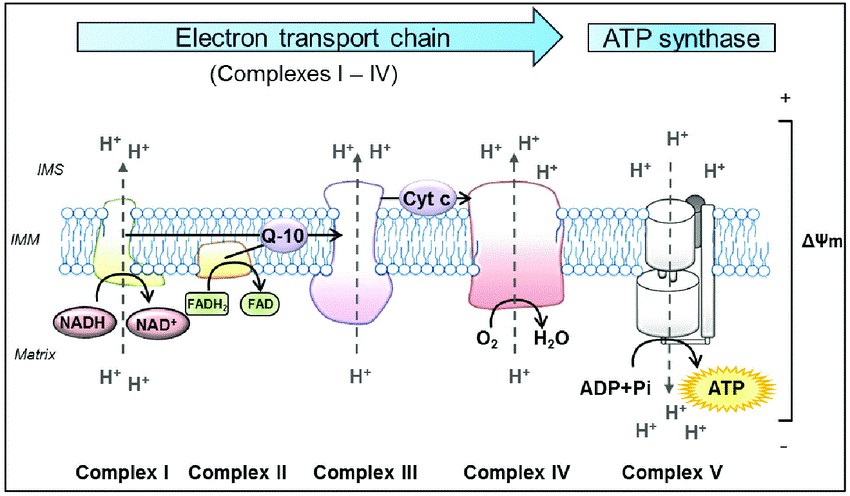 Fig. 1 Schematic representation of oxidative phosphorylation in mitochondria. (Szabo L, et al., 2020)
Oxidative phosphorylation involves a series of complex reactions within the inner mitochondrial membrane. The process can be summarized into the following key steps:
Electron Transport Chain (ETC): The ETC is a chain of protein complexes embedded in the inner mitochondrial membrane. It consists of several components, including NADH-Coenzyme Q oxidoreductase (complex I), succinic-coenzyme Q oxidoreductase (complex II), electron transfer flavin-coenzyme Q oxidoreductase, coenzyme Q-cytochrome C reductase (complex III), and cytochrome C oxidase (complex IV). These complexes work together to facilitate the transfer of electrons from electron donors, such as NADH and FADH2, to electron acceptors, such as molecular oxygen (O2).
Proton Pumping: As electrons pass through the ETC, energy is released and used to pump protons (H+) from the mitochondrial matrix to the intermembrane space. This creates an electrochemical gradient, with a higher concentration of protons in the intermembrane space compared to the matrix.
Chemiosmosis: The electrochemical gradient generated by proton pumping drives protons back into the mitochondrial matrix through ATP synthase, a protein complex located in the inner mitochondrial membrane. This flow of protons powers the synthesis of ATP from ADP (adenosine diphosphate) and inorganic phosphate (Pi) through a process called chemiosmosis.
ATP Synthesis: ATP synthase acts as a molecular turbine, utilizing the energy from the proton flow to catalyze the phosphorylation of ADP, resulting in the formation of ATP. This process is known as oxidative phosphorylation since it couples ATP synthesis with the transfer of electrons, ultimately derived from the oxidation of nutrients.
While oxidative phosphorylation is the primary mechanism for ATP synthesis, another process called substrate-level phosphorylation also contributes to ATP production. Substrate-level phosphorylation involves the direct transfer of a phosphate group from a phosphorylated compound to ADP, resulting in ATP formation. Although both oxidative phosphorylation and substrate-level phosphorylation lead to ATP production, they differ in their energy sources. Substrate-level phosphorylation derives its energy from metabolic intermediate chemical reactions. For example, during glycolysis, the conversion of glucose to pyruvate results in ATP production through substrate-level phosphorylation. This process occurs independently of the electron transport chain.
| Substrate-Level Phosphorylation | Oxidative Phosphorylation | |
| Source of Phosphate | Organic molecule | Inorganic phosphate PO43- |
| Energy Source | High energy phosphate bond of donor | Proton motive force |
| Location in Prokaryotes | Cytosol | Cytoplasmic membrane |
| Location in Eukaryotes | Cytosol and mitochondrial matrix | The inner membrane of the mitochondrion |
| Metabolic Pathway | Common in many metabolic pathways, such as glycolysis and the TCA cycle. | Cellular respiration |
Inhibitors play a significant role in interfering with the normal functioning of oxidative phosphorylation. Respiratory chain inhibitors, such as rotenone, antimycin A, and cyanide, block specific components of the electron transport chain, preventing the transfer of electrons and disrupting the oxidation process. Additionally, oxidative phosphorylation inhibitors, including oligomycin and dicyclohexylcarbonyldiimide, directly impede ATP formation and electron transfer. Uncoupling agents, exemplified by 2,4-dinitrophenol (DNP), uncouple the coupling processes of electron transfer and ATP synthesis, resulting in the dissipation of energy as heat rather than ATP production.
Thyroid hormone activates the Na+-K+ ATPase on the cell membrane of various tissues, promoting ATP breakdown into ADP and Pi. This, in turn, increases the influx of ADP into mitochondria, reducing the ATP/ADP ratio and enhancing oxidative phosphorylation. The acceleration of ATP synthesis results in increased oxygen consumption, heat production, and basal metabolic rate.
ADP also regulates oxidative phosphorylation. The rate of oxidative phosphorylation is primarily controlled by the concentration of ADP. When the demand for ATP increases, the concentration of ADP rises, leading to an accelerated rate of oxidative phosphorylation as ADP is transported into the mitochondria. Conversely, a deficiency of ADP slows down oxidative phosphorylation.
Mitochondrial DNA (mtDNA) mutations can also impact oxidative phosphorylation. Due to the naked circular double helix structure of mtDNA and the absence of protective proteins and DNA repair systems, mtDNA is susceptible to mutations caused by oxidative phosphorylation. Since mtDNA encodes 13 proteins involved in oxidative phosphorylation, mutations in mtDNA can disrupt the process, leading to decreased ATP production and the onset of various related diseases.
Reference
Loading ......
