
Inquiry Basket
 Loading ......
The NF-κB (nuclear factor kappa-light-chain-enhancer of activated B cells) signaling pathway plays a vital role in regulating immune responses, inflammation, cell survival, and various cellular processes. Understanding the mechanisms and modulators of this pathway is crucial for advancing research in fields such as cancer, immunology, and inflammation. As a leading provider of innovative research tools, Creative Diagnostics provides a series of small molecules targeting key components of the NF-κB pathway, helping researchers to unravel the complex mechanism of NF-κB activation and inhibition, paving the way for novel therapeutic strategies in many fields such as cancer, immunology, and inflammation.
NF-κB is a transcription factor that controls the expression of numerous genes involved in immune and inflammatory responses. Dysregulation of NF-κB signaling has been linked to a variety of diseases, making it an attractive target for therapeutic intervention.
The NF-κB signaling pathway consists of receptors and receptor-proximal signaling adapter proteins, the IκB kinase complex, IκB proteins, and NF-κB dimers. When cells are subjected to various extracellular and extracellular stimuli, IκB kinase is activated, which leads to phosphorylation and ubiquitination of IκB protein, and then IκB protein is degraded and NF-κB dimer is released. NF-κB dimers are further activated by various post-translational modifications and translocated to the nucleus. In the nucleus, it binds to the target gene to promote transcription of the target gene. NF-κB signaling pathway includes canonical signaling pathway and non-canonical signaling pathway.
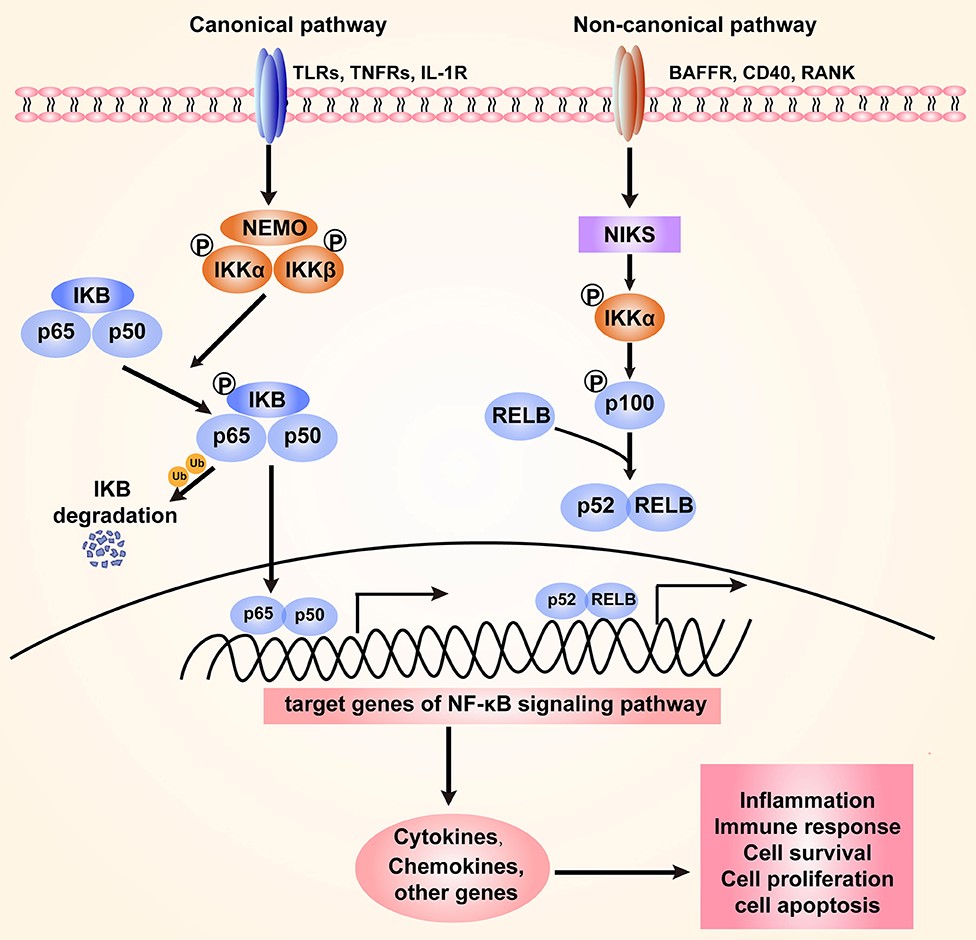 Fig. 1 The canonical and non-canonical NF-κB signaling pathway. (Peng C, et al., 2020)
There are multiple pharmacological compounds that can either activate or inhibit proteins involved in NF-kB signaling.
IKK complex inhibitor
The IKK (IκB kinase) complex plays a central role in the activation of NF-κB signaling. Inhibiting the activity of this complex can serve as an effective strategy for modulating NF-κB-mediated processes. By targeting the IKK complex, these inhibitors allow researchers to dissect the intricate mechanisms of NF-κB activation and explore potential therapeutic interventions.
IκB degradation inhibitor
IκB proteins act as inhibitors of NF-κB by sequestering it in an inactive form in cytoplasm. By inhibiting the enzymes responsible for IκB degradation, these inhibitors effectively prevent the release and activation of NF-κB. Researchers can utilize these inhibitors to gain insights into the regulation of NF-κB activation and its downstream effects.
NF-κB nuclear translocation inhibitor
The translocation of NF-κB from the cytoplasm to the nucleus is a critical step in its activation and subsequent gene expression. Creative Diagnostics offers a range of inhibitors targeting NF-κB nuclear translocation. By specifically inhibiting NF-κB nuclear translocation, researchers can investigate the dynamics of NF-κB localization and its impact on gene expression.
p65 acetylation inhibitor
The p65 subunit of NF-κB plays a central role in its transcriptional activity. Acetylation of p65 is known to enhance its DNA-binding ability and transactivation potential. Creative Diagnostics offers p65 acetylation inhibitors that can modulate NF-κB activity by interfering with this post-translational modification. These inhibitors provide a valuable tool for studying the impact of p65 acetylation on NF-κB-mediated gene expression and cellular processes.
NF-κB transactivation inhibitor
NF-κB transactivation refers to the process by which it stimulates gene expression by binding to specific DNA sequences. Creative Diagnostics offers a selection of NF-κB transactivation inhibitors that can modulate this critical step in NF-κB signaling. These inhibitors disrupt the interaction between NF-κB and its target DNA, thereby attenuating its transcriptional activity. By targeting NF-κB transactivation, researchers can investigate the specific genes and cellular pathways influenced by NF-κB-mediated transcription.
NF-κB activators and inducers
In addition to inhibitors, we also provide a range of NF-κB activators and inducers. These compounds stimulate NF-κB signaling, allowing researchers to study its downstream effects and the associated cellular responses. By manipulating NF-κB activity, researchers can explore the intricate balance between activation and inhibition in various biological processes.
Antioxidants
Oxidative stress, characterized by an imbalance between reactive oxygen species (ROS) production and antioxidant defenses, is implicated in numerous diseases. Creative Diagnostics offers a selection of antioxidants that can help combat oxidative stress by modulating NF-κB signaling. These antioxidants, such as N-acetylcysteine (NAC) and resveratrol, have been shown to inhibit NF-κB activation and reduce the expression of pro-inflammatory mediators. By targeting NF-κB-mediated oxidative stress, these compounds provide a valuable tool for studying the impact of ROS on cellular function and exploring potential therapeutic interventions.
Anti-inflammatory and immunosuppressant drugs
The dysregulation of NF-κB signaling is closely associated with chronic inflammation and immune disorders. Compounds like dexamethasone have demonstrated anti-inflammatory effects by inhibiting NF-κB activation and downstream pro-inflammatory cytokine production. These drugs provide valuable tools for understanding the role of NF-κB in inflammatory processes and developing targeted therapies.
References
Loading ......
