
Inquiry Basket
 Loading ......
Transglutaminases (TGs) are a family of multifunctional proteins having enzymatic and scaffolding functions that participate in the regulation of cell fate in a wide range of cellular systems and are implicated to have roles in the development of disease. TG 1 to 7 are with clinical significance and application prospects in a variety of diseases, including Inflammatory, Cancer, Cardiac Failure, Kidney and Liver Fibrosis, Cystic Fibrosis, Cataract formation, Neurodegenerative, Autoimmune disease, Dermatological disease, etc.
Type I transglutaminase (TG1) is an enzyme that is responsible for the assembly of the keratinocyte cornified envelope and is a valuable marker for elucidating the regulation of normal epithelial differentiation and squamous metaplasia. What is more, TG1 mutation is an underlying cause of autosomal recessive congenital ichthyosis. In ichthyosis, TG1 mutants accumulate in the ER where they are ubiquitinylated. This abnormal trafficking leads to a reduced TG1 level and activity, which are hallmarks of the ichthyosis disease. Moreover, ER-associated TG1 may activate other processes that negatively impact the cell including ER stress.
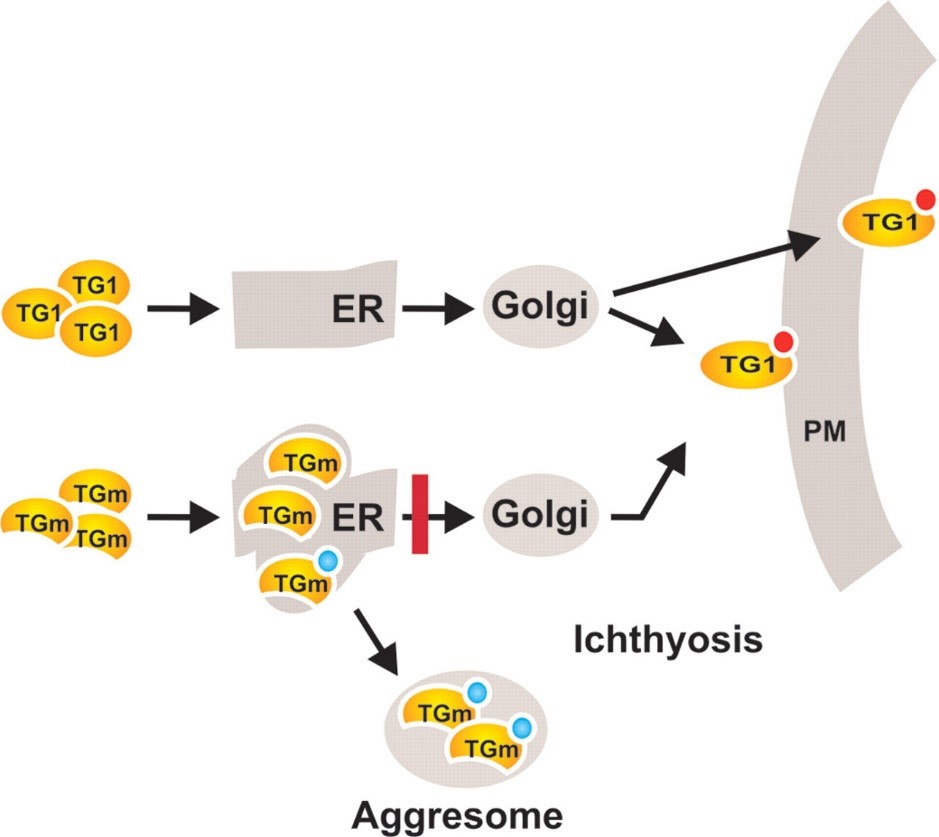 Fig. 1 Schematic summary of transglutaminase trafficking
TG 2 is the most studied, multi-functional member of the transglutaminase family. In addition to being an enzyme, TG2 also serves as a G protein for transmembrane receptors. TG2 has been associated with various human diseases. Thus, modulating the biological activities of TG2 in these diseases will have therapeutic value.
TG2 can promote tissue fibrosis through several ways, including contributing to promoting transcription and the activation of TGF-β, resisting protein breakdown, and enhancing cell adhesion and motility activating cell survival pathways. Related diseases include fibroproliferative diseases, including progressive kidney disease, pulmonary fibrosis, systemic sclerosis, and liver cirrhosis, etc.
 Fig. 2 Key profibrotic roles of TG2 at the cell membrane and in the ECM
Cancerous diseases are another group of diseases that might be beneficial from the inhibition of TG2. A correlation between elevated cancer TG2 levels and cancer aggressiveness was reported in the case of colorectal, breast, pancreatic, ovarian, esophageal squamous cell cancer, glioblastomas, malignant melanomas, renal and cervical squamous cell carcinomas and hepatocellular carcinomas. In addition, TG2 was found to be a biomarker of cervical intraepithelial neoplasia.
TG2 is also abundantly expressed in cardiomyocytes, vascular cells and macrophages. Accumulating evidence points to the involvement of TG2 in cardiovascular activities makes it a potential target that might provide new therapeutic approaches in the treatment of cardiovascular diseases.
 Fig. 3 Transglutaminase 2 (TG2) in cardiac diseases
In Celiac disease (CD), which is a systemic autoimmune disorder, TG2 is a specific target of a conditional autoimmune mechanism. The presence of anti-TG2 antibodies in serum is a very sensitive and specific marker to be used as a diagnostic tool. TG2 expression was also found to be increased in the skin biopsy of patients with psoriasis.
Neurodegenerative diseases, such as Alzheimer's disease, Parkinson's disease, etc., are characterized in part by aberrant cerebral transglutaminase activity, and by accumulation and deposition of cross-linked proteins which are all substrates of TG2. Inhibition of TG2 activity might have a therapeutic value in these diseases.
Mast cell derived TG2 was reported to participate in the pathogenesis of chronic urticaria and contributes to multiple sclerosis pathogenesis and clinical outcome. TG2 was suggested to be a biomarker for idiopathic inflammatory myopathies and osteoarthritis as well.
Transglutaminase 3 (TG3) is present in hair follicles, epidermis, and brain. Like TG2, TG3 binds to and hydrolyzes GTP. It catalyzes the crosslinking of trichohyalin and keratin intermediate filaments to harden the inner root sheath of a hair follicle, which is critical for hair fiber morphogenesis. It also participates in cell envelope formation during the latter stages of differentiation. Anti-TG 3 antibodies can be used to assess and monitor Dermatitis Herpetiformis. IgA TG 3 antibodies ELISA is a sensitive test for initial diagnosis and follow-up of patients with Dermatitis Herpetiformis.
Transglutaminase 4 (TG4) is present in the prostate gland, prostatic fluids, and seminal plasma. Recent reports suggest a link between increased expression of TG4 and the promotion of an aggressive prostate cancer phenotype. Human TG4 promotes tumor and endothelial cell interaction potentially through influencing the ROCK pathway, potentially leading to be identified as new cancer therapeutic targets.
Transglutaminase 5 (TG5) is mainly expressed in foreskin keratinocytes, epithelial barrier lining, and skeletal muscle. In addition to full-length TG5 protein, three alternatively spliced isoforms of TG5 have been described: delta3 (deletion of exon 3), delta11 (deletion of exon 11), and delta3-delta11 (deletion of both exons). Full-length TG5 and the delta11 isoform are active, whereas delta3 and delta3-delta11 have low activity. TG5 crosslinks loricrin, involucrin, and SPR3 in the epidermis and contributes to hyperkeratosis in ichthyosis and psoriasis patients. TG5 inactivating mutations result in skin peeling syndrome. Moreover, the epidermal transglutaminases (TGM1, TGM3 and TGM5) encode essential cross-linking enzymes in the epidermis, which are major factors in chronic inflammatory skin disorder.
 Fig. 4 TGM1, TGM3 and TGM5 gene expression in the skin of Atopic dermatitis patients and healthy controls
Development of autoimmunity directed towards different members of the transglutaminase protein family could offer an explanation for the diversity in manifestations of gluten sensitivity. An antitransglutaminase 6 IgG/IgA response is prevalent in gluten ataxia, independent of intestinal involvement. TG 6 antibodies (anti-TG6) are considered a biomarker for gluten-related ataxia and neuropathy, and may be a potential tool in diagnosing.
Like TG6, the expression of TG 7 is restricted to the testes, lungs, and brain. TG7 remains poorly studied so far. However, there is a report that suggested that TG7 transcript levels are increased in breast cancer cells of patients with poor prognoses.
| Cat No. | Product name | Applications | |
| ABPR-0951 | Human TGM1 ELISA Matched Antibody Pair | ELISA | Inquiry |
| CABT-L6027 | Rabbit Anti-Human keratinocyte TG1 (transglutaminase) polyclonal antibody | WB, IF, IHC | Inquiry |
| CABT-L6028 | Rabbit Anti-Human keratinocyte TG1 (transglutaminase) polyclonal antibody [FITC] | IA, FC | Inquiry |
| DPABH-06794 | Mouse Anti-Human TGM1 (full length) polyclonal antibody | WB, IHC-P | Inquiry |
| DPABH-14348 | Rabbit Anti-Human TGM1 polyclonal antibody | ICC/IF, WB, IHC-P | Inquiry |
| CABT-L6029 | Mouse Anti-Human TG1 monoclonal antibody, clone YUH42 | WB, IF. | Inquiry |
| DCABH-6016 | Mouse Anti-Human TGM1 monoclonal antibody, clone 7.5_3H7 | IP, ICC, IHC-P, WB | Inquiry |
| DEIA1832 | Transglutaminase IgA ELISA Kit | Inquiry | |
| DEIA1861 | Transglutaminase Antibody IgG ELISA Kit | Inquiry | |
| DEIA-BJ2623 | Mouse Anti-tissue transglutaminase IgA ELISA Kit | Inquiry |
| Cat No. | Product name | Applications | |
| CABT-L6036 | Rabbit Anti-Human epidermal transglutaminase (TG3) polyclonal antibody | WB, Immunostaining | Inquiry |
| DPABH-22986 | Rabbit Anti-Human TGM3 Polyclonal Antibody | WB, ELISA | Inquiry |
| CABT-L6037 | Mouse Anti-Human TG3 monoclonal antibody, clone YUH56 | WB, IF, ELISA | Inquiry |
| DEIA-FN1517 | Human TGM3 (Transglutaminase 3, Epidermal) ELISA Kit | ELISA | Inquiry |
| Cat No. | Product name | Applications | |
| CABT-L6038 | Rabbit Anti-Human prostate transglutaminase (TG4) polyclonal antibody | IA | Inquiry |
| DPABH-22948 | Goat Anti-Human TGM4 (aa 49-63) polyclonal antibody | WB | Inquiry |
| CABT-B11620 | Mouse anti-Human TGM4 monoclonal antibody, clone BU2I2 | WB, ELISA | Inquiry |
| Cat No. | Product name | Applications | |
| CABT-L6039 | Rabbit Anti-Human transglutaminase 5 (TG5) polyclonal antibody | IA | Inquiry |
| DPAB-DC3783 | Mouse Anti-Human TGM5 (aa 511-610) polyclonal antibody | WB, ELISA | Inquiry |
| DPABH-25371 | Rabbit Anti-Human TGM5 (C-terminal) polyclonal antibody | WB, IHC-P | Inquiry |
| DPAB-L21267 | Rabbit Anti-Human TGM5 (C-terminal) polyclonal antibody | ELISA | Inquiry |
| CDBP6267 | TGM5 blocking peptide | BL, IB | Inquiry |
| Cat No. | Product name | Applications | |
| DPABH-28410 | Goat Anti-Rat TGM6 (aa 311-323) polyclonal antibody | WB | Inquiry |
| DPAB-L21269 | Rabbit Anti-Human TGM6 (C-terminal) polyclonal antibody | ELISA | Inquiry |
| CABT-L6040 | Rabbit Anti-Human neuronal transglutaminase (TG6) polyclonal antibody | IA | Inquiry |
| CABT-L6041 | Mouse Anti-Human TG6 (Beta Barrel 1 Domain) monoclonal antibody, clone YUH40 | WB, ELISA. | Inquiry |
| CABT-L6042 | Mouse Anti-Human TG6 (Beta Barrel 2 Domain) monoclonal antibody, clone YUH30 | WB, ELISA. | Inquiry |
| CABT-L6043 | Mouse Anti-Human TG6 (Catalytic Domain) monoclonal antibody, clone YUH63 | WB, ELISA. | Inquiry |
| DCABH-6994 | Rabbit Anti-Human TGM6 monoclonal antibody, clone FQS21419 | WB, IHC-P, FC | Inquiry |
| CDBP6268 | TGM6 blocking peptide | BL, IB | Inquiry |
| CDBP6269 | TGM6 blocking peptide | BL, IB | Inquiry |
| Cat No. | Product name | Applications | |
| CABT-B9565 | Rat anti-Human TGM7 monoclonal antibody, clone 703809 | WB | Inquiry |
| CABT-L6044 | Rabbit Anti-Human transglutaminase 7 (TG7) polyclonal antibody | IA | Inquiry |
| DCABH-13752 | Rabbit Anti-Human TGM7 monoclonal antibody | WB, ELISA | Inquiry |
| CDBP6270 | TGM7 blocking peptide | BL, IB | Inquiry |
Loading ......
