
Inquiry Basket
 Loading ......
Coronaviruses are named for the crown-like spikes on their surface. Human coronaviruses (HCoVs) are enveloped, single-stranded, positive-sense RNA viruses that belong to the coronaviridae family. HCoVs have been identified to be a frequent cause of respiratory tract infections, it causes mild to severe respiratory diseases. The coronavirus subfamily is further classified into four genera: alpha, beta, gamma, and delta coronaviruses.
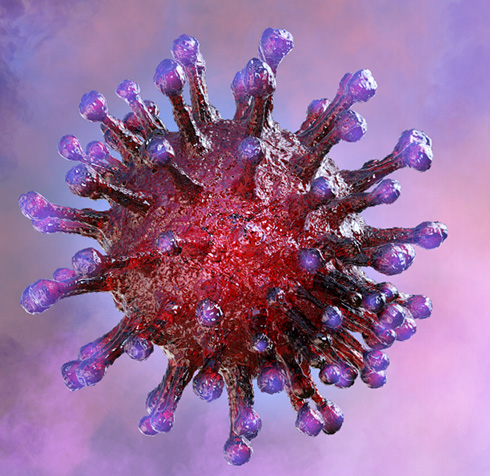
Seven types of human coronaviruses (HCoVs) have been described: HCoV-229E, HCoV-NL63, HCoV-HKU1, HCoV-OC43, MERS-CoV, SARS-CoV, and SARS-CoV-2. The human coronaviruses (HCoVs) are in two of these genera: alphacoronaviruses (HCoV-229E and HCoV-NL63) and betacoronaviruses (HCoV-HKU1, HCoV-OC43, MERS-CoV, SARS-CoV, SARS-CoV-2). HCoV-229E and HCoV-OC43 were first identified in 1967 as the cause of upper and mild respiratory tract infections. Younger children and the elderly are considered vulnerable to developing lower respiratory tract infections (LRTIs). The outbreak of SARS renewed interest in this virus family and resulted in the identification of two additional HCoVs, HCoV-NL63 and HCoV-HKU1 were identified in 2004 and 2005. People around the world commonly get infected with human coronaviruses 229E, OC43, NL63, and HKU1. They usually cause a mild to moderate upper-respiratory tract illness, like the common cold that people catch every year. Theses infections were most common in the winter, were distributed across all age groups, and were less common than those caused by rhinovirus, influenza, or respiratory syncytial virus but more common than other respiratory viruses; coinfections were relatively common, particularly in young children.
Coronaviruses are medium-sized enveloped positive-stranded RNA viruses whose name derives from their characteristic crown-like appearance in electron micrographs. These viruses have the largest known viral RNA genomes, with a length of 27 to 32 kb. The host-derived membrane is studded with glycoprotein spikes and surrounds the genome, which is encased in a nucleocapsid that is helical in its relaxed form but assumes a roughly spherical shape in the virus particle. Replication of viral RNA occurs in the host cytoplasm by a unique mechanism in which RNA polymerase binds to a leader sequence and then detaches and reattaches at multiple locations, allowing for the production of a nested set of mRNA molecules with common 3' ends. The genome encodes four or five structural proteins, S, M, N, HE, HCoV-229E and HCoV-NL63 possess four genes that encode the S, M, N, and E proteins, respectively, whereas HCoV-OC43 and HCoV-HKU1 also contain a fifth gene that encodes the HE protein.
The alphacoronavirus genus includes two human virus species, HCoV-229E and HCoV-NL63. HCoV-229E, like several animal alphacoronaviruses, utilizes aminopeptidase N (APN) as its major receptor. HCoV-NL63 uses angiotensin-converting enzyme-2 (ACE-2) as its receptor. Important animal alphacoronaviruses are transmissible gastroenteritis virus of pigs and feline infectious peritonitis virus. There are also several related bat coronaviruses among the alphacoronaviruses. Two of the non-SARS human species of the betacoronavirus genus, HCoV-OC43 and HCoV-HKU1, have hemagglutinin-esterase activity and probably utilize sialic acid residues as receptors.
Creative Diagnostics now can provide HCoV antigens and antibodies. HCoV antigens can be used for scientific research, detection of HCoV coronavirus and preparation of neutralizing antibodies.These antibodies are useful for researchers interested in viral research. This products are for research use only and are not intended for therapeutic or diagnostic applications. All of our products are produced using a standardized production process to ensure the highest quality and are performance guaranteed for the applications listed on the detailed datasheets.
<Product List of other HCoV Reagents
| Cat | Product Name | Applications | Category | |
| DAGC131 | Recombinant HCoV-OC43 S Protein [His] | SDS-PAGE | Antigen | Inquiry |
| DAGC132 | Recombinant HCoV-HKU1 S Protein [His] | SDS-PAGE | Antigen | Inquiry |
| DAGC133 | Recombinant HCoV-NL63 S Protein [His] | SDS-PAGE | Antigen | Inquiry |
| DAGC134 | Recombinant HCoV-229E S Protein [His] | SDS-PAGE | Antigen | Inquiry |
| CABT-CS025 | Mouse Anti-HCoV OC43, 229E Nucleoprotein Monoclonal antibody, clone 6538E | IF | Antibody | Inquiry |
| CABT-B343 | Anti-HCoV OC43 monoclonal antibody, clone 4616 | ELISA | Antibody | Inquiry |
| CABT-B342 | Anti-HCoV OC43 monoclonal antibody, clone 4615 | ELISA | Antibody | Inquiry |
| CABT-RM315 | Mouse anti-HCoV spike glycoprotein monoclonal antibody, clone 18 | ELISA, IHC-P, FC, IF, IP | Antibody | Inquiry |
| CABT-RM316 | Rabbit anti-HCoV spike glycoprotein monoclonal antibody, clone 139 | ELISA, IHC-P, FC, IF, IP | Antibody | Inquiry |
| CABT-RM317 | Rabbit anti-HCoV spike glycoprotein polyclonal antibody | ELISA, IHC-P, FC, IF, IP | Antibody | Inquiry |
Loading ......
