
Inquiry Basket
 Loading ......
Creative Diagnostics offers several new ELISA Kits for quantitative and qualitative analysis of drugs residues in different kinds of samples. Our ELISA product line covers various drug residues. In addition, the test sensitivity of our kits is far below the maximum residue limit (MRL), which is a secure choice for multiple purposes.
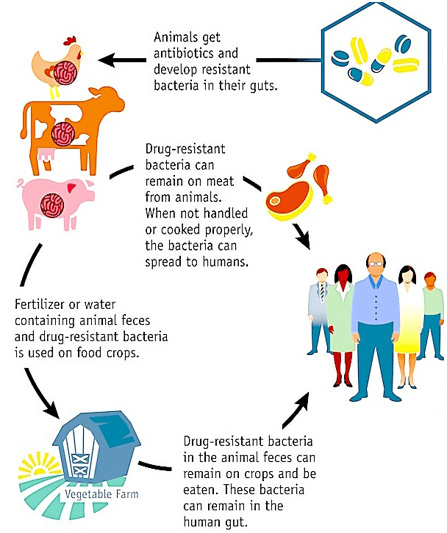
In many production systems, the treatment with antimicrobial drug of groups of animals in advance of clinical symptoms is inevitable. However, antimicrobial drugs are also used to enhance growth rates and increase feed efficiency in food-animals sometimes, which is forbidden. Furthermore, it can be misused. In 2005, for instance, Amantadine was found in Chickens in China. Because poultry farmers tried to protect birds from avian influenza, while Amantadine is approved only for use in humans, according to international livestock regulations. All above inappropriate usages trigger the appearance of drug-resistant bacteria.
A portion of drugs will be remained in the both tissues (meat, liver etc.) and sideline products (eggs, honey etc.) of animals. Another part can be eliminated from animal through their feces. The feces can be used as a fertilizer, and the urine may remain in the irrigation water, which leads the cops might be contaminated by antimicrobial drug as well.
There are two main concerns about drug residues in food. one is residues produces potential threat to directly toxicity in human such as general oral toxicity, carcinogenicity, reproductive toxicity, developmental toxicity, genotoxicity etc; the other is whether the low levels of antibiotic exposure would result in alteration of microflora, cause the development of antibiotic resistant bacteria.
One of the most important directly effects of antibiotics in food is allergic reactions. Abundant information is related to hypersensitivity of Penicillin, aminoglycosides and tetracycline. Furthermore, β-lactam antibiotics can cause cutaneous eruptions, dermatitis, gastro-intestinal symptoms and anaphylaxis at very low doses. Such drugs include the Penicillin and cephalosporin groups of antibiotics. These direct effects may include the induction of resistance in normal flora of the human gastrointestinal tract due to the consumption of antibiotic-containing meat products causing an outbreak of resistant diarrheal disease.
Antibiotic resistance is the ability of a microorganism to withstand the effects of an antibiotic, which is a public concern recently. Its primary cause is long-term overexposure to antibiotics through their use as medicines in humans, as well as in animals, horticulture and for food preservation. The US Centers for Disease Control and Prevention has described antibiotic resistance as "one of the world's most pressing health problems", because "the number of bacteria resistant to antibiotics has increased in the last decade.
Drug residues in food can be detected in several ways, such as LC-MS, FIA, TRFIA and ELISA. Especially, ELISA has high specificity, high sensitivity, simplicity and cost effectiveness.
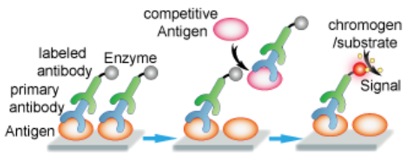
Our ELISA kits are indirect-competitive immunoassays. The microtiter wells are coated with coupling antigen. Drug residue in the sample competes with the antigen coated on the plate for the antibody. After the addition of HRP-conjugate, TMB substrate is used as chromogenic reagent. Absorbance of the sample is negatively related to the drug residues in it, after comparing with the standard curve, multiplied by the dilution factor, drug residues quantity in the sample can be calculated.
| Drug Class | Drug Name | MRL (ppb) | Sensitivity (ppb) | Sample | |
| β-lactams | Penicillin | 4 | 0.1 | Tissues, Fish, Shrimp, Milk | Inquiry |
| Amoxicillin | 4 | 1.5 | Chicken, Swine Meat, Milk | Inquiry | |
| Ceftiofur | 100 | 0.5 | Tissues, Fish, Shrimp, Milk | Inquiry | |
| Cephalosporines | 100 | 0.5 | Tissues, Fish, Shrimp, Milk | Inquiry | |
| Aminoglycosides | Spectinomycin | 200 | 0.2 | Tissues, Fish, Shrimp, Liver | Inquiry |
| Amikacin | 100 | 1.5 | Chicken, Egg | Inquiry | |
| Amphenicols | Chloramphenicol | 0 | 0.01 | Serum | Inquiry |
| Macrolides | Erythromycin | 40 | 0.2 | Tissues, Fish, Shrimp, Liver, Honey | Inquiry |
| Polypeptide | Colistin | 150 | 1.5 | Beef, Pork, Chicken | Inquiry |
| Anticoccidial Drug | Clopidol | 2000 | 0.5 | Tissue, Egg, Milk | Inquiry |
| Others | Amantadine | 0 | 0.1 | Chicken, Duck, Egg | Inquiry |
Loading ......
