
Inquiry Basket
 Loading ......
In the United States, an estimated 3.1 million adults (1.3%) have been diagnosed with inflammatory bowel disease (IBD). The amount of calprotectin present in the feces is proportional to the number of neutrophils within the gastrointestinal mucosa. The fecal calprotectin test can be used to distinguish IBD from irritable bowel syndrome (IBS), as well as to monitor the severity of IBD. Several antibodies and antigens to calprotectin are available at Creative Diagnostics for quantitative sandwich immunoassays that serve as an accurate biomarker for IBD patients.
Calprotectin is a marker of inflammation found extensively in the cytoplasm of neutrophils, which represents ~45% of total cytosolic protein. Calprotectin is a member of the S100 calcium-binding family and is composed of two proteins in mammals (e.g. humans and mice): S100A8 and S100A9. In humans, S100A8 is composed of 93 amino acids, while S100A9 is composed of 113 amino acids. S100A8 and S100A9 consist of two α-helix motives typically allowing Ca2+-binding and calprotectin complex formation. Calprotectin has antimicrobial properties that are thought to stem from its ability to chelate and sequester metal ions from pathogens. Strongly elevated faecal calprotectin concentration is frequently observed during bacterial infections. Both subunits, S100A8 and S100A9, exhibit a broad spectrum of intracellular and extracellular immunomodulatory properties. Calprotectin contributes to activating innate immune responses by acting as a damage-associated molecular pattern (DAMP) that can activate toll-like receptor 4 (TLR4).
Activation of the intestinal immune system leads to recruitment of cells from the innate immune system, including neutrophils which release calprotectin upon activation. As the inflammatory process progresses, the released calprotectin is absorbed by the fecal material before it is excreted from the body. The amount of calprotectin present in the feces is proportional to the number of neutrophils within the gastrointestinal mucosa. Faecal calprotectin has been shown to have high sensitivity and specificity for differentiating between IBD and IBS. Large amounts of calprotectin indicate IBD, while low or normal levels suggest IBS. Faecal calprotectin is more sensitive and specific than systemic inflammatory markers, and correlates well with endoscopic and histological disease activity.
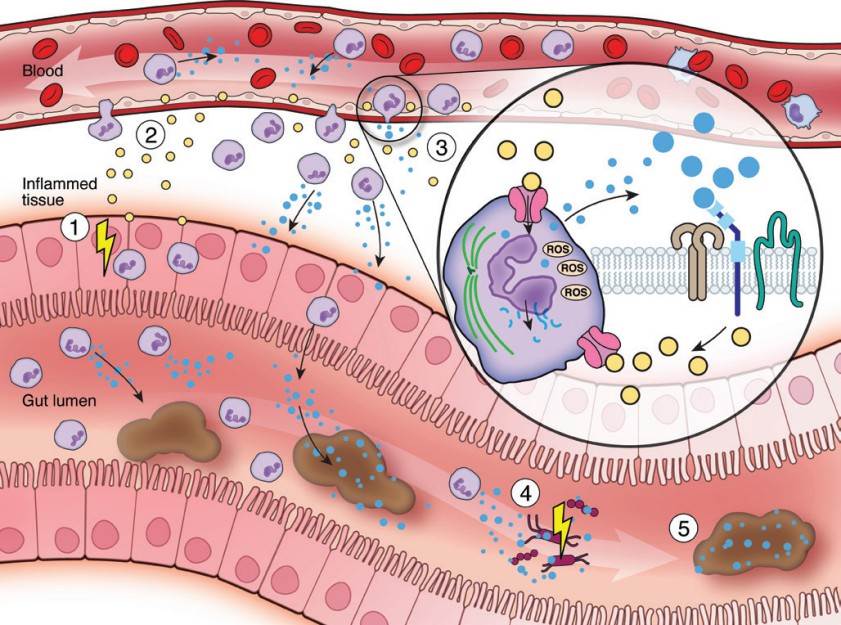 Fig. 1 Calprotectin in the control of gut inflammation (Jukic, A., et al. 2021)
The faecal calprotectin concentration in healthy humans has been extensively investigated. The concentrations found in adults and children over the age of 4 years somewhat range between ~10 and 50 µg/g which depends on study cohorts and the used assay. A threshold of 50 µg/g has been broadly adopted as the upper limit of normal in healthy individuals. Lack of guidelines and data regarding optimal faecal calprotectin cut‐offs renders intermediate faecal CP concentrations of 150–250 µg/g frequently challenging to interpret in IBD, while<40 g="" rules="" out="" ibd="" and="">250 µg/g should prompt evaluation for IBD or raise suspicion for an IBD flare.
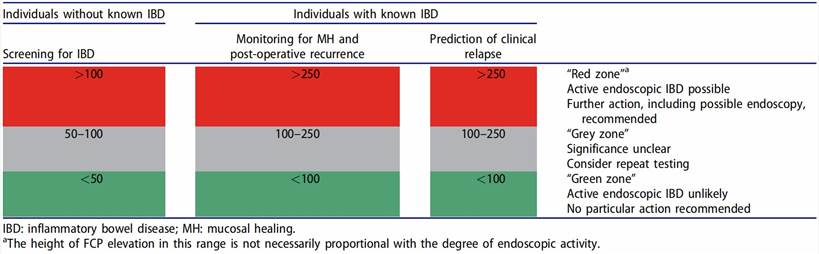 Fig. 2 Suggested fecal calprotectin thresholds (mg/g) for various clinical indications (Ricciuto, A., et al. 2019)
All existing assays rely on immunochemical techniques that use monoclonal or polyclonal antibodies to human calprotectin. Commercial diagnostic fecal assays for Calprotectin are chemiluminescent, fluorescent, or immune-turbidimetric immunoassays. Quantitative enzyme-linked immunosorbent assay (ELISA) is the most frequently used method, but is timeconsuming and therefore best suited to batch analysis. Point-of-care tests based on lateral flow immunochromatography (LFIA) with rapid turnaround times have been developed.
References
| Cat. No | Product Name | Type | |
| DCAB-TJ212 | Anti-MRP8/MRP14 monoclonal antibody (Capture) | Antibody | Inquiry |
| DCAB-TJ213 | Anti-MRP8/MRP14 monoclonal antibody (Detection) | Antibody | Inquiry |
| CABT-B7194 | Anti-Calprotectin S100A8 monoclonal antibody | Antibody | Inquiry |
| CABT-B7193 | Anti-Calprotectin S100A9 monoclonal antibody | Antibody | Inquiry |
| DAG-T1230 | Calprotectin Antigen | Antigen | Inquiry |
| DAGC002 | Recombinant Calprotectin Protein [His] | Antigen | Inquiry |
| DAGA-820 | Recombinant S100A8 protein (mouse, aa 1-89,>95%) [His] | Antigen | Inquiry |
| DAGA-822 | Recombinant S100A9 protein (human, aa 1-114,>90%) [His] | Antigen | Inquiry |
| DEIA2166 | Human Calprotectin ELISA | ELISA Kit | Inquiry |
| DEIA4161 | S100A8 (Human) ELISA Kit | ELISA Kit | Inquiry |
| DEIA4162 | S100A9 (Human) ELISA Kit | ELISA Kit | Inquiry |
Loading ......
