
Inquiry Basket
 Loading ......
African swine fever (ASF) is a highly contagious haemorrhagic viral disease of domestic and wild boars. It was first reported in Kenya, Africa and then spread around the world, particularly in sub-Saharan Africa. In 2007 outbreaks occurred in Georgia, Armenia, Azerbaijan and the European part of Russia, Ukraine, and Belarus. It is one of the diseases listed in the World Organisation for Animal Health (OIE) Terrestrial Animal Health Code and must be reported to the OIE. The typical signs of African swine fever are similar to classical swine fever, and the two diseases normally have to be distinguished by laboratory diagnosis. Symptoms include fever, loss of appetite, lack of energy, abortions, internal bleeding, with haemorrhages visible on the ears and flanks. Sudden death may occur.
The pathogen of ASF is African swine fever virus (ASFV). It is a large, double stranded DNA virus, the only member of the Asfarviridae family, genus Asfivirus and the only DNA virus transmitted by arthropods, soft ticks of the Ornithodoros genus. Humans are not susceptible to the disease. The disease can be spread directly through contact. It can also be spread indirectly through feeding infected pig meat and /or pork products, species of soft tick in some regions and possibly blood sucking flies or insects and through contaminated objects (fomites) such as vehicles, clothes, equipment etc.
 Fig. 1 ASFV infection (Galindo I and Alonso C. 2017)
ASFV is a large icosahedral DNA virus which replicates predominantly in the cytoplasm of infected cells. The ASFV double-stranded DNA genome varies in length from about 170 to 193 kbp depending on the isolate and contains between 150 and 167 open reading frames. The ASFV particle is composed of several concentric domains: the internal core formed by the central genome contains the nucleoid, which is coated by a thick protein layer named core shell; an inner lipid envelope surrounding the core; and finally the capsid, which is the outermost layer of the intracellular virions. The extracellular virions possess an additional external envelope that is obtained when the virus buds out through the plasma membrane.
Currently there is no approved vaccine for ASF. Inactivated vaccines were the first to be tried, it can produce antibody after immunizing animals, but can not provide immune protection. It may be related to the complex immune mechanism of ASFV or to the different ways of mature infectious virus particles. After that, subunit vaccine, nucleic acid vaccine, virus live vector vaccine, attenuated live vaccine and gene deletion vaccine were explored but none of them could provide effective protection. The large number of proteins encoded in the ASFV genome and the complex immune escape mechanism of ASFV hinder the development of ASF vaccine. It is necessary to further study the etiology, pathogenic mechanism and immune mechanism of ASFV for the development of effective vaccines.
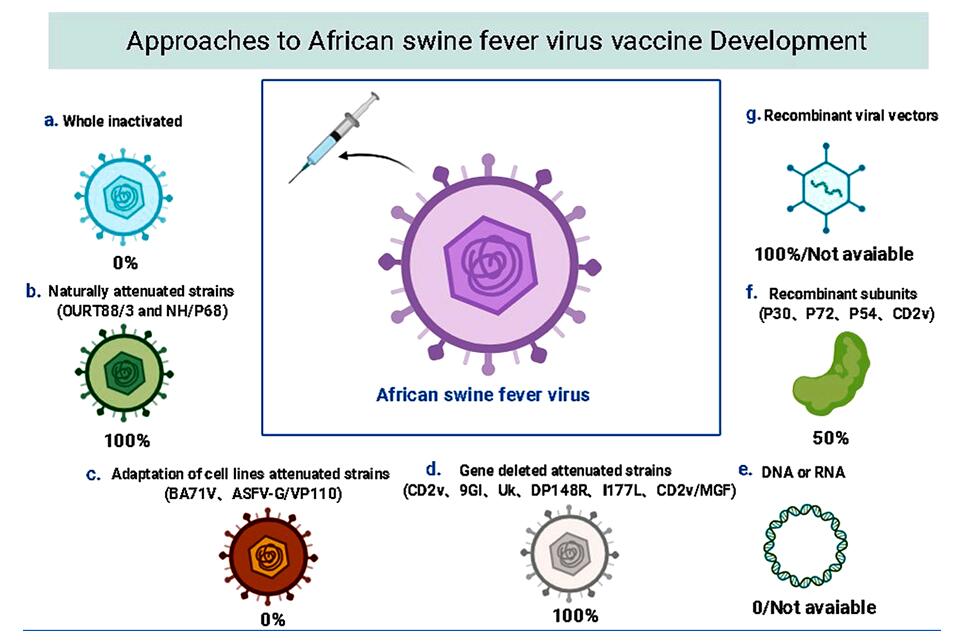 Fig. 2. Current vaccine strategies for African swine fever (Wang T, et al. 2020)
Due to the lack of an effective vaccine against this virus, early diagnosis becomes very important for ASF control. Among the structural proteins that compose the virion of ASFV, p30 is one of the most immunogenic proteins and is produced during early stage of ASFV infection. These two characteristics make p30 a good target for diagnostic assays to detect ASFV infection. Creative Diagnostics is now offering p30, p54, p72 and pp62 antigens and antibodies for ASFV detection. All of our antibodies are manufactured to the highest quality standards have been validated to work in various types of immunoassays.
Loading ......
