
Inquiry Basket
 Loading ......
Noroviruses are nonenveloped, positive-sense, single-stranded RNA viruses belonging to the Caliciviridae viral family and are the leading cause of non-bacterial acute gastroenteritis worldwide. Particle stability is of special interest as transmission occurs via the faecal-oral route and virions can persist in the environment. Studies on norovirus capsid assembly and disassembly rely mainly on norovirus-like particles.
Norovirus genomes are 7.4–7.7 kb in length and have three open reading frames (ORFs). The non-structural proteins, such as the RNA dependent polymerase (RdRp), are encoded by ORF1, while the structural proteins are encoded by ORF2 (VP1) and ORF3 (VP2). Structural analysis of Norovirus has revealed that each viral capsid is composed of 90 dimers of VP1 in a T = 3 icosahedral symmetry. VP1 folds into two domains: a shell (S) domain that is responsible for initiating capsid assembly and icosahedral contacts and a protruding domain (P), containing two subdomains of P1 and P2, that enhance the stability of the capsid by providing intermolecular contacts between VP1 dimers. VP1 proteins can self-assemble to form virus-like particles (VLPs) deprived of viral genetic material, which morphologically and antigenically resemble the native virus. Different expression systems have been developed to produce the capsid in the form of VLPs.
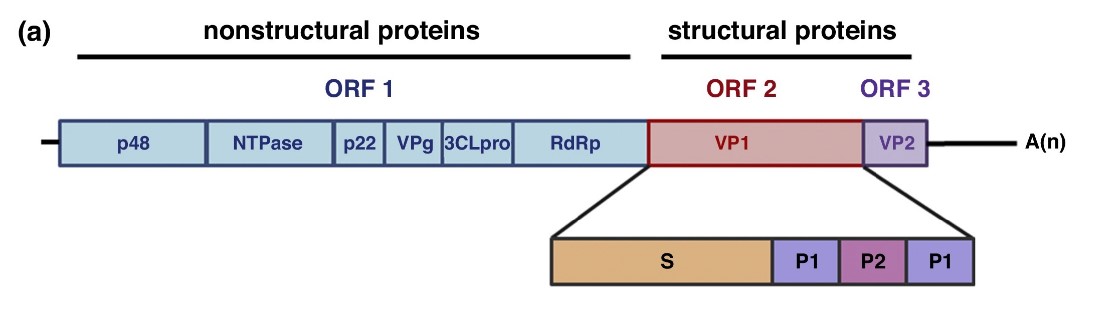 Fig. 1 Genomic organization of NoV
Noroviruses are classified into genogroups groups and genotypes based on amino acid diversity in VP1 protein. According to the system, the Norovirus genus is divided into 10 genogroups (GI-GX) and 49 genotypes (9 GI, 27 GII, 3 GIII, 2 GIV, 2 GV, 2 GVI and 1 genotype each for GVII, GVIII, GIX [formerly GII.15] and GX), where genogroups known to infect humans include GI, GII, GVIII, and GIX. GII.4 is especially significant as it has caused a multitude of outbreaks globally over the years and is considered to be predominant in human infections.
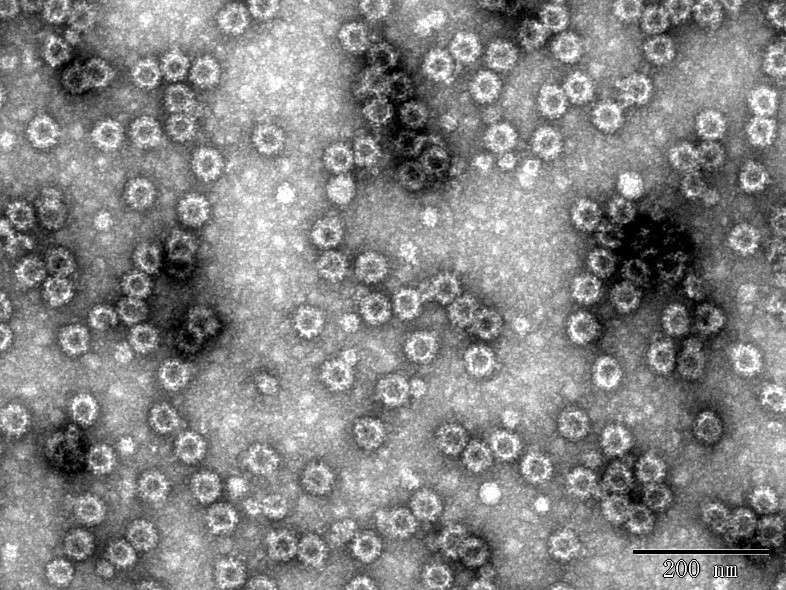
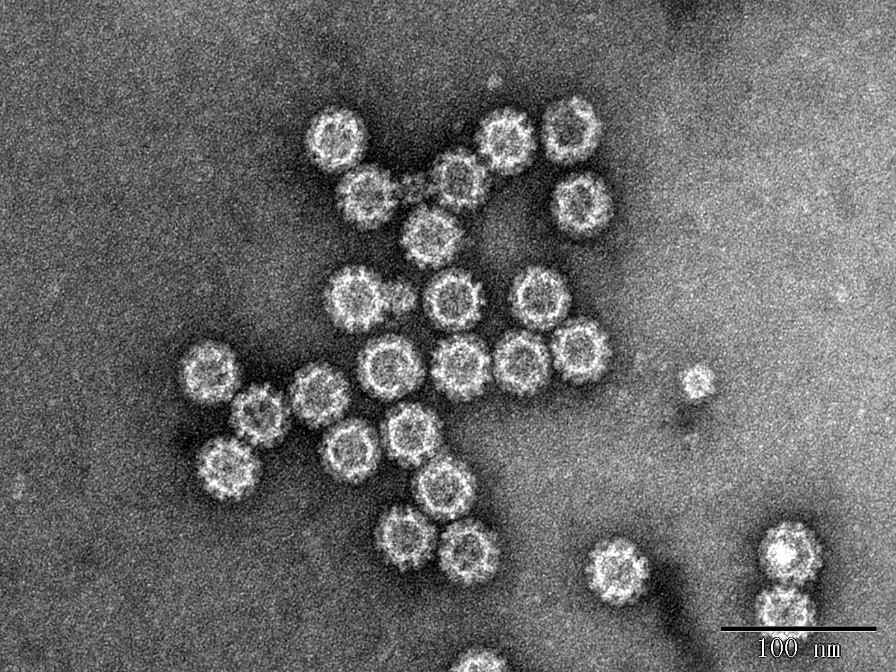
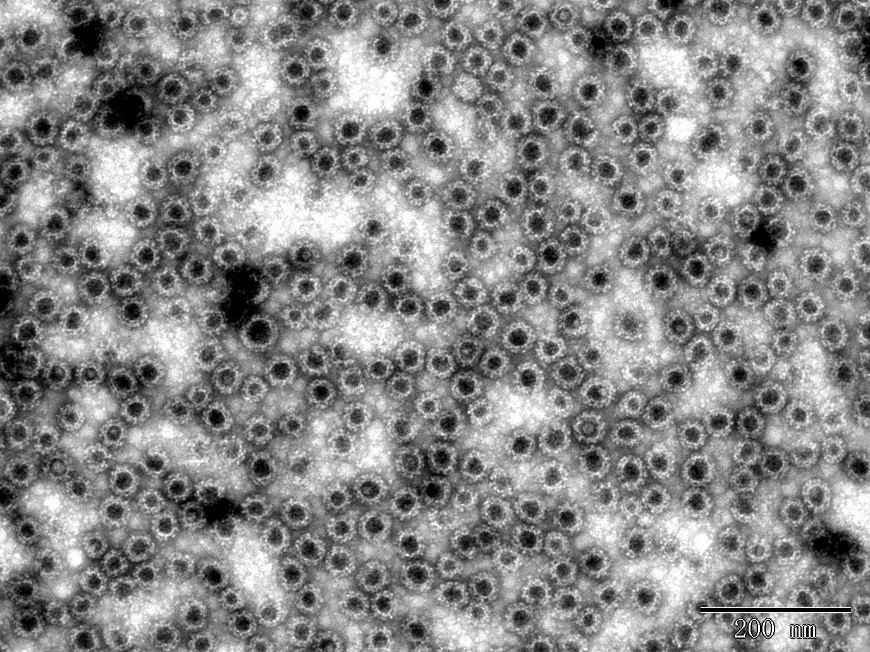
Creative Diagnostics has developed a range of yeast-expressed norovirus VLP antigens that can be used for in vitro diagnostics and vaccine research. They have been validated to a high degree of confidence using electron microscopy.
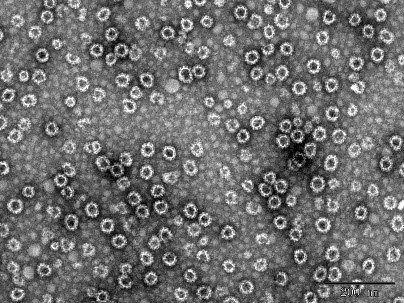 Fig. 2 NoV GI.1 VLP (DAG-WT2451)
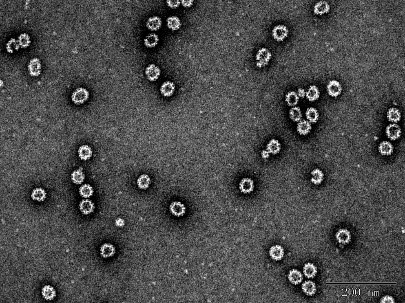 Fig. 3 NoV GII.2 VLP (DAG-WT2452)
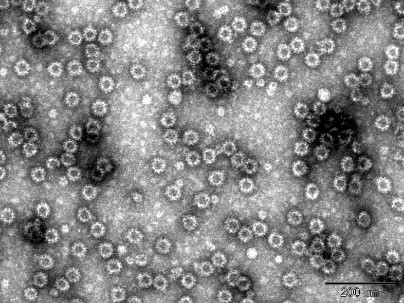 Fig. 4 NoV GII.3 VLP (DAG-WT2452)
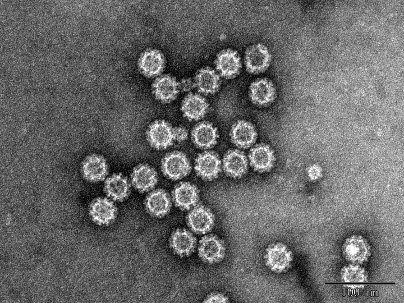 Fig. 5 NoV GII.4 VLP (DAG-WT2454)
 Fig. 6 NoV GII.6 VLP (DAG-WT2455)
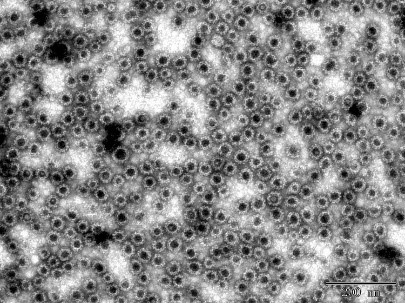 Fig. 7 NoV GII.13 VLP (DAG-WT2456)
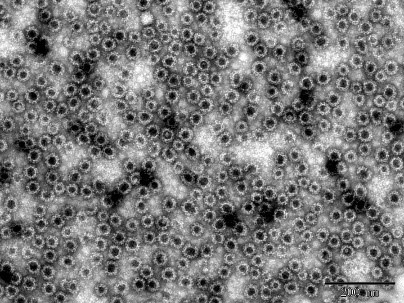 Fig. 8 NoV GII.17 VLP (DAG-WT2457)
References
| Cat. No. | Product Name | Source | Application | |
| DAG-WT2451 | Recombinant Norovirus GI.1 VLP | Yeast | immunoassay | Inquiry |
| DAG-WT2452 | Recombinant Norovirus GII.2 VLP | Yeast | immunoassay | Inquiry |
| DAG-WT2453 | Recombinant Norovirus GII.3 VLP | Yeast | immunoassay | Inquiry |
| DAG-WT2454 | Recombinant Norovirus GII.4 VLP | Yeast | immunoassay | Inquiry |
| DAG-WT2455 | Recombinant Norovirus GII.6 VLP | Yeast | immunoassay | Inquiry |
| DAG-WT2456 | Recombinant Norovirus GII.13 VLP | Yeast | immunoassay | Inquiry |
| DAG-WT2457 | Recombinant Norovirus GII.17 VLP | Yeast | immunoassay | Inquiry |
a

b
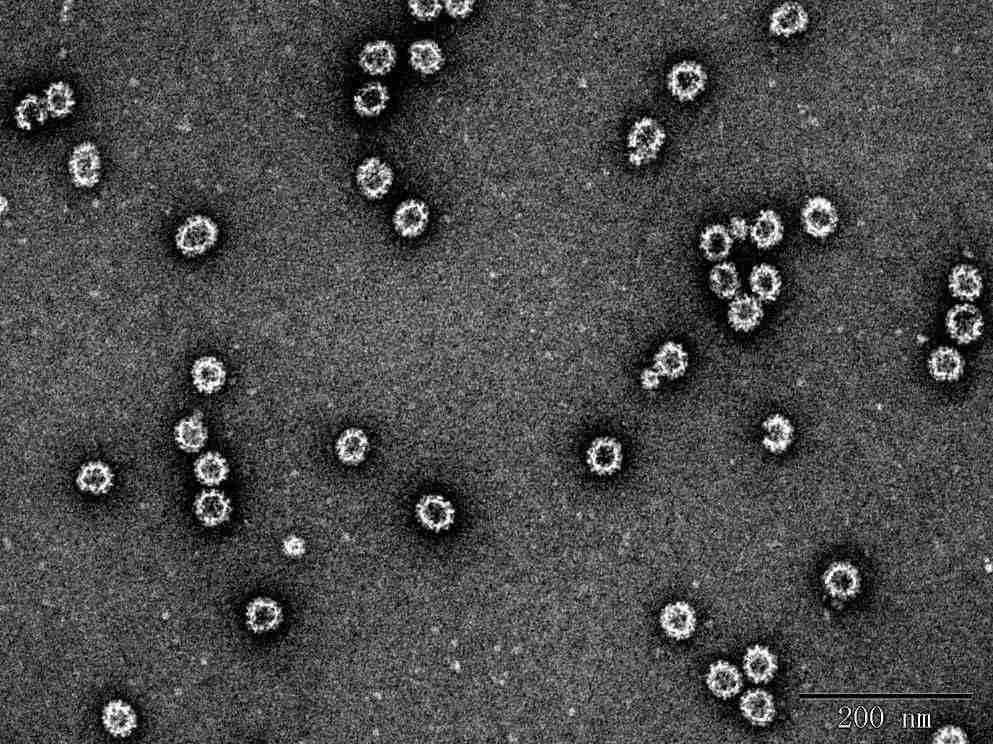
c
d
e

f
g
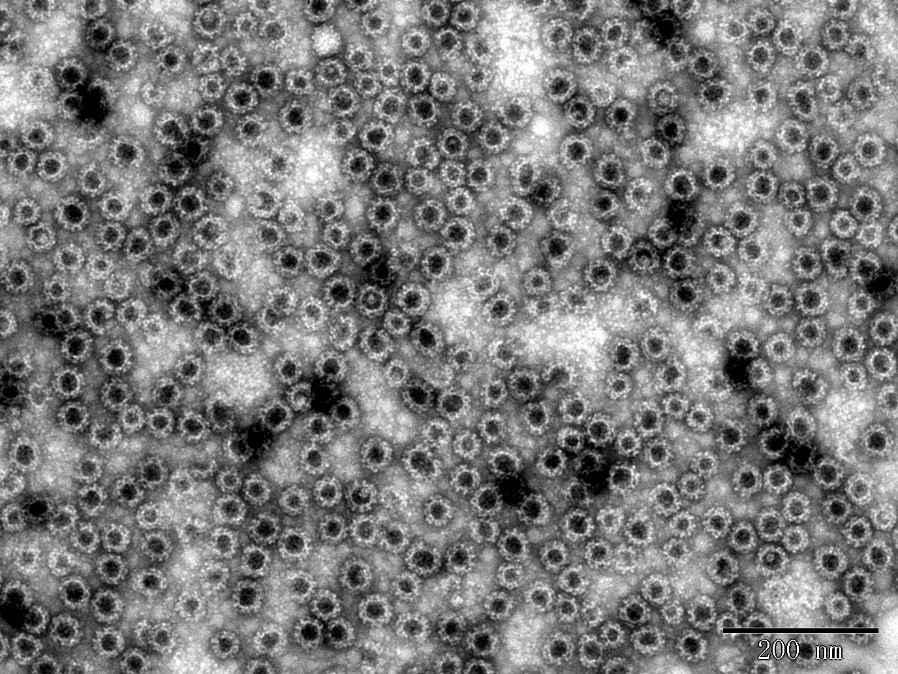
Fig. 2 TEM images of Norovirus VLP
a. NoV GI.1 VLP (DAG-WT2451).
d. NoV GII.4 VLP (DAG-WT2454).
g. NoV GII.17 VLP (DAG-WT2457)
b. NoV GII.2 VLP (DAG-WT2452).
e. NoV GII.6 VLP (DAG-WT2455).
c. NoV GII.3 VLP (DAG-WT2453)
f. NoV GII.13 VLP (DAG-WT2456)
Loading ......
