
Inquiry Basket
 Loading ......
In the field of clinical diagnostics, the measurement of biomarkers plays a crucial role in assessing various physiological processes and disease conditions. One such biomarker of significant interest is malondialdehyde (MDA), a reactive aldehyde produced during lipid peroxidation. Elevated levels of MDA are associated with oxidative stress, which is implicated in numerous pathological conditions, including cardiovascular diseases, neurodegenerative disorders, and cancer.
In biological systems, free radicals induce lipid peroxidation, a process that leads to the generation of malondialdehyde (MDA), a byproduct of oxidative stress. MDA can cause cross-linking and polymerization of vital biomolecules such as proteins and nucleic acids, exerting cytotoxic effects.
Free radicals are generated in the body through enzymatic and non-enzymatic systems, with the latter attacking polyunsaturated fatty acids in biomembranes, triggering lipid peroxidation and the subsequent formation of lipid peroxidation acids. The process of lipid peroxidation not only converts reactive oxygen species into non-radical lipid decomposition products but also amplifies the effects of reactive oxygen species through chain or branched-chain reactions. Thus, a single reactive oxygen species can initiate the formation of numerous lipid decomposition products, some of which are harmless, while others can disrupt cellular metabolism and function, leading to cell death. Oxygen free radicals not only cause cellular damage through the peroxidation of polyunsaturated fatty acids in biomembranes but also through the decomposition products of lipid hydroperoxides. The end product of lipid oxidation, MDA, not only affects the activity of mitochondrial respiratory chain complexes and key enzymes within mitochondria but also exacerbates membrane damage. Therefore, measuring the level of MDA indirectly reflects the extent of lipid peroxidation and, consequently, the degree of cellular damage.
As the final product of lipid peroxidation, MDA has been used as a biomarker for measuring oxidative stress in various biological samples, such as blood, urine, and exhaled breath condensate (EBC) in patients with various diseases, including cancer, cardiovascular disease, inflammatory diseases, and pulmonary and neurodegenerative diseases.
The formation of MDA begins with the initial extraction of a hydrogen atom from a polyunsaturated fatty acid (PUFA) by an oxidant, such as a free radical or reactive oxygen species. This creates an unstable lipid radical (L-), which then rapidly reacts with molecular oxygen to form a lipid peroxyl radical (LOO-). These peroxyl radicals can then abstract a hydrogen atom from another PUFA, propagating the chain reaction and producing lipid hydroperoxides (LOOH). The lipid hydroperoxides and peroxyl radicals can undergo further reactions, including cyclization and cleavage, which leads to the formation of MDA and other secondary products. MDA is the principal and most extensively studied compound derived from this process.
In addition to its formation during lipid peroxidation, MDA can also be enzymatically produced as a side product during the biosynthesis of thromboxane A2, a potent vasoconstrictor and pro-inflammatory mediator. The generation of MDA through these pathways can have significant biological consequences, as MDA is known to possess mutagenic and toxic effects.
Once formed, MDA can undergo different metabolic fates. It may be broken down by enzymes, particularly aldehyde dehydrogenase in the mitochondria. Alternatively, MDA can covalently bind to proteins and nucleic acids, creating DNA-protein crosslinks and damaging adducts. Additionally, some MDA is excreted in the urine. The interactions and modifications of MDA lead to the generation of various MDA epitopes that engage the innate immune system. These MDA epitopes are associated with the expression of pro-inflammatory genes and the activation of downstream signaling pathways, including protein kinase-C, p38-MAPK, ERK1/2, and NF-κB, which play crucial roles in regulating inflammatory responses.
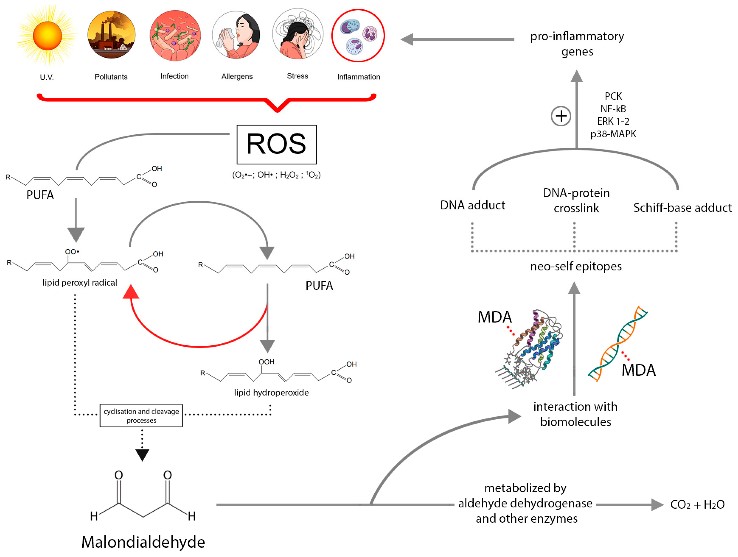 Figure 1. Graphic representation of MDA synthesis and metabolism.
(Source: Cordiano, R. et al., 2023)
Reference
| Target | Cat. No. | Product Name | Host | Isotype | Application | |
| MDA | DPAB-DC4508 | Anti-MDA polyclonal antibody | Rabbit | IgG | WB, IHC, ELISA | Inquiry |
| DPATB-H82977 | Anti-Malondialdehyde polyclonal antibody | Goat | IgG | ELISA, WB, Conjugation | Inquiry | |
| DPATB-H83118 | Anti-Malondialdehyde polyclonal antibody | Rabbit | IgG | WB, IHC-Fr, ELISA, IHC-P | Inquiry | |
| DPATB-H82688 | Anti-Malondialdehyde (conjugated) polyclonal antibody | Rabbit | IgG | ELISA, IHC-Fr, ICC | Inquiry | |
| DPAB1029 | Anti-Malondialdehyde polyclonal antibody | Goat | WB, ELISA | Inquiry | ||
| DPBT-66793GM | Anti-Malondialdehyde polyclonal antibody | Goat | IgG | IHC, ELISA, FC, IP, WB | Inquiry | |
| DPATB-H82976 | Anti-Malondialdehyde polyclonal antibody [Biotin] | Goat | IgG | ELISA, WB | Inquiry | |
| DPATB-H82973 | Anti-Malondialdehyde polyclonal antibody [FITC] | Goat | IgG | ICC, IF | Inquiry | |
| DPATB-H82948 | Anti-Malondialdehyde polyclonal antibody [HRP] | Goat | IgG | ELISA, WB | Inquiry | |
| CABT-B1071 | Magic™ Anti-Malondialdehyde monoclonal antibody, clone 2G94 | Mouse | IgG2a, λ | IHC | Inquiry |
| Target | Cat. No. | Product Name | Expression System | Tag/Conjugate | Application | |
| MDA | DAG3366 | Malondialdehyde [BSA] | N/A | BSA | IHC, ICC | Inquiry |
| Target | Cat. No. | Product Name | Size | Species | Application | Detection Sample | |
| MDA | DEIASL349 | Rat Malondialdehyde ELISA Kit | 96T | Quantitative | Serum, plasma, tissue homogenates and other biological fluids | Inquiry | |
| DEIA3918 | MDA(Malondialdehyde) ELISA Kit | 96T | Universal | Quantitative | Serum, plasma, tissue homogenates and other biological fluids. | Inquiry |
Loading ......
