
Inquiry Basket
 Loading ......
Immuno-based enzyme-linked signal amplification methods have been used for decades to detect and localize low copy number protein, mRNA, and other small molecules or probes present in tissue by immunohistochemistry, in situ hybridization, western blot and ELISA. Earlier amplification methods, for example using biotinylated secondary antibodies and streptavidin-conjugated reporters, are based on the formation of layers or complexes of immunocytochemical reagents. Enzyme-base amplification methods instead rely on a catalytic reporter deposit (CARD) and can increase signal relative to conventional fluorescent probes by as much as 100-fold. Alkaline phosphatase (AP) and horseradish peroxidase (HRP) are the most commonly used enzymes conjugated to secondary antibodies for immunohistochemical detection. Compared to AP, HRP is smaller, more stable, and less expensive than alkaline phosphatase and has a high turnover rate that allows for the rapid generation of strong signals.
A primary consideration is to weigh the advantages of a fluorescent signal versus a chromogenic reaction product visible with simple bright-fi eld optics. Indeed, HRP-mediated CARD can produce either a chromogenic or fluorometric reaction product depending of the substrate added; for example 3,3′-diaminobenzidine (DAB) or dye-coupled tyramide respectively. Although yielding a rapid dark brown chromogenic precipitate that is compatible with tissue dehydration, numerous counterstains, and is highly stable, DAB is a teratogenic compound that needs to be disposed as a biohazard. Fluorescent dye-coupled tyramide is safer and more amenable to multi-labeling procedures using fluorophores with distinct excitation/emission spectra.
TSA was developed in the early 1990s and uses HRP to catalyze the deposition of labeled tyramide molecules at the site of probe or epitope detection. Tyramide is converted by HRP into a highly reactive oxidized intermediate which binds rapidly and covalently to electron-rich tyrosine residues present in GFP or other proteins in close proximity to the epitope.
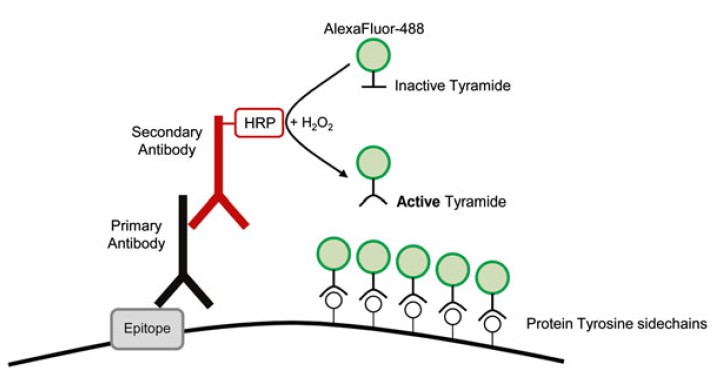 Figure 1. Schematic illustrating Tyramide signal amplification strategy.
TSA can therefore provide better spatial resolution compared to other HRP or AP-based methods where reaction products may diffuse from the sites of enzyme activity. In addition to the direct TSA system where tyramide is conjugated directly to the fluorophore, modifications have been developed to further increase sensitivity by coupling tyramide to haptens, such as biotin or dinitrophenyl (DNP), which have multiple binding sites and can then be detected by reporter-bound streptavidin or antibodies. For instance, biotinylated tyramide has proven useful to reveal various tissue antigens with high resolution by electron microscopy.
The enhanced sensitivity provided by TSA allows one to decrease the concentration of primary antibody from 2 to 50-fold relative to classical approaches with reporter-conjugated secondary antibodies, generating a highly specific signal with low background signal. Primarily used for detection of low copy number mRNA by fluorescent in situ hybridization (ISH), further uses of TSA include enhancement of low expression level protein signal by immunohistochemistry and dual fluorescent labeling. In immunohistochemistry, TSA may also reveal otherwise undetectable proteins in subcellular compartments such as axons and dendrites.
We describe here the methods for the use of the TSA kit, though similar kits are available from other vendors. Though a variety of target species and fluorophores are available, this kit includes goat anti-rabbit secondary antibody coupled to HRP and Alexa Fluor-488-coupled tyramide—this green light emitting fluorophore is brighter and more photostable than earlier generation fluorophores such as fluorescein. As an example procedure we have stained coronal brain sections from a bacterial artificial chromosome transgenic (BAC-Tg) mouse line expressing enhanced green fluorescent protein (GFP) under the control of Slc17a6 regulatory elements to visualize neurons that express the vesicular glutamate transporter (VGLUT2). Subsets of, presumably high expressing, VGLUT2+ neurons display sufficient intrinsic fluorescence for visualization in fresh tissue. However, following aldehyde fixation, GFP fluorescence is significantly quenched and immunohistochemical procedures are required. Here we performed a side-by-side comparison of the signal obtained with a conventional method versus TSA-enhanced immunolabeling. Using low concentrations of primary antibody, TSA generated less background signal, brighter cell bodies and revealed subcellular compartments that were otherwise subthreshold. TSA can therefore be an excellent strategy to conserve valuable primary antibodies and enhance signal-to-noise, particularly for high-background antibodies or low-copy number epitopes.
All solutions are prepared using double-distilled water (ddH2O, 18 MΩ) and prepared and stored at room temperature unless indicated otherwise.
Immunohistochemistry Materials
1. Sample preparation and fixation methods will vary by tissue type, species and epitope. For the example experiment described below we deeply anesthetized an 18-week-old BAC-Tg. VGLUT2-GFP mouse with ketamine and xylazine, transcardially perfused with 10 mL of ice-cold phosphate-buffered saline (PBS) followed by 50 mL 4 % paraformaldehyde (PFA) dissolved in PBS. The brain was harvested, post-fixed overnight at 4 °C in 4 % PFA, cryoprotected in 30 % sucrose, frozen in superchilled (on dry ice) isopentane and stored at−80 °C. The brain was transferred to a cryostat chamber and allowed to equilibrate to−20 °C before cutting 30-μm sections, and sections were transferred to wells in a 48-well plate containing PBS plus 0.01 % sodium azide (see Note 1).
2. Small thin brushes: Da Vinci Ussuri red sable brushes no. 0, 1, and 2.
3. Pasteur glass pipettes melted and curved into a hook under a flame.
4. Non-coated 24-well culture plates, sterile, with lid.
5. Microscope slides, Superfrost Plus, pre-cleaned, 25 × 75 × 1.0 mm.
6. Cover glass, thickness 1½, 22 × 50 mm, Corning.
7. Transfer pipets.
8. Petri dish, 5.5 in. diameter. Polyethylene slide holder.
Immunohistochemistry Reagents
9. Polyclonal rabbit anti-green fluorescent protein, 2 mg/mL. Upon receipt add equal volume 100 % glycerol and store at−20 °C (stock concentration 1 mg/mL).
10. Donkey anti-rabbit conjugated to Alexa Fluor-488. Upon receipt reconstitute in lyophilized antibody in 0.5 mL of 50 % glycerol (1 mg/mL) and store at−20 °C. This antibody is used in the conventional immunostaining protocol.
11. Phosphate Buffered Saline, 10× solution, Fisher. Prepare 1 L of PBS by diluting 10× PBS 1:10 in ddH2O and store at 4 °C.
12. 0.2 % Triton X-100 in PBS. Prepare 1 L of PBS and add 2 mL of Triton X-100 (PBS-T); used for washes and incubation with antibodies in conventional immunohistochemistry method. Store at 4 °C.
13. Normal Donkey Serum (NDS). NDS is used at a concentration of 4 % in PBS-T solution. PBS-T + 4 % NDS is used for blocking nonspecific sites of labeling in the conventional immunostaining protocol. Prepare only the amount necessary for the experiment and use fresh.
14. Sodium azide. To prepare preservation buffer for free-floating sections, add 100 mg of sodium azide to 1 L of PBS to obtain a fi nal concentration of 0.01 % sodium azide. Store at 4 °C.
15. Mounting medium: Fluoromount-G.
16. DAPI, 4′,6-diamidino-2-phenylindole, 20 mg/mL. DAPI binds strongly to A-T rich regions in DNA and is used as a nuclear counterstain. When bound to doublestranded DNA DAPI has a maximum emission wavelength at 461 nm (blue). DAPI is dissolved 1/2,000 (0.01 mg/mL) in Fluoromount-G mounting medium. Store at 4 °C, protected from light.
TSA Amplification Kit
17. In order to amplify the endogenous GFP signal we used the rabbit anti-GFP primary antibody, from Invitrogen in association with the TSA Kit: Tyramide coupled to Alexa Fluor-488 (Component A). Labeled tyramide is provided as a powder and dissolved in 150 μL of DMSO (Component B). Dissolve the powder in DMSO inverting the vial several times. To minimize freeze- thaw cycles, stock the solution in small aliquots of 5–10 μL, depending of the quantities required for individual experiments. Store aliquots at−20 °C, protected from light.
18. Dimethylsulfoxide, DMSO (Component B), 200 μL.
19. Horseradish peroxidase (HRP)-conjugated goat anti-rabbit (Component C), 100 μg. HRP-conjugated secondary antibody is reconstituted in 200 μL of PBS (0.5 mg/mL) (see Note 2). Filter PBS using a sterile 30 mm diameter and 0.22 μm PES membrane syringe filter. Solution can be stored up to 3 months at 4 °C.
20. Blocking reagent (Component D), 3 g. Dissolve 10 mg of component D in 1 mL of PBS to prepare a 1 % blocking reagent solution (10 mg/mL). Blocking reagent solution should be prepared only when needed for immediate use. Store stock powder desiccated at−20 °C.
21. Amplification buffer (Component E), 25 mL (contains thimerosal at 0.02 %).
22. Hydrogen peroxide (30 %) stabilized solution in water (H2O2; Component F), 200 μL.
1. Immunostaining performed on 30 μm-thick fixed brain sections (see Note 3). Up to six sections are placed per well in a 24-well plate (see Note 4). It is important to not let brain sections dry during solution changes (see Note 5). Proceed with a thin brush or a smooth hooked glass Pasteur pipette to transfer sections from one well to another without damage. All incubation steps are performed in 1 mL/well with gentle agitation (35–50 rotations/min) and at room temperature unless otherwise specified (see Note 6).
2. Rinse to eliminate sodium azide residues: three 5–10 min rinses with PBS.
3. Permeabilize tissue with detergent to increase antibody penetration: one rinse with PBS-T for 5–10 min (see Note 7).
4. Peroxidase quenching to reduce background signal (see Note 8): stock solution is 30 % H2O2 in water (Component F). Dilute 100 μL of H2O2 stock solution in 2.9 mL of PBS to obtain 1 % H2O2 final solution. Incubate tissue in 1 % H2O2 for 20 min (see Note 9).
5. Remove residual H2O2: three 5–10 min rinses with PBS (see Note 10).
6. Block nonspecific binding sites: incubate with 1 % blocking reagent for 1 h (see Note 11). 1 % blocking reagent is prepared using 10 mg/mL Component D in PBS. Prepare the final volume necessary for blocking, primary antibody and secondary antibody incubations. If primary antibody incubation is planned overnight, prepare only the quantity necessary for blocking and the primary antibody incubation and prepare fresh blocking solution on day 2 for the secondary antibody incubation.
7. Primary antibody: dilute primary antibody in blocking solution and incubate 2 h at room temperature or over-night at 4 °C (see Note 12). We used a rabbit anti-GFP diluted in 1 % blocking reagent solution (see Note 13). Concentration of the primary antibody should be reduced from 2- to 50-fold compared to the concentration used for conventional immunohistochemistry. We routinely use the anti-GFP antibody diluted between 1:1,000 and 1:2,000 (0.001–0.0005 mg/mL) in the conventional protocol. Using the TSA kit, the optimal concentration of anti-GFP was empirically determined to be between 1:4,000 and 1:10,000 (0.00025–0.0001 mg/mL).
8. Wash out primary antibody: three 5–10 min rinses with PBS.
9. HRP-conjugated secondary antibody: incubate sections for 2 h at room temperature (0.4–1 mL/well). The HRP conjugated secondary goat anti rabbit antibody is diluted 1:100 (0.005 mg/mL) in the 1 % blocking reagent solution (see Note 14).
10. Wash out secondary antibody: three 5–10 min rinses with PBS. 11. Prepare TSA buffer: during final rinse in step 10, activate TSA buffer (Component E) with 0.0015 % of H2O2 (Component F) (see Note 15). Proceed in two steps to obtain a final concentration of 0.0015 % H2O2 using as little amplification buffer as possible. For example, for a volume of 1.2 mL, first add 1 μL of 30 % H 2 O 2 solution to 19 μL of amplification buffer (dilution 1/20), then add 1.2 μL of this intermediate dilution to 1.2 mL of amplification buffer (dilution 1/1,000) to obtain a final dilution of 1/20,000 (from 30 to 0.0015 % H2O2).
12. Tyramide signal amplification: incubate sections in prepared tyramide working solution (0.4–1 mL/well) for 5–10 min at room temperature (see Note 16). Alexa Fluor-488-tyramide stock solution is diluted 1/100 in the activated TSA buffer. The tyramide working solution has to be prepared at the last moment to avoid early interaction between tyramides and H2O2 and kept protected from direct light to preserve fluorescent dyes.
13. Wash out TSA solution: three 5–10 min rinses with PBS.
14. Mount sections on slides: fill a large petri dish (5.5 in. diameter) with PBS and immerse slide and sections in it. Using the brush, gently position and fix the sections to the charged surface of a pre-labeled slide.
15. Dry slides: place in slide holder in a nearly vertical position for 10 min.
16. Rinse slides: briefly rinse slides with ddH2O by submersion in a 50 mL conical Falcon tube. Dry for 10 min.
17. Coverslip: deposit Fluoromount-G mounting medium with DAPI (0.01 mg/mL) on the slides and apply coverslip. Add 0.5 μL of DAPI stock solution (20 mg/mL) to 1 mL of Fluoromount–G to obtain a fi nal concentration of 0.01 mg/ mL. This Fluoromount + DAPI solution can be stored at 4 °C protected from light for 2 weeks. The amount of mounting medium laid on the slide depends on the number of sections mounted per slide, but is typically 100–150 μL (see Note 17). Mounted slides are kept at 4 °C protected from light (see Note 18).
18. Image slides: image the immunolabeled sections using a fluorescent microscope. We used 10× (N.A: 0.45) objective of a Zeiss Axio Observer VivaTome Inverted Fluorescence Microscope, and 20× (N.A: 0.8) and 40× (water immersion, N.A: 1.2) objectives of a ZEISS Confocal LSM 780 equipped with 405 and 488 nm laser lines. Use identical settings (e.g., exposure times, gain) for a given wavelength to compare immunostaining obtained with the TSA kit +/−no primary antibody control or a conventional immunostaining protocol.
Reference
Loading ......
