
Inquiry Basket
 Loading ......
Macrophages were initially identified by Elie Metchnikoff as cells that clear foreign pathogens. Macrophage cells are key players in the immune response, by ridding the body of worn-out cells, foreign substances, microbes and cancer cells, and alerting the immune system to the presence of invaders. Macrophage-based cell therapy is a growing field showing promise in treating cancer, spinal cord injury, and autoimmune disease.
Macrophages are a type of white blood cell that play an important role in the human immune system and carry out various functions including engulfing and digesting microorganisms, clearing out debris and dead cells, and stimulating other cells involved in immune function. Macrophages confer innate immunity, typically the first line of defense against foreign antigens. In addition to having an immune role, macrophages also secrete anti-inflammatory cytokines (i.e., small signaling proteins) and help mediate reparative processes.
Macrophages form from monocytes, which themselves derive from the bone marrow. Monocytes circulate through the blood for one to three days before migrating into tissues, where they become macrophages or dendritic cells (i.e., a type of antigen-presenting cell that plays a role in linking the innate and adaptive immunity). Macrophages can be found within many organs in the body, including the liver, brain, bones, and lungs, as well as in the blood, particularly at sites of infection.
Based on phenotypes and functions, macrophages can be typically divided into M1 (proinflammatory, classically activated macrophages) and M2 (anti-inflammatory, alternatively activated macrophages) types. In brief, M1 macrophages can be induced by IFN-γ, LPS, TNF-α or GM-CSF, followed by activation of Toll-like receptor signaling pathways. They play a positive role in the removal of pathogens and tumor cells. M2 macrophages can be induced by cytokines, such as IL-4, IL-13, glucocorticoids, M-CSF/CSF1, IL-10, IL-33, IL-21, and TGF-β. Accompanied by increased production of polyamines and ornithine through the arginase pathway, high secretion of IL-10, PGE2, TGF-β, but low IL-12, they are major participants in the clearance of parasites and homeostasis, such as tissue remodeling and regeneration, wound healing and anti-inflammation.
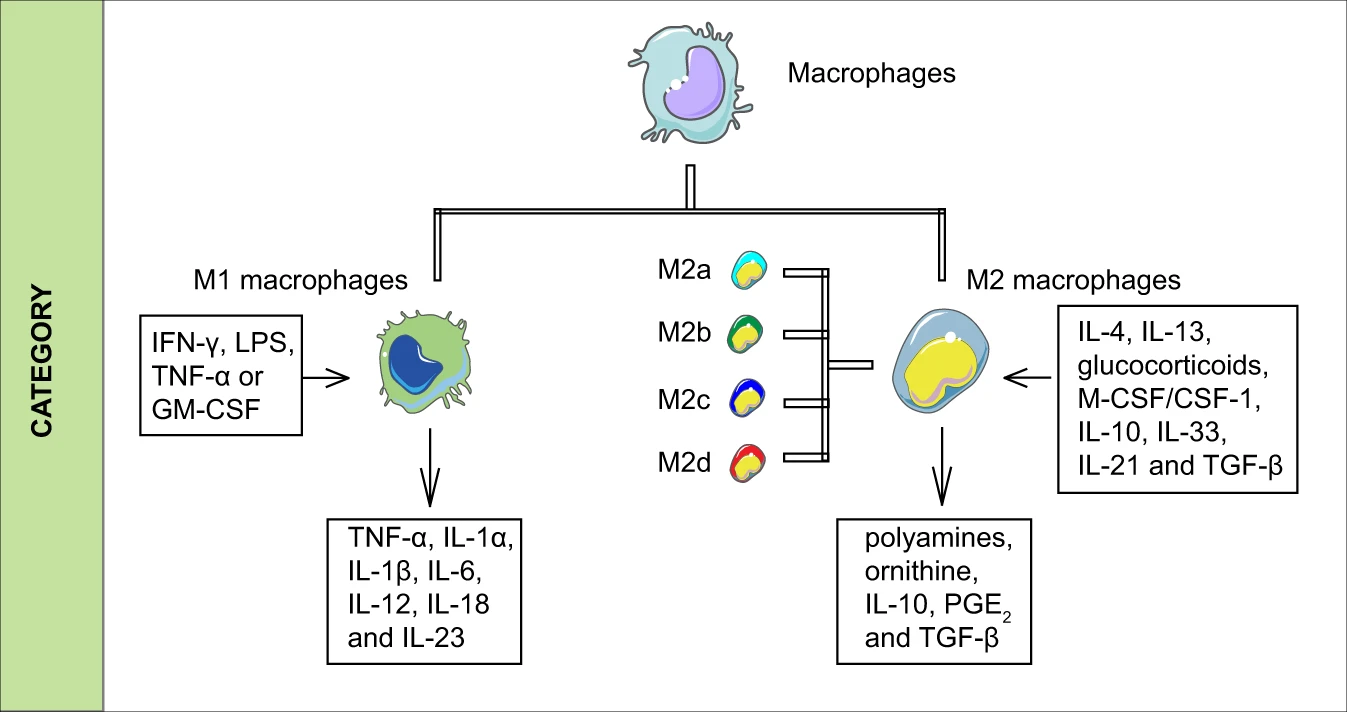 Fig. 1 Categories of Macrophages
To be distinguished from other immunocytes, macrophages can be characterized by phagocytosis and the expression of CD11b, F4/80, and CSF1R in mice or CD79, CD163, CD16, CD312, and CD115 in humans. Specifically, to present antigens and activate adaptive immune responses, M1 macrophages often express high levels of MHC class II molecules and costimulatory molecules, such as CD40, CD80, and CD86, while M2 macrophages contain upregulated levels of endocytosis-related receptors, such as the human scavenger receptors CD163 and Stabilin-1 and C-type lectin receptors, including CD206, CD301, detin-1 and CD209. In addition to the proinflammatory or anti-inflammatory cytokines mentioned above, polarized macrophages generate different types of chemokines. CXCL9, CXCL10, CXCL11, and CCL5 are usually secreted by M1 macrophages to recruit Th1, Th17, and cytotoxic T cells, while CCL2, CCL17, CCL18, CCL22, and CCL24 are produced by M2 macrophages in most cases.
Macrophages have great potential as cellular therapeutic sources. Their outstanding regenerative capacity could directly aid tissue reconstruction in injured organs, such as the intestines, skin, liver, heart, kidneys, and lungs. Their phagocytic ability could be used to clear cancer cells or neurodegenerative materials as well as infectious agents. As efficient pro-inflammatory regulators, they could be applied to suppress inflammation and deliver active tissue-healing substances. Below are some of the more noteworthy applications:
a. Ex vivo activated PBMC-derived macrophages promote skin wound healing via the secretion of growth factors and anti-inflammatory cytokines.
b. Transferred macrophages efficiently clear accumulated neurotoxic materials.
c. Genetically engineered CAR-M eradiate cancer cells.
d. A specific subtype of macrophages reducesEC M contents around the heart injury site and promotes regeneration.
e. Transferred macrophages clear excessive surfactant and resolve the pathology of PAP.
f. Macrophages secrete CXCL1 and WNT to coordinate damaged intestinal epithelial cell regeneration.
g. Regenerative macrophages can resolve fibrosis and promote hepatocyte regeneration.
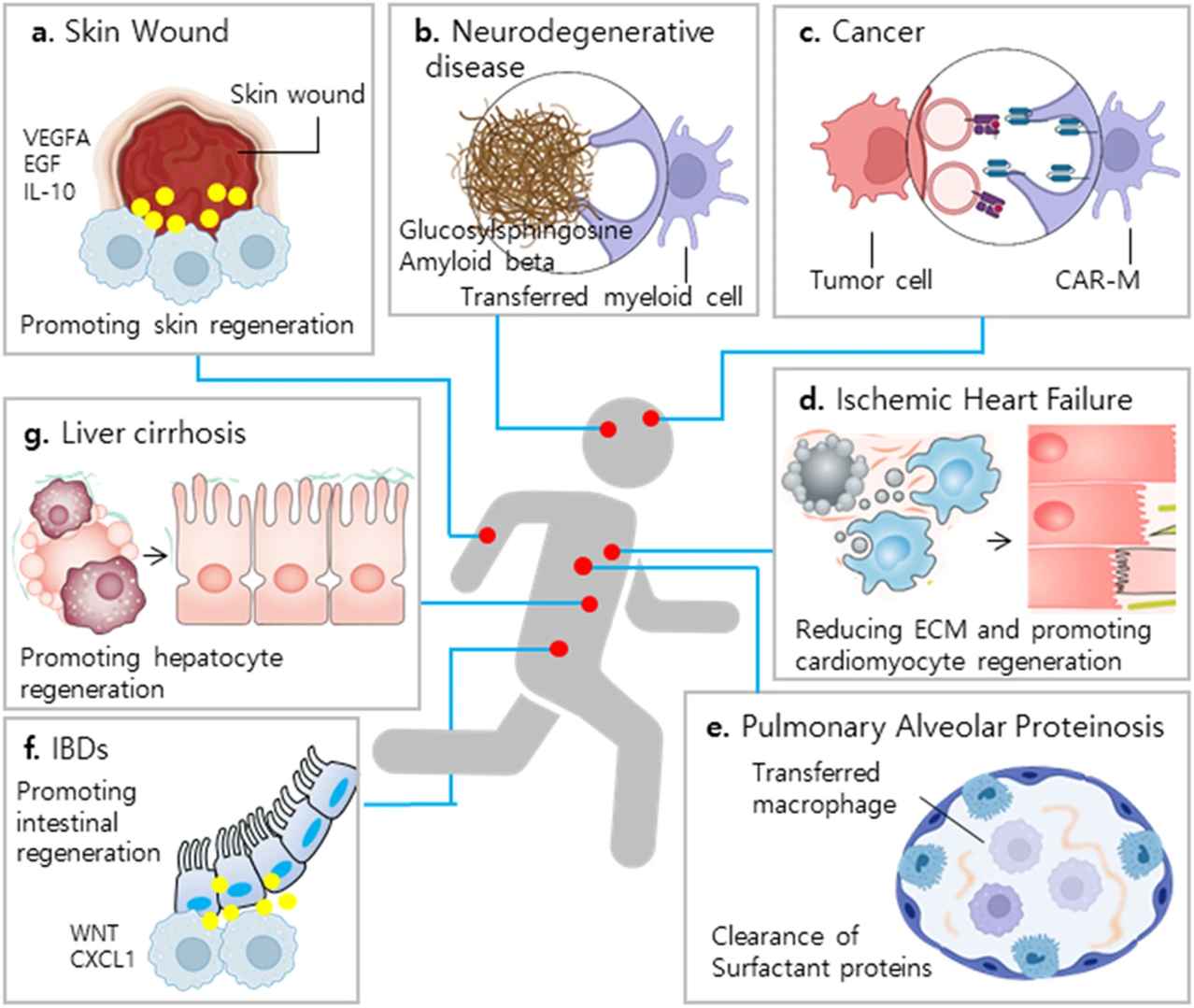 Fig. 2 New therapeutic frontiers in macrophage-based cell therapy
Loading ......
