
Inquiry Basket
 Loading ......
LacZ, also known as β-galactosidase or β-gal, is a proteolytically stable 1024–amino acid protein which can be used as an affinity tag to increase expression of fusion proteins in E. coli. LacZ fusion proteins can be purified by substrate affinity chromatography on immobilized p-amino-phenyl-β-D-thio-galactosidase (APTG) and eluted with a high pH borate buffer. Detection is then achieved using a colorimetric enzymatic assay. LacZ is relatively immunologically neutral and so it is a useful fusion partner for the generation of antibodies to a protein of interest.
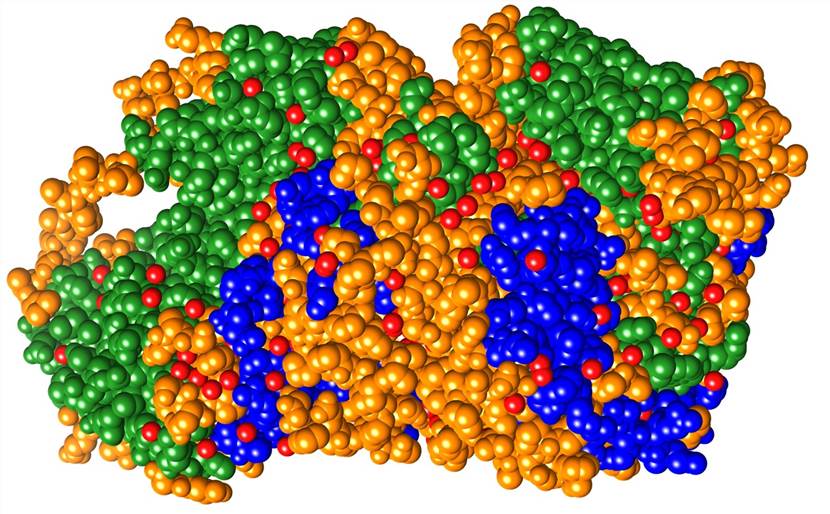 Fig 1. Beta galactosidase monomer 3D illustration.
The positive color of LacZ is dark blue, and the stained part is the part where the target gene is knocked out, so it is the localization of the reporter gene. The LacZ gene is a gene widely used in the study of gene expression regulation. In 1969, a research team headed by Dr. Beckwith of Harvard University isolated the gene for the first time by using DNA molecular hybridization technology. The β-galactosidase encoded by the LacZ gene (abbreviated as β-gal) is a tetramer composed of 4 subunits, which can catalyze the hydrolysis of lactose. Beta-gal is relatively stable, and when stained with X-Gal as a substrate, it turns blue, which is convenient for detection and observation. The many advantages of the LacZ gene make it a common marker gene in genetic engineering experiments, such as commonly used in the screening of transformed strains, β-galactosidase color reaction selection method, that is, blue-white screening. For example, the plasmid vector PUC 19 and the phage vector M13 series commonly used in gene cloning all carry the LacZ gene. The principle of lacZ color development: When foreign DNA is inserted into the vector lacZ marker gene, the β-galactosidase gene is inactivated, so the color of the colonies of E. coli transformants in the medium supplemented with X-gal-IPTG is determined by the color change from blue to white colonies was directly observed.
Because of its extremely large size and tendency to form homotetramers in solution, the LacZ affinity tag can alter the functional activity of the purified fusion protein. In addition, LacZ fusion proteins are often insoluble. This insolubility has advantages and disadvantages: protein targeting to inclusion bodies can allow the expression of gene products that are toxic to E. coli, but because LacZ must be correctly folded to bind APTG, LacZ fusion proteins must be refolded prior to purification and/or detection. β-galactosidase is composed of four identical subunits, each of which contains two fragments, the α and ω fragments. Only when these two fragments are present at the same time, β-galactosidase shows activity. The mutation or deletion of lacZ gene will directly lead to the loss of β-galactosidase activity, and the cells cannot grow in the medium with only lactose as the carbon source, which can be used for strain screening and purification.
Loading ......
