
Inquiry Basket
 Loading ......
In recent years, the use of polyethylene glycol (PEG) has gained significant attention in various fields, including drug delivery, diagnostics, and biotechnology. PEGylation, the process of covalently attaching PEG molecules to therapeutic proteins and nanoparticles, has been widely employed to enhance their stability, solubility, and circulation time in the body. However, the emergence of anti-PEG antibodies has posed challenges to the efficacy and safety of PEGylated products.
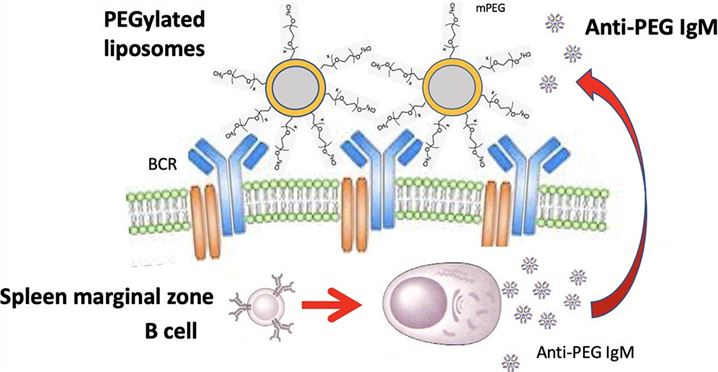 Figure 1. Diagram of PEGylated nano-biopharmaceuticals.
(Source: Kozma, G. T. et al., 2020)
Conjugating polyethylene glycols (PEGs) to proteins or drug delivery nanosystems is a widely used technique to enhance the effectiveness of complex nano-biopharmaceuticals. However, these drugs and agents can often trigger an immune response, leading to the production of anti-drug antibodies (ADAs). Among these ADAs, anti-PEG IgG and IgM have been identified as significant contributors to the loss of drug efficacy. This is primarily attributed to two phenomena: accelerated blood clearance (ABC) and hypersensitivity reactions (HSRs).
The rise of anti-PEG IgG and IgM antibodies poses a significant challenge in the development and clinical use of PEGylated drugs and nanosystems. These immunogenic responses can compromise the therapeutic index of these complex nano-biopharmaceuticals, limiting their efficacy and potentially causing serious adverse reactions in patients.
To address the challenges posed by anti-PEG antibodies, several strategies have been explored to mitigate their impact on PEGylated products. These strategies include:
Accurate detection of anti-PEG antibodies is crucial for assessing the immunogenicity of PEGylated products and evaluating their potential risks. Several methods have been developed to detect and quantify anti-PEG antibodies, including:
References
| Target | Cat. No. | Product Name | Size | Species Reactivity | Application | Detection Sample | |
| PEG | DEIA-JY2311 | Rabbit Anti-PEG IgG ELISA | 96T | Rabbit | Quantitative | Serum or plasma | Inquiry |
| DEIA-JY2312 | Rabbit Anti-PEG IgM ELISA | 96T | Rabbit | Quantitative | Serum or plasma | Inquiry | |
| DEIASL243 | Human Anti-PEG IgG ELISA Kit | 96T | Quantitative | serum, plasma | Inquiry | ||
| DEIASL244 | Human Anti-PEG IgM ELISA Kit | 96T | Quantitative | serum, plasma | Inquiry | ||
| DEIASL085 | Rat anti-PEG IgG ELISA Kit | 96T | Quantitative | serum, plasma | Inquiry | ||
| DEIASL086 | Rat anti-PEG IgM ELISA Kit | 96T | Quantitative | serum, plasma | Inquiry | ||
| DEIASL087 | Monkey anti-PEG IgG ELISA Kit | 96T | Quantitative | serum, plasma | Inquiry | ||
| DEIASL088 | Monkey anti-PEG IgM ELISA Kit | 96T | Quantitative | serum, plasma | Inquiry | ||
| DEIA6160 | Mouse anti-PEG IgM ELISA Kit | 96T | Quantitative | Serum | Inquiry | ||
| DEIA6158 | High Sensitivity Polyethylene Glycol (PEG) ELISA Kit | 96T | N/A | Quantitative | Serum,plasma | Inquiry | |
| DEIA6159 | Mouse anti-PEG IgG ELISA Kit | 96T | Quantitative | Serum | Inquiry | ||
| DEIABL237 | Polyetheylene Glycol ELISA Kit | 2 x 96T | Quantitative | serum, plasma | Inquiry | ||
| Corticosteroid | DEIA-XY26 | Corticosteroid ELISA kit | 96T | milk, urine, tissue, feed | Inquiry | ||
| DEIA-XYZ221 | Corticosteroid Group ELISA Kit | 96T | Human, Research Animal | Qualitative | human urine, blood, oral fluid | Inquiry |
Loading ......
