
Inquiry Basket
 Loading ......
Neutrophil elastase (NE), also known as serine elastase, leukocyte elastase, polymorphonuclear leukocyte elastase, and granulocyte elastase, is a serine protease expressed in primary neutrophils, which is released extracellularly and participates in hydrolysis reactions during the formation of neutrophil extracellular trap (NET) degranulation. NE hydrolysis accounts for approximately 80% of the body's total protease hydrolytic activity and breaks down a variety of substances, including elastin, collagen, and fibronectin, etc. In addition to its involvement in the body's inflammatory response, NE plays an important role in cancer.
Neutrophil elastase is a serine protease with a relative molecular weight of 29KDa encoded by the ELANE gene. NE synthesis begins with a 267-amino acid zymogen (inactive form) and undergoes four successive post-translational protein modifications to be completed. First, the 29 amino acid signal peptide was removed by signal peptidase cleavage. Then, the NE precursor was glycosylated at asparagine residues 109 and 159. In addition, the N-terminal dipeptide, SerGlu, is removed by the cysteine protease, Histone C. Subsequent cleavage of the dipeptide leads to a structural rearrangement of the N-terminal region, which is inserted into the protein core. Finally, the C-terminal propeptide is removed, resulting in 218 amino acid residues comprising the catalytically active enzyme. Neutrophil elastase contains an active center consisting of serine, histidine, and aspartic acid, forming a typical catalytic triad. NE has a relatively high degree of stability and is able to maintain activity under a wide range of different environmental conditions.
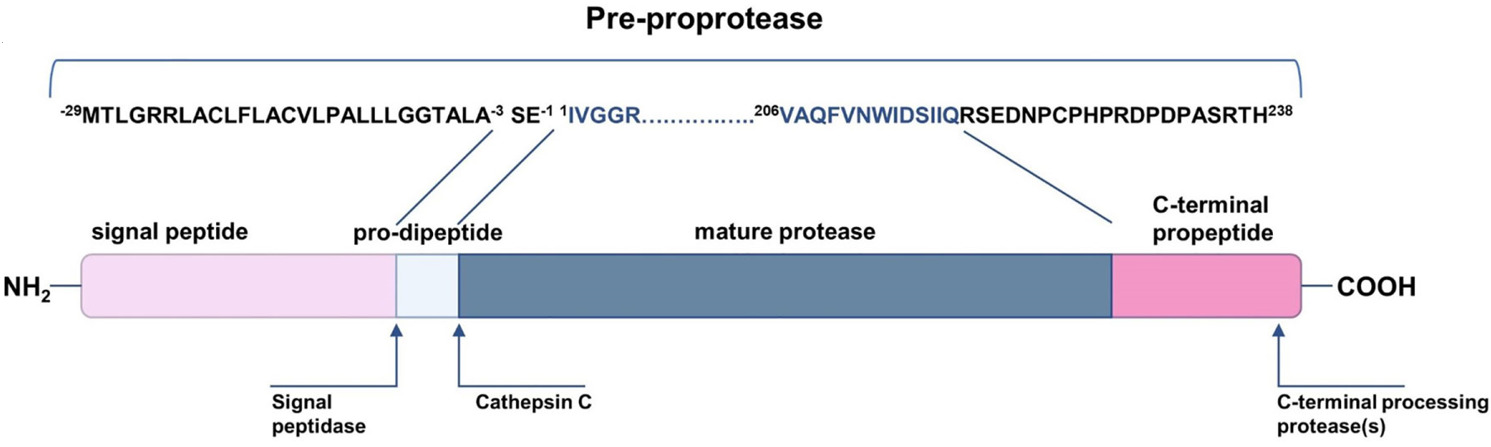 Figure 1. 267-residue preproprotein scheme and post-translational modification at both ends
(Source: Rydzynska Z, et al. 2021)
NE is closely associated with the inflammatory response and is not limited to the local inflammatory response, but also affects the systemic immune status. NE induces phosphorylation of the Src kinase family, promotes macrophage adhesion and cytokine production through the integrin-Src kinase pathway, and reduces macrophage phagocytosis of bacteria. During neutrophil activation, elastase can interact with cell surface receptors. NE initiates inflammation via Toll-like receptor 4 (TLR4). Intercellular adhesion molecule-1 (ICAM-1) is an integrin receptor molecule on the surface of several somatic cells. In the inflammatory response, NE activates ICAM-1 and promotes the aggregation of neutrophils and other immune cells, thereby intensifying and accelerating the inflammatory response. In addition, NE modulates the inflammatory response through the NF-κB pathway, and sivelestat affects the IKK pathway by inhibiting IκB phosphorylation and NF-κB activation, thereby inhibiting the inflammatory response. By inhibiting NE activity or expression, the intensity and duration of the inflammatory response can be reduced, ultimately improving the prognosis of the disease.
Neutrophils (NET) kill pathogenic bacteria via NE. NET is produced by activated neutrophils, which rapidly accumulate to the site of inflammation following inflammation through a multistep adhesion cascade. Following the onset of inflammation, neutrophils rapidly accumulate to the site of inflammation through a cascade reaction, after which they fight pathogens by phagocytosis, production of reactive oxygen species (ROS), and secretion of NE. However, when NE is over-activated, it leads to extracellular matrix (ECM) degradation and oxygen radical production, resulting in tissue inflammation and damage. At the same time, the damaged basement membrane releases laminin fragments that promote leukocyte migration and antioxidant factor recruitment, thereby accelerating the inflammatory process. In addition, NE can damage ECM components, including the vascular endothelium and fibronectin, leading to immune cell aggregation and fibrotic reactions.
 Figure 2. The specific process of the anti-infection effect of NE
(Source: Zeng W, et al. 2023)
NE can remodel the tumor microenvironment. The tumor microenvironment (TME) is a complex environment of cells, molecules, and extracellular matrix surrounding a tumor. NE has the potential to influence tumor cell proliferation, invasion, and metastasis, and plays a role in all stages of tumor development. Circulating neutrophils and myeloid-derived suppressor cells (MDSC) are implicated in patient survival and secrete NE and NET. NE activate chemokines, cytokines, and other growth factors that promote MDSC chemotaxis toward TME. Therefore, inhibition of NE activity may indirectly reduce MDSC infiltration.
NE promotes the growth and proliferation of primary tumor cells. NE protein and activity are significantly elevated in the serum of lung and colon cancer patients compared to healthy individuals, and this elevation is associated with disease progression. In addition, studies using mouse models of lung and breast cancer have shown that NE deficiency leads to a reduction in tumor number and size. NE may promote tumor growth by directly increasing cancer cell proliferation or inducing angiogenesis within the TME. It may also promote tumor formation by inactivating tumor suppressors and subsequently attenuating growth inhibition. In addition to directly affecting tumor growth and metastasis, NE can also promote lung tumor progression in an indirect manner. For example, NE degrades elastin, collagen, calreticulin, fibronectin, and proteoglycans, which can lead to tumor invasion into lung tissue.
NE promotes tumor cell invasion and metastasis. Tumor metastasis is a complex process that begins with degradation of the basement membrane and ECM, followed by local invasion of tumor cells into surrounding tissues. There is increasing evidence that neutrophils promote cancer metastasis by releasing secretory granules. NE released by activated neutrophils is a major stimulus for tumor metastasis, as NE gene deletion or pharmacological inhibition significantly reduces the likelihood of tumor metastasis. Yet another aspect of NE that is relevant to tumor invasion and metastasis is its effect on tumor angiogenesis and the structural-functional characteristics of the new blood vessels formed. For example, the expression of E-selectin on endothelial cells is significantly increased after NE stimulation, which directly leads to enhanced vascular adhesion of cancer cells.
 Figure 3. NE promotes the proliferation, migration, and invasion of tumor cells
(Source: Jia W, et al. 2024)
NE can be used as a potential biomarker for cancer. Some clinical studies have shown that NE levels are elevated in a variety of tumors, and that NE levels correlate with tumor stage, grading and survival, e.g., NE concentrations are significantly higher in patients with T4 than in patients with T1, T2, and T3, and NE concentrations are higher in patients with aortic invasion than in patients without aortic invasion. Furthermore, in NSCLC, elevated NE in tumor tissue is considered an independent prognostic factor. In breast cancer, stage III and IV patients had higher NE than stage I and II, patients with high NE levels had significantly shorter disease-free survival, and patients with high NE concentrations relapsed more rapidly and died earlier.
NE selectively kills cancer cells and attenuates tumorigenesis. Although neutrophils can promote tumorigenesis, they may also have the potential to kill tumors. In human cells, neutrophils release catalytically active NE to kill various types of tumor cells, and the killing effect is highly specific and weak for noncancerous tissues, which may be related to the interaction of NE with histone H1 isoforms. Upon entry into cancer cells, NE can hydrolyze and release the CD95 death structure domain, which ultimately damages DNA, releases ROS, and induces apoptosis. In addition, the interaction of NE with histone H1 isoforms may produce CD8+ T cell-mediated effects in vitro to prevent distant metastasis. NE kills all types of cancer cells with minimal toxicity to non-cancerous cells, suggesting potential for a broad range of anti-cancer therapies.
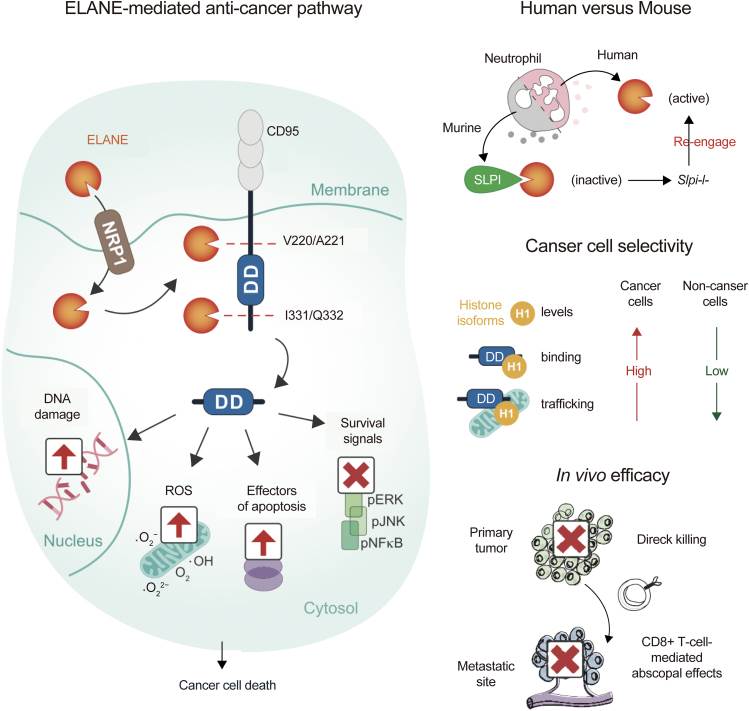 Figure 4. NE kills cancer cells and attenuates tumorigenesis
(Source: Zeng W, et al. 2023)
Endogenous serine protease inhibitors (serpins) have a tertiary structure complementary to elastase and play an important role in regulating the immune response. Endogenous inhibitors with anti-neutrophil elastase activity include alfa1-proteinase inhibitor (α1-PI), elafin, secretory leukocyte protease inhibitor (SLPI), α1-antichymotrypsin (ACT), α2-macroglobulin, and monocyte neutrophil elastase inhibitor (MNEI or Serpin B1). NE activity is mainly regulated by α-1-PI, Serpin B1 and SLPI 17, 19, 52, 55. Reduction of elastase activity helps to reduce inflammation and prevent tissue damage. The imbalance between NE and its endogenous inhibitors has been implicated in the pathogenesis of a variety of diseases characterized by severe, progressive or chronic inflammation, such as cystic fibrosis (CF), chronic obstructive pulmonary disease (COPD), acute respiratory distress syndrome (ARDS), pulmonary fibrosis, asthma exacerbations, systemic lupus erythematosus (SLE) and rheumatoid arthritis.
In addition to endogenous inhibitors, there are exogenous and therapeutic neutrophil serine protease inhibitors. Therapeutic inhibitors are used to reduce the levels of intracellularly active NE, PR3 and CG and to reduce neutrophil accumulation at sites of inflammation. Depending on the size and nature of the inhibitor, they can be administered orally, aerosolized, or intravenously. Clinically available NE inhibitors are divided into five classes. Generation 1 inhibitors are biologic and some are less stable, such as α1-antitrypsin and elafin. Generation 2 NE inhibitors employ mechanism-based suicide small molecules (SMOLs) that inhibit released and membrane-bound elastase. Generation 3 and 4 NE inhibitors are non-mechanism-based SMOLs that are non-reactive and reversible inhibitors derived from pyridine and dihydropyrimidinone lead structures. The fifth-generation inhibitors have a pre-adaptive pharmacophore derived from the fourth generation NE inhibitors.
Table 1. Classification of neutrophil elastase inhibitors
| Classification | Origin | Examples |
| 1st generation | Biological | AAT, Elafin |
| 2sd generation | SMOLs, suicide inhibitors | ONO-5046, ONO-6818 |
| 3rd generation | Modern, non-mechanism-based SMOLs | AZD9668 |
| 4th generation | Modern, non-mechanism-based SMOLs | BAY-678 |
| 5th generation | Pre-adaptive pharmacophores derived from 4th generation | BAY 85-8501 |
(Source: Bronze-da-Rocha E, et al. 2018)
References
| Target | Cat. No. | Product Name | Size | Species Reactivity | Application | Detection Sample | |
| ELANE | DEIA4069 | Human Neutrophil Elastase ELISA Kit | 96T | Human | Quantitative | Serum, Plasma, Tissue Homogenates and other Biological Fluids. | Inquiry |
| Target | Cat. No. | Product Name | Expression System | Tag/Conjugate | Application | |
| ELANE | DAGC305 | Recombinant Human Neutrophil Elastase Protein [His] | Yeast | His | Immunogen, Protein Standard, etc | Inquiry |
| DAGC306 | Recombinant Human Neutrophil Elastase Protein [GST] | E.coli | GST | Immunogen, Protein Standard, etc | Inquiry | |
| DAG-WT187 | Recombinant Elastase CELA3A Antigen | Mammalian cells | His | LFIA, ELISA | Inquiry | |
| DAG-WT188 | Recombinant Elastase CELA3B Antigen | Mammalian cells | His | LFIA, ELISA | Inquiry | |
| DAG-WT298 | Native Human Leukocyte Elastase | Human neutrophils | Unconjugated | N/A | Inquiry |
| Target | Cat. No. | Product Name | Host | Isotype | Application | |
| ELANE | CPBT-40521SH | Anti-ELANE polyclonal antibody [Biotin] | Sheep | IgG | WB, RIA, EIA | Inquiry |
| DPAB2236SH | Anti-ELANE polyclonal antibody | Sheep | Inquiry | |||
| DPAB2237SH | Sheep anti-Human Neutrophil Elastase Polyclonal antibody | Sheep | Inquiry | |||
| DCABH-7584 | Rabbit Anti-Human ELANE monoclonal antibody, clone KG109-7 | Rabbit | IgG | WB, ICC/IF, IHC, FC | Inquiry | |
| CABT-L508 | Sheep anti Human Neutrophil Elastase polyclonal antibody | Sheep | IgG | IEP, ELISA | Inquiry | |
| CABT-L509 | Sheep anti Human Neutrophil Elastase polyclonal antibody [HRP] | Sheep | IgG | IEP, ELISA | Inquiry | |
| CABT-52729MH | Anti-ELANE monoclonal antibody, clone 39A | Mouse | IgG1 | ELISA, FC, FA | Inquiry | |
| DPAB-DC842 | Anti-ELANE (aa 168-267) polyclonal antibody | Mouse | WB, ELISA | Inquiry |
Loading ......
