
Inquiry Basket
 Loading ......
Cancer, a complex and devastating disease, continues to be a significant global health challenge. To combat this disease effectively, it is crucial to understand the underlying mechanisms that drive tumorigenesis. Over the past two decades, extensive research has identified several fundamental features known as cancer hallmarks, including sustaining proliferative signaling, evading growth suppressors, resisting cell death, inducing/accessing vasculature, enabling replicative immortality, activating invasion and metastasis, reprogramming cellular metabolism, and avoiding immune destruction. In the latest elaboration of this field, Hanahan proposes four emerging and enabling features, including unlocking phenotypic plasticity, non-mutational epigenetic reprogramming, polymorphic microbiomes, and senescent cells, which can also be viewed as core hallmarks of cancer.
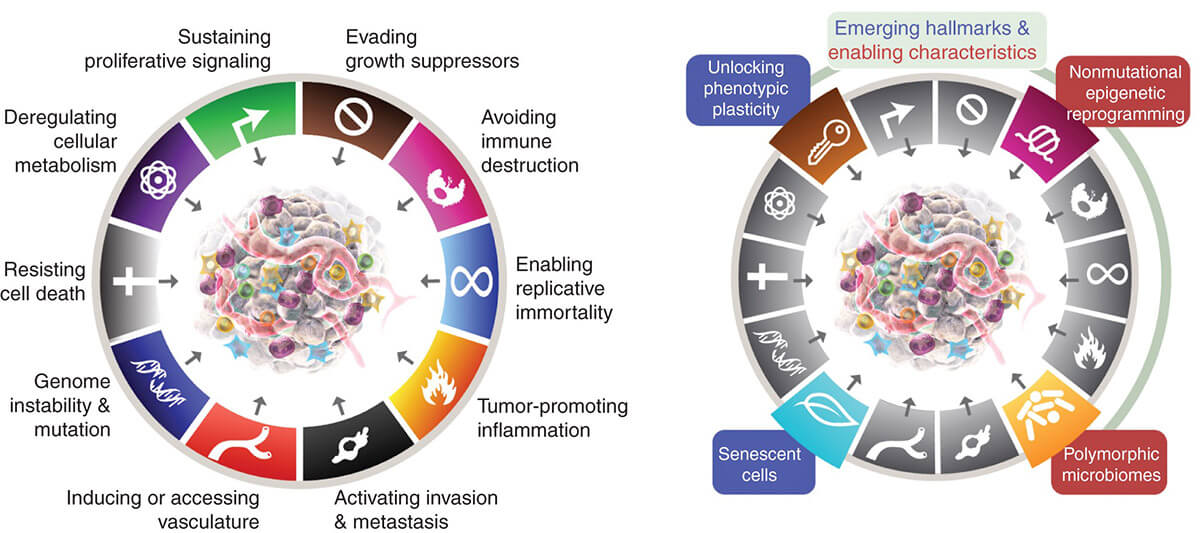 Fig. 1 The hallmarks of cancer. (Hanahan D, 2022)
One of the distinguishing features of cancer cells is their ability to sustain proliferative signaling, leading to uncontrolled cell growth. This hallmark is often driven by genetic mutations that disrupt the delicate balance between cell division and cell death. For instance, oncogenes such as HER2 can promote excessive cell growth when overexpressed, contributing to breast cancer development. Targeting these aberrant signaling pathways has become a crucial strategy in cancer therapy.
Normal cells possess intrinsic mechanisms to prevent excessive proliferation. However, cancer cells acquire the ability to evade these growth suppressors, enabling uncontrolled growth. For example, the tumor suppressor gene p53 plays a pivotal role in regulating cell cycle arrest and apoptosis, and mutations in p53 are frequently observed in various cancer types, allowing cells to bypass growth-inhibitory signals.
Apoptosis, or programmed cell death, is a natural process that eliminates damaged or unwanted cells. Cancer cells often evade apoptosis, promoting their survival and progression. Dysregulation of apoptosis-related pathways, such as the Bcl-2 family of proteins, can confer resistance to cell death signals. Targeting these pathways presents a potential avenue for therapeutic intervention.
Normal cells have a limited capacity for replication due to telomere shortening. In contrast, tumor cells can achieve unlimited replication potential by synthesizing high levels of telomerase or through recombination-based mechanisms. These strategies prevent the shortening of telomeres, which are protective caps at the ends of chromosomes, and allow cells to divide indefinitely. Targeting telomerase has emerged as a potential therapeutic strategy to disrupt replicative immortality in cancer cells.
Tumors require a blood supply to fuel their growth and metastasis. Cancer cells can induce angiogenesis by secreting pro-angiogenic factors such as VEGF. This hallmark ensures a continuous nutrient and oxygen supply to the growing tumor. Anti-angiogenic therapies, such as bevacizumab, have been developed to inhibit tumor angiogenesis and starve cancer cells of vital resources.
Understanding the relationship between angiogenesis and cancer
Metastasis, the spread of cancer cells from the primary tumor to distant sites, is responsible for the majority of cancer-related deaths. Cancer cells acquire the ability to invade surrounding tissues and enter the bloodstream or lymphatic system, facilitating their dissemination. Key molecular changes, including the upregulation of matrix metalloproteinases, enable cancer cells to breach tissue barriers. Targeting these invasive properties is crucial for preventing metastasis and improving patient outcomes.
The immune system plays a critical role in recognizing and eliminating cancer cells. However, cancer cells can evade immune surveillance through various mechanisms. For example, they can downregulate major histocompatibility complex (MHC) molecules, which are essential for immune recognition. Immunotherapies, such as immune checkpoint inhibitors, aim to unleash the immune system's full potential and enhance anti-tumor immune responses.
Cancer cells undergo metabolic reprogramming to support their rapid growth and survival. They exhibit altered energy metabolism, favoring aerobic glycolysis even in the presence of sufficient oxygen (the Warburg effect). Compared with normal aerobic respiration, this abnormal energy metabolism is less efficient at obtaining energy, but it helps cancer cells avoid growth inhibition and cell death. Targeting these metabolic alterations holds great promise for developing novel cancer therapies.
Unlocking phenotypic plasticity functions to evade or escape the terminally differentiated state and is a key component of cancer pathogenesis. During primary tumor formation, malignant progression, and/or response to therapy, dedifferentiation of mature cells back to progenitor states, blocking differentiation to freeze cancer cells in the progenitor/stem state and transdifferentiation into replacement cell lineages. These types of phenotypic plasticity play a role in many types of cancer. Collectively, unlocking cellular plasticity to enable various forms of disrupted differentiation constitutes a discrete hallmark capability that is distinct from the well-established cancer core imprints in regulating cellular phenotypes.
Epigenetic alterations, such as DNA methylation and histone modifications, play a critical role in cancer development. Recent studies have highlighted the importance of non-mutational epigenetic reprogramming in promoting tumorigenesis. Aberrant DNA methylation patterns and altered histone modifications can lead to dysregulated gene expression and contribute to cancer initiation and progression.
The microbiome of tumors is composed of a large number of microbial communities present in the colon, other mucous membranes, and their junctions, or within the tumor. The tumor microbiome has extremely high polymorphism and plays an important role in the occurrence, development, and treatment response of tumors.
Cellular senescence is generally considered to be an irreversible tumor-suppressive protective mechanism to maintain tissue homeostasis. However, increasing evidence shows that in some cases senescent cells can promote tumor occurrence and development through methods such as the senescence-associated secretory phenotype (SASP).
As a leading company in the field of diagnostics and research reagents, Creative Diagnostics is committed to supporting cutting-edge research in cancer biology. Our comprehensive portfolio of high-quality antibodies, proteins, and molecular biology reagents empowers scientists and clinicians to investigate the hallmarks of cancer and develop innovative solutions to combat this devastating disease.
References
Loading ......
