
Inquiry Basket
 Loading ......
GBS is a β-hemolytic streptococcus that colonizes the gastrointestinal and genitourinary tracts of human beings, as part of the normal flora and, under certain conditions, can be an opportunistic pathogen which causes life-threatening neonatal and adult infections. Asymptomatic GBS colonization is frequent, benign, and of unknown pathogenesis in healthy women, but it is a potentially serious problem in pregnant women, as invasive GBS infections in pregnancy and the puerperium include bloodstream infections, meningitis, osteomyelitis, endocarditis (invasive) or bacteriuria, amniotic fluid infection, fasciitis and cellulitis, endometritis and episiotomy or cesarean-section wound infections (non-invasive). Reports of invasive GBS infection in elderly and immunocompromised patients have also recently increased. Arthritis, endocarditis, pneumonia, bacteremia, urinary tract infection, and soft tissue, skin and bone infection are the most common presentations of GBS infection in non-pregnant adults. Elderly patients and patients with underlying disease (e.g., diabetes, cancer, or HIV) are particularly susceptible to infection. GBS remains one of the most common causes of severe infectious diseases in newborns, such as early-onset and late-onset disease, over the last few decades. Maternal colonization is the principal route of EOD GBS infection in neonates, with intra-amniotic ascending infection or with transmission by aspiration of infected amniotic fluid or vaginal secretions during delivery.
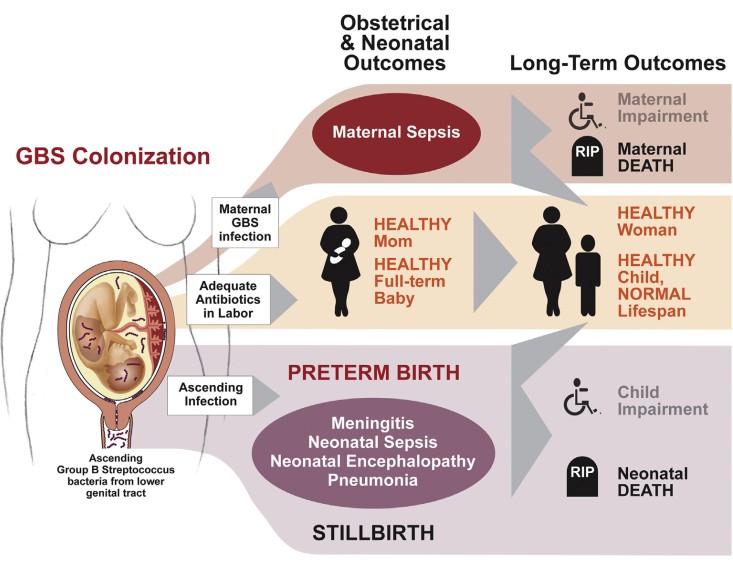 Figure 1. Clinical pathways in maternal GBS colonization
(Source: Armistead B, et al. 2019)
Under the microscope, GBS appears as typical gram-positive cocci, often arranged in short chains or pairs. The most important basis for its classification is the cell surface capsular polysaccharide (CPS). CPS is not only an important virulence factor but also serves as the basis for serotype classification. To date, at least ten serotypes (Ia, Ib, II-IX) have been described and differences in geographical distribution and pathogenicity have been noted among them. In addition, the most commonly used typing method in molecular epidemiological studies of GBS, multilocus sequence typing (MLST), can be used to classify strains into different sequence types (STs) and clonal complexes (CCs) based on sequencing of multiple housekeeping genes in order to trace their genetic evolution and transmission routes. The pangenome analysis showed that GBS has a typical "open pan-genome", namely, the number of genes in the gene pool will not stop growing with the accumulation of the number of newly sequenced strains. The genome can be further partitioned into a "core genome" found in all strains and which encodes the essential functions of life, and the strain-specific "accessory genome". The accessory genome is enriched for a large number of virulence-related, drug resistance and host adaptation genes. The latter genes are often associated with mobile genetic elements such as genomic islands, prophages, transposons and plasmids. Such a high degree of genomic plasticity may allow GBS to rapidly acquire new functions through horizontal gene transfer in order to adapt to different host environments (e.g., cattle and human) and resist selective pressures (e.g., antibiotics).
The pathogenic process of GBS is a complex, multi-stage process involving multiple factors, encompassing consecutive steps from adhesion and colonization to tissue invasion and immune evasion.
The first step of infection is the adhesion and colonization of GBS on host mucosal surfaces. GBS achieves this through various surface adhesins. Pili have been shown to be important adhesive structures that are responsible for the initial adherence to epithelial cells. Other adhesion molecules include the FbsA and FbsB (fibrinogen binding) proteins, the Lmb (laminin-binding) protein, and the newly discovered immunogenic adhesin BibA, among others. By binding to host extracellular matrix components with high specificity such as fibrinogen and laminin, the above-mentioned proteins firmly anchor the bacteria to the host tissues. Following successful colonization, GBS can use various hydrolytic enzymes, such as hyaluronidase (HyIB), to destroy ECM and spread within the tissues. At the same time, some of the virulence factors have also been shown to have invasion functions that can help bacteria cross cellular barriers such as the blood-brain barrier, causing severe invasive diseases like meningitis (e.g. C5a peptidase).
 Figure 2. Major adhesins mediating GBS interaction with host cells
(Source: Shabayek S, et al. 2018)
CPS can interfere directly with recognition and phagocytosis by phagocytes (macrophages and neutrophils). In addition, CPS from some serotypes (e.g. Ia, III) is sialylated, i.e. has sialic acid incorporated into it. Sialic acid is a host mimic that binds complement regulatory factor H, inhibiting activation of the alternative complement pathway and avoiding complement-mediated clearance. Sialic acid is a host mimic that binds complement regulatory factor H, which blocks activation of the alternative complement pathway and prevent complement-mediated clearance. The BHC is able to form pores in epithelial and endothelial cell membranes leading to cell lysis, disruption of tissue barriers, apoptosis and direct toxicity towards a variety of immune cells, including macrophages. C5a peptidase is able to degrade C5a with high efficiency, impairing recruitment of phagocytes such as neutrophils to the site of infection, thereby weakening the host innate immune response. GBS also expresses SOD to help resist oxidative stress produced by phagocytes. Altering teichoic acids of the cell wall (using the Dlt operon) changes its surface charge, providing resistance to the killing effects of cationic antimicrobial peptides.
Antibiotics are the most effective treatment for GBS infections, but antimicrobial resistance is an emerging concern. The first-line treatment for GBS infection is penicillin. Fortunately, GBS strains remain sensitive to penicillin, ampicillin, and cephalosporin antibiotics. However, the GBS situation of resistance to macrolides and lincosamides is the opposite, with a significantly increasing resistance rate. In some areas, the resistance rate to erythromycin has even exceeded 40%-50%, and the resistance rate to clindamycin is also generally between 20%-40%. This situation poses a huge clinical challenge for patients who are allergic to penicillin, as these two classes of drugs are the primary alternative.
Penicillin antibiotics are divided into 5 groups: natural penicillins (penicillin G, penicillin V), penicillinase-resistant penicillins (methicillin), aminopenicillins (ampicillin), broad-spectrum penicillins (carbenicillin), and aminopenicillin/β-lactamase inhibitor combinations (amoxicillin/clavulanic acid). Cephalosporins, carbapenems and monobactams are other β-lactam containing antibiotics. Penicillins, cephalosporins, carbapenems, and monobactams are sometimes grouped together as β-lactam antibiotics. The β-lactams are the largest group of antibiotics. The antibacterial action of the drugs in this group is thought to result from the inhibition of enzymes involved in cell wall synthesis. Penicillins inactivate the DD-transpeptidases that are part of the penicillin-binding proteins (PBPs), proteins that form part of the bacterial cell wall. The cell wall must be continuously remade as the cell grows and divides. The inability to synthesize peptidoglycan, an essential component of the cell wall, prevents the synthesis of the bacterial cell wall. When peptidoglycan cross-linking is inhibited, the cell wall cannot be maintained and the bacterial cell rapidly dies. Although the precursors of peptidoglycan are made, accumulation of the precursor molecules results in the activation of hydrolases and bacterial cell lysis mediated by autolysin.
There are three main mechanisms of resistance to β-lactam antibiotics: reducing the quantity of drug that reaches the PBPs, lowering the affinity of PBPs to β-lactam antibiotics or enzymatically destroying the drug using β-lactamases. In Gram-positive bacteria, the main mechanism of resistance to βlactam antibiotics is alterations in the PBP targets. Literature shows that reduced susceptibility of GBS to penicillin has been reported and that amino acid substitutions in PBPs can result in a lowered penicillin binding affinity. These GBS strains are known as penicillin-resistant GBS (PR-GBS). The emergence of PR-GBS is concerning because PBP mutations have been thought to be the first step on the road to eventual full penicillin resistance, a development similar to what has been seen with the evolution of penicillin resistance in other streptococci. PR-GBS strains can gain resistance by acquiring mutations in genes encoding PBPs, including PBP1a, PBP2a, PBP2b and PBP2x. The most common mutations are in the V405A and/or Q557E sites in PBP2x. These two sites are near the highly conserved active center, and are believed to be the amino acid substitutions that cause reduced susceptibility to penicillin.
Resistance of GBS to erythromycin and clindamycin is primarily mediated by two mechanisms: target site modification and active efflux. The most common resistance mechanism, target site modification, is mediated by methylase enzymes encoded by erm genes. Erm methylase enzymes methylate a specific adenine at a certain position of 23S rRNA which causes the conformational change of the drug-binding site on the ribosome, thereby preventing the drug's binding. Drugs affected include macrolides, lincosamides, and streptogramin B (MLSB) causing cross-resistance. This resistance phenotype is described as MLSB constitutive (cMLSB) or inducible (iMLSB). The active efflux mechanism is encoded by drug efflux pumps encoded by mef genes. The mef genes encode an efflux pump which actively transports the macrolide drug out of the bacterial cell. mef-carrying strains are generally resistant only to 14- and 15-membered ring macrolides (erythromycin and azithromycin), but they are usually susceptible to clindamycin and streptogramin B, therefore they display the M phenotype. As the MLSB-resistance genes are often encoded on mobile genetic elements, they can spread within the GBS population and also can be transmitted to other species.
 Figure 3. Antimicrobial resistance mechanisms observed in Group B Streptococcus strains
(Source: Hayes K, et al. 2020)
References
| Target | Cat. No. | Product Name | Expression System | Tag/Conjugate | Application | |
| S. agalactiae | DAG-WT3651 | Inactivated Group B Streptococcus (GBS) Culture Fluid | N/A | N/A | Control | Inquiry |
| DAG-WT3652 | Inactivated Group B Streptococcus (GBS-Ia) Culture Fluid | N/A | N/A | Control | Inquiry | |
| DAG-WT3653 | Inactivated Group B Streptococcus (GBS-Ib) Culture Fluid | N/A | N/A | Control | Inquiry | |
| DAG-WT3654 | Inactivated Group B Streptococcus (GBS-III) Culture Fluid | N/A | N/A | Control | Inquiry | |
| S. agalactiae Hyaluronan Lyase protein | DAG2614 | Recombinant Streptococcus agalactiae Hyaluronan Lyase Protein (a.a. 259-1072) [His] | E. coli | His | N/A | Inquiry |
Loading ......
