Antibodies are essential tools in various fields of research, diagnostics, and therapeutics. With advancements in biotechnology, Creative Diagnostics has developed various antibody formats and purification techniques that enhance their specificity, sensitivity, and stability.

Antibody Forms
Creative Diagnostics offers a diverse range of antibody formats to cater to different research needs. The following are some common antibody forms provided by Creative Diagnostics, including intact antibodies and F(ab)2 fragments of antibodies. Researchers can choose the appropriate antibody format based on their specific experimental requirements and desired outcomes.
- Whole Antiserum
Antiserum refers to the blood serum derived from an immunized host containing antibodies of interest. It is often available in relatively unpurified forms. Antiserum is typically obtained from immunized animals, such as rabbits or goats. However, in addition to antibodies that recognize target antigens, antiserum contains non-specific antibodies and serum proteins, which can lead to background noise and interfere with experimental results. To overcome this limitation, purification methods are employed to eliminate serum proteins and enrich the fraction of immunoglobulins that specifically recognize the target antigen. - Fractionated Antiserum (Ig fraction)
We offer fractionated antiserum and IgG fractions, which are derived from whole antiserum. While the immunoglobulin fraction primarily consists of IgG antibodies, it may still contain small amounts of other serum proteins. These IgG fractions and fractionated antiserum are particularly valuable in situations where a high level of affinity is required, especially when dealing with rare or low-abundance antigens. The IgG fractions may contain antibodies with exceptionally high affinity, enhancing the sensitivity and specificity of assays. - IgG Fraction of Antiserum
We fractionated the whole antiserum and then further purified it by ion exchange chromatography to obtain the IgG portion of the antiserum. This fraction is essentially free of other host serum proteins. The IgG fraction of the antisera has the same high-affinity advantage as fractionated antisera (Ig fraction). - Affinity Isolated Antibody (AIA)
We offer highly purified products that minimize non-specific binding. One such product is affinity-isolated antigen-specific antibodies, which are obtained through immunospecific purification using antigen-bound agarose. This purification method effectively removes all host serum proteins, including immunoglobulins that do not specifically bind to the antigen. These products are the most purified, ensuring high specificity and accuracy in various applications and assays. - Tissue Culture Supernatant
The supernatant is the fluid obtained after centrifuging hybridomas in tissue culture that produces monoclonal antibodies. It contains a mixture of culture medium and approximately 5-10% fetal calf serum. - Ascites Fluid
Ascites fluid was historically used as a method for in vivo antibody production. It involves the growth of hybridoma cells within the peritoneal cavity of a mouse or rat. The resulting ascites fluid contains a high concentration of monoclonal antibodies, providing higher yields compared to tissue culture supernatant. Ascites fluid contains specific antibodies and other host serum proteins. Specific antibody concentrations range from 1-10 mg/mL. The total protein concentration is approximately 20 mg/mL. - Purified Immunoglobulin
Purified immunoglobulin refers to monoclonal antibodies that have undergone purification using protein A or protein G affinity chromatography. These purification techniques specifically target the Fc region of the antibodies, allowing for selective enrichment. - F(ab)2 Fragment
F(ab)2 fragments are generated by the enzymatic digestion of IgG using pepsin. This process results in the cleavage of the antibody molecule, producing a divalent fragment. The F(ab)2 fragment retains two antibody binding sites, allowing it to bind to its target antigen. However, the Fc portion of the antibody, which is responsible for certain immune functions, is removed during this digestion process.
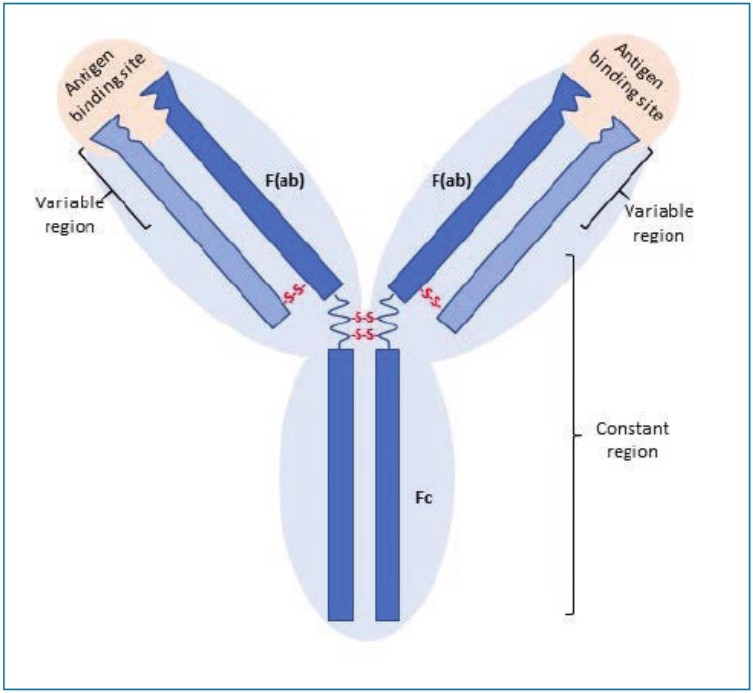 Fig. 1 Antibody structure. (Stevens N E, et al., 2017)
Antibody Purification Methods
Antibody purification is a crucial step in obtaining high-quality antibodies with minimal impurities. The choice of purification method depends on factors such as the antibody source, intended application, and required level of purity.
- Protein A/G Purification
Protein A and Protein G, expressed by Staphylococcus aureus and Streptococcus bacteria, respectively, are antibody-binding proteins widely used in antibody purification. They specifically bind to the Fc region of antibodies, allowing selective enrichment. This purification method removes serum proteins from the raw antiserum but does not remove nonspecific immunoglobulin components, resulting in protein A/G purified antisera that still have a small amount of undesirable cross-reactivity. - Affinity Purification
Affinity purification is based on the reversible interaction between a protein and a specific ligand coupled to the chromatography medium. The advantage of antigen affinity purification is that immunoglobulins can specifically bind to the antigen that stimulates its production. As a result, a large number of non-specific immunoglobulin components are eliminated, and immunoglobulin components that can specifically bind to the target antigen are enriched. Therefore, what is obtained after affinity purification mainly contains the expected specific immunoglobulins. - Pre-adsorption
Polyclonal antibodies are sometimes pre-adsorbed. They are adsorbed by other proteins or serums from different species to eliminate possible cross-reactive antibodies. The purity and specificity of the purified antibody should be very high, and any cross-reactivity is significantly reduced.
Learn about our Antibody Purification Services
As a renowned company in the field of antibody research and development, Creative Diagnostics offers a wide range of high-quality antibodies in various formats. Whether you require antiserum, tissue culture supernatant, or purified antibodies, Creative Diagnostics is committed to meeting your research needs and delivering exceptional products.

 Loading ......
