
Inquiry Basket
 Loading ......
Flow cytometry generates vast amounts of multidimensional data, consisting of numerous parameters characterizing individual cells within a sample. Effectively harnessing this wealth of information requires robust data analysis techniques that enable researchers to identify and quantify specific cell populations, evaluate marker expression levels, and explore relationships between different cellular subsets. By employing advanced data analysis strategies, researchers can unlock valuable insights and make informed decisions, ultimately accelerating scientific discovery and contributing to breakthroughs in various fields.
All flow cytometers are equipped with computers associated with them. The computer program that controls the cytometer during data acquisition has several important functions. It allows the user to select the parameters to be measured and adjust various settings such as voltages on the PMTs and gain settings on the amplifiers. It also provides options for selecting logarithmic or linear amplification, adjusting threshold settings, and managing color compensation. The program enables the selection of histograms and cytograms for display and allows the user to draw regions and set gates for data acquisition. If the flow cytometer has cell sorting capabilities, the computer program controls the sorting process.
During data acquisition, the program continuously writes the acquired data to the hard drive, creating a file of data commonly referred to as "listed data." This file can be later analyzed using the same program, providing the ability for offline analysis. The offline analysis is valuable for tasks such as preparing illustrations for publications or lecture slides.
To facilitate data analysis on computers in different locations, there are various programs available for analyzing data files. These programs can be obtained commercially or as free software. Regardless of the specific program used, the principles of data analysis remain the same, ensuring consistent and reliable analysis of flow cytometry data.
Flow cytometry instruments measure the light scattered by cells at right angles to the laser beam (side scatter, SS) and light scattered in a forward direction (forward scatter, FS). The amount of scattered light is influenced by the size, shape, and optical homogeneity of the cells or particles being analyzed. The angle at which the scattering is measured also plays a role. The appearance of forward scatter is dependent on the instrument design and may vary slightly between different cytometer models. Forward scatter is primarily sensitive to cell size, while side scatter is mainly influenced by the optical homogeneity of the cells.
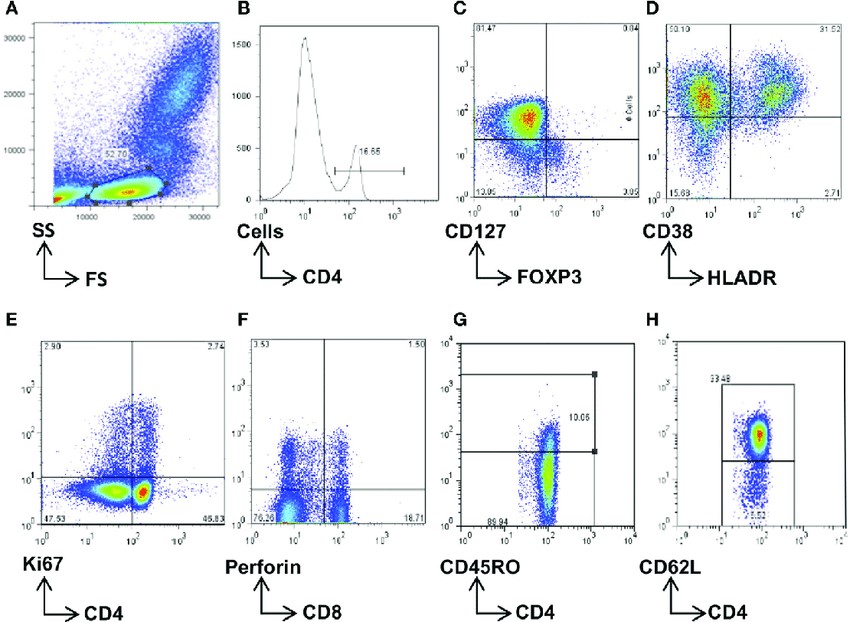 Fig. 1 Example of flow cytometry gating strategy. (Ndure J, 2017)
Flow cytometry data analysis often involves plotting and visualizing multidimensional data to gain a comprehensive understanding of cellular populations. Scatter plots, histogram overlays, and density plots are commonly used to visualize parameters such as fluorescence intensity, allowing researchers to assess marker expression levels and explore relationships between different markers.
Analysis of high-dimensional data using conventional flow cytometry analysis methods is tedious and time-consuming because high-dimensional data often contain more than 14 parameters. In addition, it is difficult to determine the relationship between multiple markers using conventional "gating" methods, which may result in the loss of target cell populations. At present, there are several new analysis tools available for the analysis and visualization of high-dimensional data, such as Spanning-tree progression analysis of density-normalized events (SPADE), t-Distributed Stochastic Neighbor Embedding (tSNE), PCA (Principal component analysis), and FLOw clustering without K (FLOCK). Algorithmically, tSNE is similar to PCA, but tSNE can identify more co-segregation features than PCA. tSNE is available as a plugin for FlowJo and FCS Express.
In addition, Cytobank is a cloud analysis system for high-dimensional data, which can analyze more than 30 parameters. Here, users upload data and select corresponding analysis items for data analysis. Cytobank's clustering, dimensionality reduction, and visualization tools take full advantage of the scalability of cloud computing to quickly perform high-volume analyses.
In conclusion, flow cytometry data analysis is a critical component of successful cell analysis, enabling researchers to unlock valuable insights and make significant contributions to scientific knowledge. By leveraging robust gate strategies, advanced analysis techniques, and reliable reagents and software solutions from Creative Diagnostics, researchers can extract meaningful information from complex flow cytometry datasets.
References
Loading ......
