
Inquiry Basket
 Loading ......
Fibroblast Growth Factor 2 (FGF 2), also called basic fibroblast growth factor (bFGF), is one of the earliest identified and most characterized of the FGFs. FGF 2 is a pleiotropic signaling molecule that acts by binding to specific receptors on the cell surface and initiating downstream signal transduction. Signal transduction by FGFs, in general, lies at the heart of the regulation of many vital biological processes such as proliferation, differentiation, migration, survival and angiogenesis of cells. As a consequence, FGF 2 is involved in both a variety of physiological functions such as embryonic development, tissue repair and regeneration, as well as a number of pathological processes.
Browse all FGF2 related products
FGF is a family of signaling proteins with roles in vertebrate development and maintenance of physiological homeostasis. FGF-2 (basic fibroblast growth factor, or bFGF) is the prototypical family member, and as its name indicates, is well known for its ability to cause fibroblasts to divide mitotically. FGF-2 is ubiquitously expressed in many tissues and cell types (fibroblasts, endothelial cells, smooth muscle cells, astrocytes, neurons, etc.) in both extracellular milieu as well as intracellularly. Unique subcellular localizations of FGF-2 may be functionally relevant for some of its diverse roles. FGF-2 is not a typical secretory protein and lacks a classic signal peptide sequence. Thus, FGF-2 release from cells into the extracellular space is not through the classic endoplasmic reticulum-Golgi secretory pathway, but by an "unconventional" secretion pathway (e.g., exocytosis). Tight local control of cell behavior in a microenvironment is especially important for repair mechanisms in response to injury.
FGF‑2 is the product of the FGF2 gene, which has several protein isoforms of various molecular weights due to translation from different in-frame start codons (AUG or CUG). The most abundant of these is the low molecular weight (LMW) 18 kDa FGF‑2. This isoform primarily resides in the cytoplasm and may be secreted outside the cell by a non-classical route. There it can function classically, in a paracrine or autocrine manner, by binding to its receptors on the cell surface and activating downstream signaling.
 Figure 1. FGF2 transcription yields up to five transcripts differing in the length of their 3' UTR
(Source: Chlebova K, et al. 2009)
In addition to this low molecular weight (LMW) isoform, FGF‑2 has several high molecular weight (HMW) isoforms of around 22 kDa, 22.5 kDa, 24 kDa, and 34 kDa. The HMW isoforms have a nuclear localization signal (NLS) sequence at their N‑terminus that results in nuclear sequestration, after synthesis, in which they act intracrinely. Intracellularly, HMW FGF‑2 is not known to initiate the canonical RTK pathway. Rather, HMW FGF‑2 acts intranuclearly as a transcriptional regulator, directly and indirectly controlling gene expression in a myriad of ways, including ribosome biogenesis and cell cycle progression. The 18 kDa FGF‑2 core is composed of 12 anti‑parallel β‑strands arranged in a β‑trefoil conformation. This structure is very stable, and resistant to proteolytic cleavage. FGF‑2 also has a heparin‑binding domain that is required for high‑affinity interaction with cell‑surface heparan sulfate proteoglycans (HSPGs). HSPGs, as co‑receptors, have also been shown to protect FGF‑2 from degradation, facilitate oligomerization and present FGF‑2 to high‑affinity FGFRs, to form a stable FGF‑2/HSPG/FGFR ternary complex for downstream signaling.
FGF‑2 has extensive pleiotropy, with nearly all of the essential cellular physiological processes under its influence. FGF‑2 is one of the most potent mitogens described to date, and can cause a variety of cell types such as fibroblasts, endothelial cells and keratinocytes to enter the cell cycle and complete cell division. FGF‑2 causes expression of cell cycle proteins such as Cyclin D1 by activation of the classical MAPK/ERK signalling pathway, which in turn can drive the cell cycle forward from G1 to S phase. In parallel, FGF‑2 can also block apoptosis and promote cell survival by activation of the PI3K/Akt pathway, which increases expression of the anti‑apoptotic protein Bcl‑2 and decreases activity of the pro‑apoptotic protein Bax. One of the best studied functions of FGF‑2 is its ability to induce angiogenesis. During physiological processes (e.g. wound healing, embryonic development) as well as pathological processes (e.g. tumour growth, ischemic diseases), FGF‑2 can strongly promote proliferation, migration and differentiation of endothelial cells, thereby causing formation of new capillaries. FGF‑2 can also cause endothelial cells to release proteases, such as matrix metalloproteinases (MMPs), which in turn degrade the vascular basement membrane and thereby clear a path for cellular migration. FGF‑2 induces endothelial cells to form tubular structures and recruit pericytes to support and stabilise them.
In the context of tissue injury, FGF-2 expression is rapidly upregulated. It orchestrates various stages of the repair process by recruiting and activating fibroblasts, inflammatory cells, and stem cells. For instance, during skin wound healing, FGF-2 accelerates the formation of granulation tissue, the deposition of collagen, and the re-epithelialization process. In bone fracture repair, it promotes the proliferation and differentiation of osteoblasts, thereby speeding up callus formation.
FGF-2 is also involved in the processes of repair after nervous system injury, where it helps with neuronal survival and axonal regeneration. Early studies showed that FGF2 was a critical factor required for the in vitro proliferation of murine and human neural stem/progenitor cells (NSPCs). This finding was later used to develop techniques that were then directly applied to isolate and propagate cancer stem cells from glioblastoma (GBM) patient tumors, most notably the neurosphere culture method. During neural development, FGF2 signaling is required in an early phase for neural stem cell expansion, while EGF signaling is dominant in a later phase of progenitor expansion and early neuronal differentiation. Neural stem cells of various developmental stages show preferential expression of FGFR subtypes: neuroepithelial cells express FGFR1 and FGFR4 at high levels, while neural stem cells in the ventricular zone express FGFR1 and FGFR3. Signaling through these receptors is what drives neural stem cells' symmetric self-renewing divisions. In the tumor microenvironment, the FGFR signaling pathway can have both tumor-promoting and tumor-suppressing effects. On one hand, the tumor cells themselves or surrounding stromal cells can secrete FGF‑2, which then functions in an autocrine or paracrine manner to support tumor cell proliferation, survival, and drug resistance. FGF‑2 also plays a critical role in tumor angiogenesis, providing the necessary blood support for rapid tumor growth and metastasis. As a result, the FGF‑2/FGFR signaling pathway has become an important target of anti‑tumor drug development. On the other hand, under some circumstances, FGF‑2 can also inhibit tumor progression by inducing cell differentiation or senescence. The exact effect is highly dependent on the tumor type and cellular context.
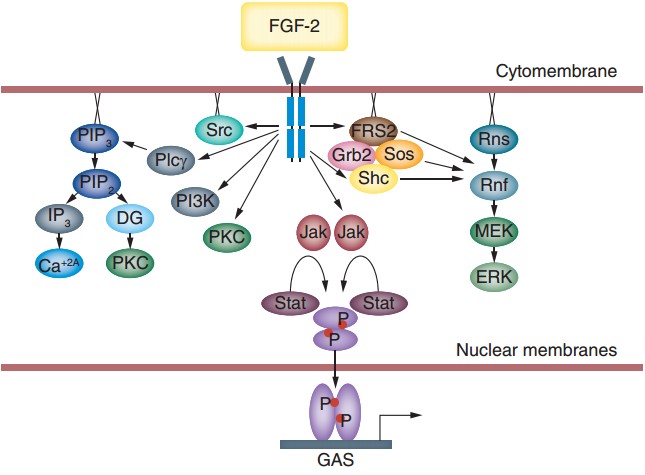 Figure 2. The mechanism of action of FGF2
(Source: Zhang J, et al. 2020)
FGFRs, belonging to the group of transmembrane tyrosine kinase receptors with tyrosine kinase activity, are ubiquitously expressed in almost all tissue cells and are responsible for the intracellular transduction of FGF signals. FGFR is composed of three parts: the extracellular ligand-binding domain contains three immunoglobulin-like repeats (D1–D3), the transmembrane region is made up of hydrophobic amino acids, and the intracellular tyrosine kinase domain has enzymatic activity. The intracellular kinase domain is first autophosphorylated after FGF binds, and then the downstream target proteins are trans-phosphorylated. A cascade reaction then transmits the signal into the nucleus. Therefore, FGFRs are involved in the processes of injury repair, vascular and neural regeneration, embryonic development, and bone formation. There are four main types of FGFR: FGFR1, FGFR2, FGFR3, and FGFR4. FGF-2 can bind to some splice variants of FGFR1, FGFR2, and FGFR3 with different affinities. FGF-2 has the highest affinity for FGFR1. FGF-2 binding to FGFR requires the participation of co-receptors HSPGs. FGF-2 first binds to and aggregates with HSPGs in the extracellular matrix or on the cell surface, and then this complex interacts with FGFRs, which leads to dimerization of FGFRs. The dimerization of the receptors causes a conformational change in the intracellular kinase domains, which leads to the activation of the tyrosine kinase activity and triggers mutual phosphorylation (trans-autophosphorylation) between the adjacent receptor molecules. The phosphorylated tyrosine residues are used as docking sites for the binding of downstream signaling molecules. This recruits and activates adapter proteins such as FRS2α, PLCγ, and Grb2, which in turn activates multiple signaling pathways such as the RAS-MAPK, PI3K-Akt, PLCγ-PKC, and STAT pathways. The signal is then transmitted into the nucleus, which regulates the expression of specific genes and thereby induces a range of cellular biological responses.
 Figure 3. FGFR signaling pathway and its targetable axis
(Source: Jimenez-Pascual A, et al. 2020)
References
| Target | Cat. No. | Product Name | Size | Species | Application | Detection Sample | |
| FGF2 | DEIA-BJ2939 | Chicken Basic Fibroblast Growth Factor ELISA Kit | 96T | Quantitative | Serum, plasma, cell culture supernatants, body fluid and tissue homogenate | Inquiry | |
| DEIA-BJ2862 | Canine Basic Fibroblast growth factor ELISA Kit | 96T | Quantitative | Serum, plasma, cell culture supernatants, body fluid and tissue homogenate | Inquiry | ||
| DEIA-BJ2438 | Mouse Basic Fibroblast growth factor ELISA Kit | 96T | Quantitative | Serum, plasma, cell culture supernatants, body fluid and tissue homogenate | Inquiry | ||
| DEIA-BJ2657 | Rabbit Basic Fibroblast growth factor ELISA Kit | 96T | Quantitative | Serum, plasma, cell culture supernatants, body fluid and tissue homogenate | Inquiry | ||
| DEIA-BJ2113 | Rat Basic Fibroblast growth factor ELISA Kit | 96T | Quantitative | Serum, plasma, cell culture supernatants, body fluid and tissue homogenate | Inquiry | ||
| DEIA1330 | Human FGF-basic ELISA Kit | 96T | Human | Quantitative | Serum, plasma, cell culture supernatant | Inquiry | |
| DEIA156 | Human FGF2(Heparin-binding growth factor 2) ELISA Kit | 96T | Human | Quantitative | Serum, plasma, cell culture supernatants, urine | Inquiry | |
| DEIA3446 | Mouse bFGF/FGF2(Basic Fibroblast Growth Factor) ELISA Kit | 96T | Mouse | Quantitative | Serum, plasma, tissue homogenates and other biological fluids. | Inquiry | |
| DEIA6531 | Human FGF2(Heparin-binding growth factor 2) ELISA Kit | 96T | Human | Quantitative | Serum, plasma, tissue homogenates and other biological fluids | Inquiry | |
| DIA-XYA149 | FGF-Basic ELISA Kit | 96T | Quantitative | Cell lysates, serum, plasma | Inquiry | ||
| CKERS-FGF2-133H | Human Fibroblast Growth Factor 2 (basic), FGF2 ELISA Kit | 96T | Human | Quantitative | Serum, plasma, other biological fluids | Inquiry | |
| DEIA-BJ2791 | Porcine bFGF/FGF2 (Basic Fibroblast Growth Factor) ELISA Kit | 96T | Porcine | Quantitative | Serum, plasma, cell culture supernatant and other biological samples | Inquiry |
| Target | Cat. No. | Product Name | Expression System | Tag/Conjugate | Application | |
| FGF2 | DAG302 | Human Fibroblast Growth Factor 2 (aa 155) | E. coli | Unconjugated | N/A | Inquiry |
Loading ......
