
Inquiry Basket
 Loading ......
The ferret (Mustela putorius furo) has become an essential model for modern biomedical research, especially in the field of respiratory disease. Its natural susceptibility to influenza and coronaviruses—closely mirrors the clinical and immunological course observed in humans. This makes the species invaluable for investigating infection mechanisms, testing vaccine candidates, and evaluating therapeutic interventions. Such studies depend on rigorously characterized, species‑specific antibodies to accurately detect ferret immunoglobulins, cytokines, and immune cell signatures.
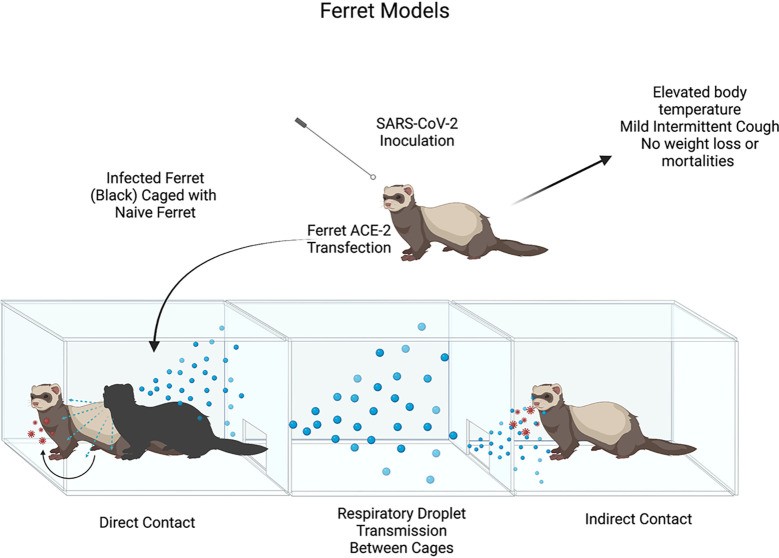 Fig. 1 Ferret model SARS-CoV-2 inoculation
(Caldera-Crespo LA.; et al. Front Cell Infect Microbiol. 2022)
Ferrets share physiological and immunological similarities with humans, particularly in the upper respiratory tract, making them especially well-suited as an animal model for studying human respiratory infections and immune interventions. Beyond its classic role in influenza research, the ferret model recently underpins studies of SARS-CoV-2, respiratory syncytial virus (RSV), and parainfluenza viruses etc.
 Fig. 2 Ferret Model for Studying HRSV Infection
(Stittelaar, K.J.; et al. Viruses 2016)
Within vaccine and therapeutic development pipelines, ferret studies combine serological assays, such as ELISA and HI tests—to quantify antibody titers with functional neutralization assays that assess the ability of antibodies to block viral infection. Increasingly, cellular immune responses are interrogated using ELISPOT assays, providing a more comprehensive picture of immune protection. Additionally, the ferret model facilitates pharmacokinetic and pharmacodynamic evaluations of therapeutic antibodies and antiviral compounds, supporting rational design and optimization of vaccines and therapeutics before clinical translation.
Ferret Immunoglobulin Antibodies
Ferret immunoglobulin or subclass-specific antibodies are essential for monitoring immune status, characterizing antibody isotype responses after infection or vaccination, and serving as core components in serological assays. Isotype-specific tools offer a more refined picture of ferret humoral defense.
Cytokine and Chemokine Antibodies
Ferret cytokine research has expanded rapidly with the growing need to examine inflammatory signaling pathways. Antibodies against IFN-γ, TNF-α, IL-6, IL-12 etc. are routine components of immune profiling. These reagents are integral to multiplex assays such as ELISA and Luminex panels, allowing quantitative mapping of cytokine fluctuations during infection, immunization, or disease progression.
Cell Surface Marker Antibodies
Defining the cellular composition of the ferret immune system requires antibodies to T-and B-cell markers such as CD4, CD8α, CD79b, CD11b, and MHC-II. These reagents underpin phenotyping by flow cytometry and immunohistochemistry, making it possible to follow the expansion or depletion of lymphocyte subsets during infection or after immunization.
Engineered Antibodies
Engineered formats, including ferret/human chimeric antibodies and Fc-modified constructs, are used in passive transfer experiments, pharmacokinetic studies, and as surrogates for therapeutic biologics. By extending half-life or modifying effector function, they make it possible to study in a model that closely parallels human physiology.
Creative Diagnostics offers a a comprehensive range of ferret antibodies to support the needs of researchers working in vaccine and therapeutic development. Our reagents include ferret secondary antibodies, cytokine antibodies, cell marker antibodies and isotype controls. All produced under rigorous quality standards so scientists can select the right tools with confidence for assays such as flow cytometry, ELISA, ELISPOT and more, helping laboratories focus on advancing their research.
References
| Ferret Immunoglobulin Antibodies | |||
| Cat. No. | Product Name | Application | |
| CABT-L0784Y | Rabbit Anti-Ferret IgA α heavy chain Polyclonal antibody | ELISA | Inquiry |
| CABT-L0785Y | Rabbit Anti-Ferret IgA α heavy chain Polyclonal antibody [HRP] | ELISA | Inquiry |
| CABT-L1083X | Mouse Anti-Ferret Igκ Monoclonal antibody, clone 5C21 | WB, ELISA, ELISPOT, FC | Inquiry |
| CABT-L1084X | Mouse Anti-Ferret Igλ Monoclonal antibody, clone 9I0 | WB, ELISA, ELISPOT, FC | Inquiry |
| CABT-L1085X | Mouse Anti-Ferret IgG Monoclonal antibody, clone 22F4 | WB, ELISA, ELISPOT, FC | Inquiry |
| CABT-L0866X | Ferret IgA Isotype control | IA, Control | Inquiry |
| Cytokine and Chemokine Antibodies | |||
| Cat. No. | Product Name | Application | |
| DMABB-JX126 | Mouse Anti-Ferret IL-12 p35 Monoclonal Antibody, clone 4H0 | ELISA | Inquiry |
| DMABB-JX127 | Mouse Anti-Ferret IL-12 p40 Monoclonal Antibody, clone 2F5 | ELISA | Inquiry |
| DMABB-JX128 | Mouse Anti-Ferret IL-17 Monoclonal Antibody, clone 3G4 | ELISA | Inquiry |
| DMABB-JX129 | Mouse Anti-Ferret IL-2 Monoclonal Antibody, clone 3E8 | ELISA | Inquiry |
| DMABB-JX130 | Mouse Anti-Ferret IL-4 Monoclonal Antibody, clone 2C2 | ELISA | Inquiry |
| DMABB-JX131 | Mouse Anti-Ferret IL-6 Monoclonal Antibody, clone 4D9 | ELISA | Inquiry |
| DMABB-JX132 | Mouse Anti-Ferret CXCL10 Monoclonal Antibody, clone 5I9 | ELISA | Inquiry |
| DMABB-JX133 | Mouse Anti-Ferret TNF-alpha Monoclonal Antibody, clone 4I23-3H22 | ELISA | Inquiry |
| CABT-NS1760 | Mouse Anti-Ferret TNF-alpha Monoclonal Antibody, clone 22 | ELISA | Inquiry |
| CABT-ZB1045 | Mouse Anti-Ferret TNF-alpha monoclonal antibody, clone NN22 | ELISA(Det) | Inquiry |
| CABT-ZB725 | Rabbit Anti-Ferret TNF-alpha monoclonal antibody, clone S414 | ELISA(Cap) | Inquiry |
| Cell Surface Marker Antibodies | |||
| Cat. No. | Product Name | Application | |
| CABT-NS1757 | Mouse Anti-Ferret CD4 Monoclonal Antibody, clone 3 | ELISA, FC | Inquiry |
| CABT-ZB1072 | Mouse Anti-Ferret CD4 monoclonal antibody, clone NN13 | ELISA(Det), FC | Inquiry |
| CABT-ZB1073 | Mouse Anti-Ferret CD8 alpha monoclonal antibody, clone NN13 | ELISA(Det) | Inquiry |
| CABT-NS1758 | Mouse Anti-Ferret CD8A Monoclonal Antibody, clone 4C6I3 | ELISA | Inquiry |
| CABT-NS1759 | Rabbit Anti-Ferret CD20/MS4A1 Monoclonal Antibody, clone 82 | ELISA | Inquiry |
| CABT-NS1756 | Rabbit Anti-Ferret CD20/MS4A1 Polyclonal Antibody | ELISA, IHC-P | Inquiry |
| DMABB-JX121 | Mouse Anti-Ferret CD56 Monoclonal Antibody, clone 5C4 [Biotin] | FC | Inquiry |
| DMABB-JX122 | Mouse Anti-Ferret CD64 Monoclonal Antibody, clone 4F7 | FC | Inquiry |
| DMABB-JX123 | Mouse Anti-Ferret CD64 Monoclonal Antibody, clone 4F7 [Biotin] | FC | Inquiry |
| DMABB-JX124 | Mouse Anti-Ferret CD86 Monoclonal Antibody, clone 2I2 | FC | Inquiry |
| DMABB-JX125 | Mouse Anti-Ferret CD86 Monoclonal Antibody, clone 2I2 [Biotin] | FC | Inquiry |
| Engineered Antibodies | |||
| Cat. No. | Product Name | Application | |
| CABT-NS1215 | Ferret Anti-Poxvirus L1 Protein Monoclonal Antibody, clone Fab 7d11 | ELISA | Inquiry |
| CABT-NS1224 | Ferret Anti-RSV Monoclonal Antibody, clone RSHZ19 | ELISA | Inquiry |
Loading ......
