
Inquiry Basket
 Loading ......
Camelids possess a specific functional class of antibodies naturally devoid of light chains (known as heavy chain antibodies, HCAbs). VHH is the variable domain of HCAb, also called single-domain antibody (sdAb) or nanobody (Nb). Due to the various natural features, VHH is widely considered to have a bright future in the field of replacing traditional monoclonal antibodies. At present, as a new generation of antibody tools, natural and synthetic VHHs/Nbs have been used in many fields of biomedicine, including biological research, diagnosis and therapies.
For years, scientists are dedicated to manufacturing small, recombinant antibodies such as the single-chain fragment variable (scFv) and Fab fragment in vitro, and VHH (15 kDa) is a natural solution. Camelid HCAb is charactered by the absence of light chains and the lack of the CH1 in the heavy-chain, and it contains only two constant regions, CH2 and CH3, and a variable region, VHH, in each chain. VHH has a longer CDR3 region than conventional antibody, which provides them with more diverse paratopes.
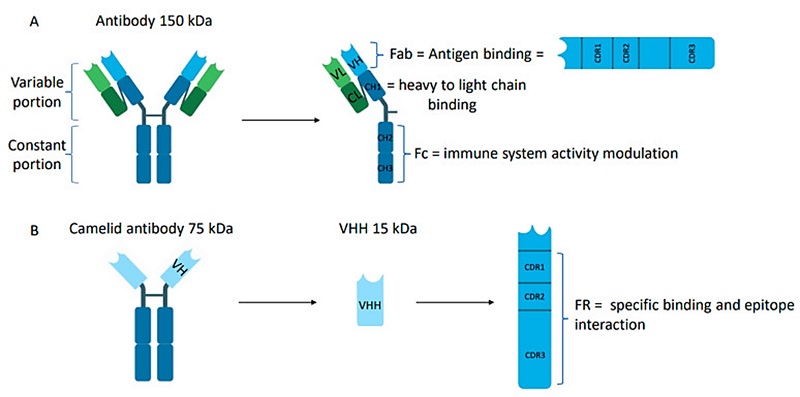 Fig. 1 Structural difference between antibody and VHH.
(Kunz S.; et al. Int J Mol Sci. 2023)
VHH shows some unique advantages versus conventional antibodies since they combine desirable features of monoclonal antibodies with some of the beneficial properties of small molecule drugs:
Three types of Nb banks can be employed to retrieve antigen-specific VHH, the immune, naïve and synthetic library. The immune library is produced through the stimulation of the B cells of immune camelids with an antigen. As for selecting specific VHHs from a library, the most common method is phage display, which is a multistep process consisting of mRNA extraction from camelid immune cells, cDNA synthesis by reverse transcription, VHH amplification by polymerase chain reaction (PCR), and ligation into a phagemid, which is subsequently transformed into host cells to generate a VHH library. High-affinity VHHs are usually identified after 3 to 5 rounds of biopanning. Then, they are eluted to be further characterized.
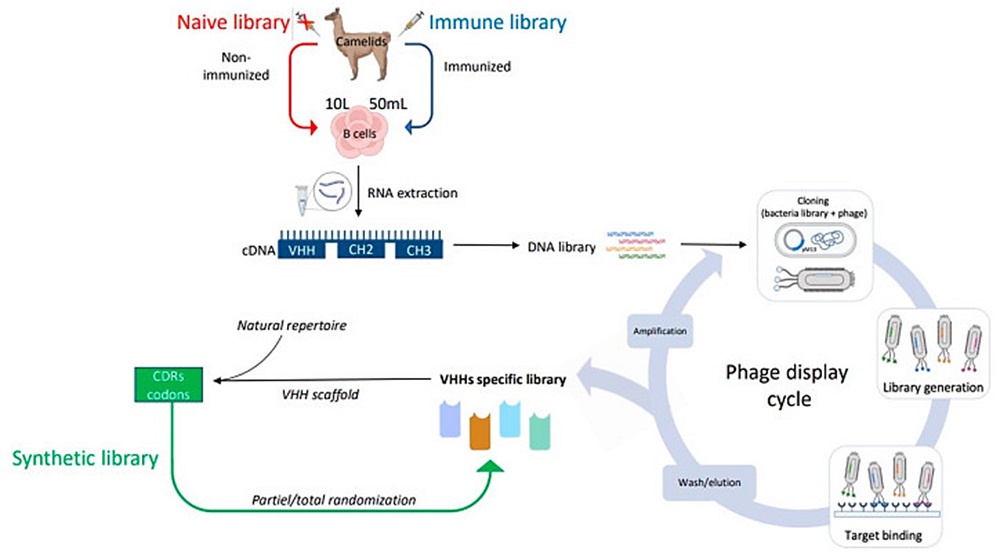 Fig. 2 Schematic overview to generate immune, naive, and synthetic VHHs libraries through phage display.
(Kunz S.; et al. Int J Mol Sci. 2023)
VHHs/Nbs are easily captured on beads via their labels. The directional immobilization of the Nb, with its paratope oriented toward the solution, assists in very efficient antigen capture. Thus, the high specificity and the adaptation of Nbs to obtain a directional immobilisation on an inert resin contribute to the success of Nb‐based affinity chromatography.
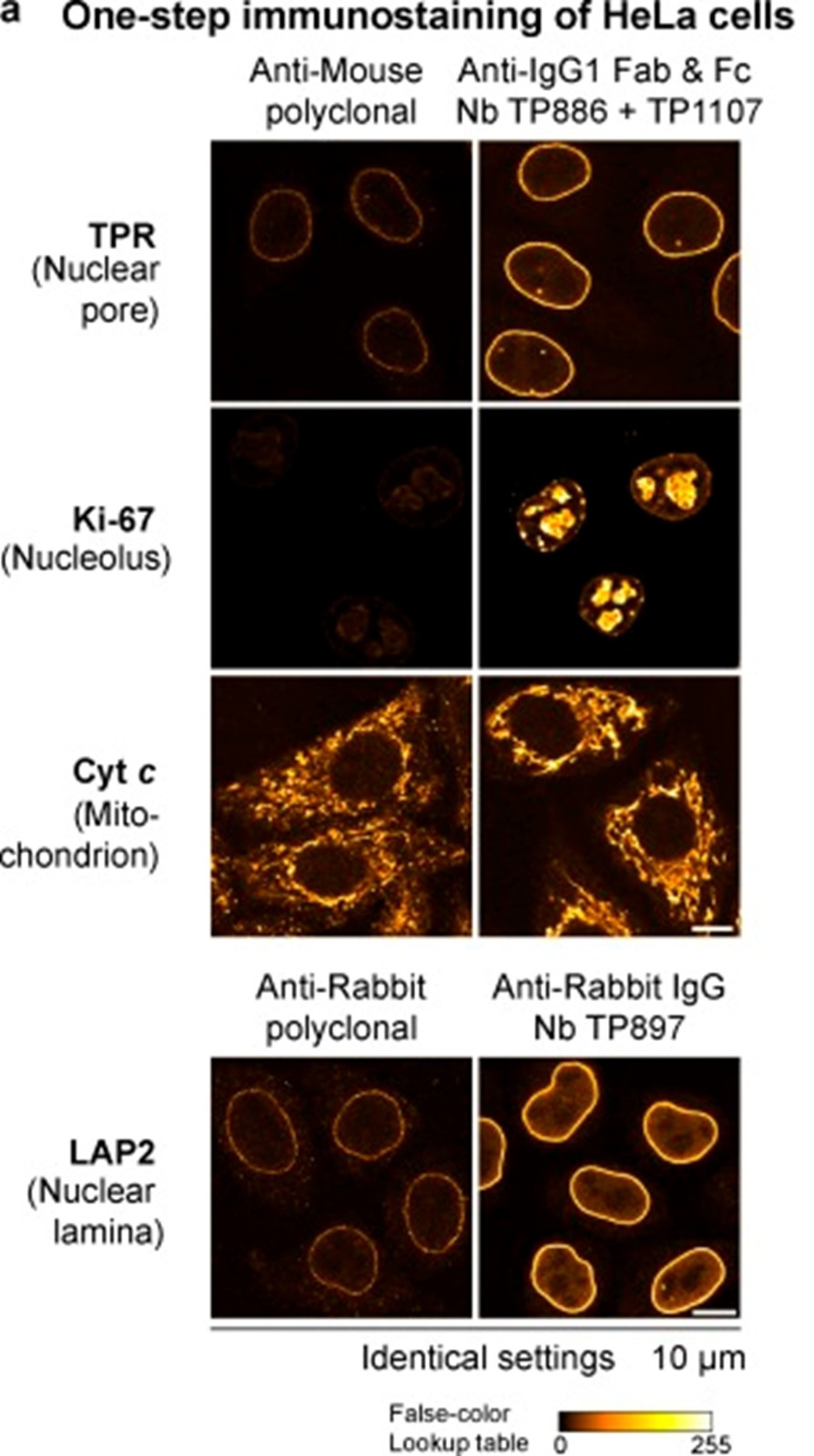 Fig. 3 One-step immunostaining of HeLa cells with anti-IgG nanobodies.
(Pleiner T,; et al. J Cell Biol. 2018)
Labeled VHHs/Nbs also have unique advantages in immunoassay. For example, in conventional indirect immunofluorescence, epitopes are initially decorated with a primary antibody and detected with a fluorophore-labeled secondary one, each around 12–15 nm in size. The effective displacement between label and epitope can reach up to 24–30 nm and thus significantly deteriorate the achievable precision and accuracy of protein localization by super-resolution fluorescence microscopy. However, Nbs are an ideal solution to this problem due the smallest size. Site-specifically labeled Nbs can place fluorophores closer than 2 nm to the antigen and, despite their small size, but tolerate up to three dyes. Currently, a variety of anti-Tag/ and anti-immunoglobulin secondary VHH antibody have been shown to have excellent ability in ELISA, WB, IF, etc.
VHHs/Nbs' high stability permits their intracellular expression, leading to functional antigen-binding entities. This capacity allows a myriad of possibilities to design innovative tools for molecular or developmental biology. For example, the genes encoding a Nb and a fluorescent protein are cloned in frame behind a suitable promotor. Transfection of this genetic construct in cell lines and its expression generate chromobodies that track the cognate antigen of the Nb within living cells.
Due to the unique characteristics and advantages over conventional antibodies, there is much ongoing research and development into the application of VHHs/Nbs in the broad field of diagnostics. The Fig.4 shows some application formats of Nbs in the field of diagnostics.
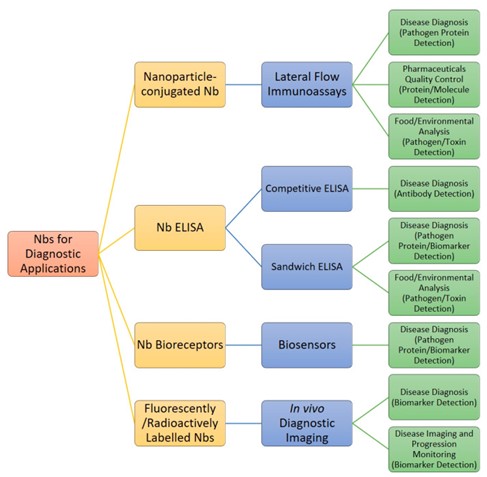 Fig. 4 Flowchart representation of Nb use for diagnostics.
(Jin BK.; et al. Int J Mol Sci. 2023)
A wide range of Nb-based IVD tests have been developed. These tests can be used to screen for possible cancers in people at risk and veterinary infectious disease (such as newcastle disease, foot and mouth disease, porcine circovirus etc.). Also, in terms of testing for small molecule haptens, a variety of VHHs have been identified and formatted to screen for possible contaminations with toxins, pesticides, and herbicides in food or other consumer goods.
VHHs/Nbs can rapidly extravasating, diffusing deep into tissues without sticking to nontargeted cells, while the excess Nbs are also rapidly cleared via the kidneys. Therefore, for in vivo diagnostic tests, Nbs may be one of the best tracers for noninvasive imaging. Previous studies have shown that Nbs appear to be an exquisite tool for SPECT/CT or PET/CT.
Recently, Ablynx developed the Nb caplacizumab (Cablivi ™), an anti-von Willebrand factor (VWF), for the treatment of acquired thrombotic thrombocytopenic purpura (aTTP). Table 1 summarizes several Nbs that have reached clinical testing.
Table 1 List of therapeutic Nbs
| Nb Name | Disease | Target | Status |
| Caplacizumab | Acquired thrombotic thrombocytopenic purpura | Von Willebrand factor | Approved |
| Ozoralizumab (ATN-103) | Rheumatoid arthritis | TNF | Clinical trial; phase II |
| Vobarilizumab (ALX-0061) | Rheumatoid arthritis systemic lupus erythematosus | IL-6 | Clinical trial; phase II |
| ALX-0171 | Lower respiratory tract infection | Respiratory syncytial virus (RSV) | Clinical trial; phase II |
| M1095 | Psoriasis | IL17A, IL17F and IL17A/F | Clinical trial; phase II |
| Bispecific nanobody-derived CAR-T cells | Refractory/relapsed B-cell lymphoma | CD19/CD20 | Clinical trial; phase I |
| α-ADAMTS-5 nanobody M6495 | Osteoarthritis | ADAMTS-5 | Clinical trial; phase I |
| VHH batch 203027 | Diarrhea | rotavirus | Clinical trial; phase II |
| [131I]-SGMIB anti-HER2 VHH1 | Breast cancer | HER2 | Clinical trial; phase I |
| AD-114 | Idiopathic pulmonary fibrosis | CXCR4 | Preclinical |
In vivo studies demonstrated that the Nb was efficiently transported across the blood-brain barrier and could even be used to transport any cargo into the brain. Backed by intrinsic beneficial biochemical and biophysical properties, Nbs are a robust targeting entity that can be easily assembled or incorporated into more complex constructs. Even in the absence of an intrinsic therapeutic effect, their conjugation with chemotherapeutic agents generates promising drug delivery compounds.
References
Loading ......
