
Inquiry Basket
 Loading ......
Escherichia coli (E. coli) strains exist as commensal bacteria which live harmlessly in the intestinal tracts of humans and other mammals. The surface of E. coli contains multiple essential antigenic structures which the bacteria express. The antigens present on E. coli surfaces enable scientists to identify strains through serotyping and determine virulence levels and track outbreaks. The identification of E. coli traditionally depends on antibody tests which detect three surface antigens: O-lipopolysaccharide and flagellar H-antigens and capsular K-antigens.
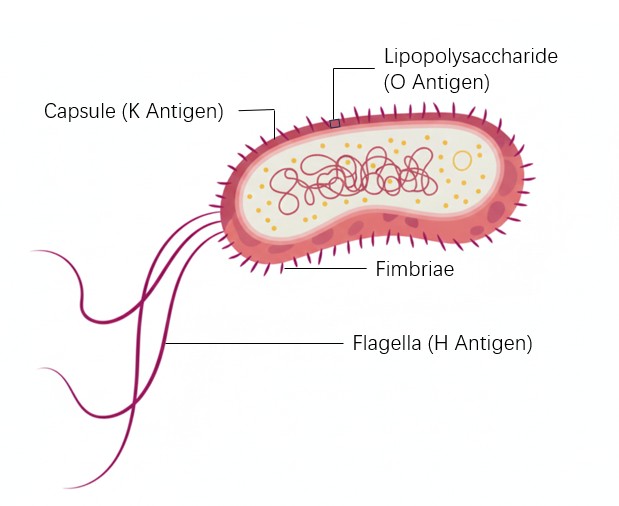 Figure 1. Antigenic structure of E. coli.
The outer membrane of E. coli contains lipopolysaccharides (LPS) which consist of lipid A and core oligosaccharides and a distinct polysaccharide known as the O-antigen. The removal of O-antigens leads to reduced pathogenicity because these antigens play a crucial role in host-pathogen interactions. Scientists use the different O-antigen antigens to identify E. coli strains because these antigens show distinct antigenic properties. Scientists have established 186 O-groups through their research but they have not assigned designations to O31, O47, O67, O72, O94 and O122 and they have divided four groups into subtypes O18ab/ac, O28ab/ac, O112ab/ac and O125ab/ac. The O antigens of E. coli serve as fundamental elements of bacterial lipopolysaccharides which determine both serological diversity and pathogenic potential. The bacterium uses these antigens for serogroup identification and depends on them to evade the immune system and maintain its virulence. The O antigen diversity in E. coli results from genetic changes that occur in specific gene clusters which contain the majority of genes that encode sugar biosynthesis and polymerization enzymes including Wzx (O-antigen flippase) and Wzy (O-antigen polymerase).
The surface antigens of pathogenic E. coli serve as essential markers for bacterial identification and virulence assessment and epidemiological studies. The O antigen exists as a part of the lipopolysaccharide (LPS) structure which covers the bacterial outer membrane. The different O antigens between bacterial strains enable scientists to identify specific serogroups including O157 and O111 while they track disease outbreaks and detect harmful bacterial strains. The diverse structure of O antigens enables bacteria to evade the immune system which makes them essential for clinical microbiology research and practice.
View more E. coli O Antigens
The H antigen represents a vital surface antigen because it contains flagellar proteins which enable bacterial movement. The H antigen system uses numerical designations like H7 and H21 to identify different strains that share the same O serogroup. The flagellar type determines the distinction between O157:H7 and O157:H- strains. The H antigen identification process in E. coli requires complete serotyping because it enables scientists to identify different E. coli strains. The H antigen which exists in flagellar proteins determines bacterial motility and their potential to cause disease. The H antigen exists as different flagellin proteins which derive from distinct genes including fliC and multiple other genes that generate phase-variable flagellin types. The process of H antigen typing becomes complicated because E. coli strains display wide genetic variation. Research has proven that E. coli flagellin genes maintain stable genetic patterns through studies which identified fliC genes and their corresponding H antigen types. Multiple E. coli H antigens show genetic similarities through their DNA sequences which either maintain identical patterns or develop distinct features for classification purposes. The H antigen helps scientists identify specific bacterial strains while simultaneously affecting how pathogens interact with their hosts to establish infections.
The K antigen which E. coli refers to as capsular polysaccharide serves as a vital marker for identifying different E. coli strains. The K antigen functions as a protective shield which helps pathogenic E. coli bacteria survive and colonize during infections by blocking host immune system responses. The K antigen prevents neutrophil opsonophagocytosis through its steric blocking of O-antibody binding sites which enables bacteria to escape host immune detection. Research shows that E. coli contains more than 100 different K antigen serotypes which demonstrate significant diversity. The chemical structure of K antigens determines their immunogenic properties and their ability to cause disease in hosts. The K1 and K5 antigens protect bacteria from phagocytic destruction and complement system attacks which makes them dangerous for causing severe infections such as neonatal meningitis and urinary tract infections. The complete E. coli serotype identification requires the combination of O and H antigens with K antigens which results in the specific strain designation O157:H7:K-. The complete serotyping system enables healthcare professionals to identify strains and researchers to study outbreaks and developers to create specific treatments and vaccines.
| Antigen | Approximate Number of Identified Serotypes |
| O antigen | O1 – O188 (some numbers are missing, e.g., O31, O47, O67, O72, O94, O122; sub‑variants include O18ab, O18ac, O28ab, O28ac, O112ab, O112ac) |
| H antigen | H1 – H56 (missing variants: H13, H22, H50) |
| K antigen | More than 100 described K types, commonly K1, K5, K12, K57, etc., divided into A, B, and L groups |
| Serotype | Main Pathogenic Features | Remarks |
| O157:H7 | Produces Shiga‑like toxin (Stx); can cause hemorrhagic colitis and hemolytic‑uremic syndrome (HUS) | The most famous pathogenic E. coli worldwide |
| O104:H4 | Combines adhesive traits of enteroaggregative E. coli with Shiga toxin; caused the 2001 German outbreak | A classic "hybrid" pathogenic strain |
| O26:H11, O45:H2, O111:H8, etc. | Common diarrheagenic E. coli (DEC) serotypes that cause gastroenteritis | Frequently monitored in food‑safety testing |
| K1 (often with O18:K1:H7) | Capsular polysaccharide associated with neonatal meningitis | K1 capsule is a major virulence factor |
References
Loading ......
