
Inquiry Basket
 Loading ......
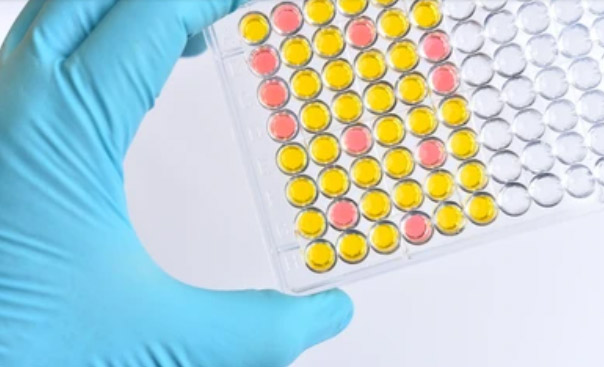
ELISA, which stands for enzyme-linked immunosorbent assay, is a powerful immunoassay technique used to detect and quantify the presence of antigens in biological samples. It relies on the specific binding between the antibody and the antigen and the enzyme labeled on the antibody or antigen to catalyze the color reaction of the specific substrate to achieve target detection. ELISA kits are designed to streamline and simplify the process, providing researchers with ready-to-use reagents and standardized protocols.
The basis of ELISA is the solid phase of antigen or antibody and enzyme labeling of antigen or antibody. Although the antigen or antibody bound to the surface of the solid phase carrier still maintains its immunological activity, the enzyme-labeled antigen or antibody retains both immunological activity and enzyme activity.
In detection, the substance under test (antigen or antibody) in the sample binds to immobilized antigens or antibodies. Wash the plate to remove non-conjugates, and then add enzyme-labeled antigens or antibodies. At this time, the amount of enzyme that can be immobilized is related to the amount of the substance to be tested in the sample. After adding the substrate that reacts with the enzyme to develop color, the content of the substance in the sample can be judged according to the depth of the color, and qualitative or quantitative analysis can be carried out. Due to the high catalytic efficiency of the enzyme, the result of the immune reaction is indirectly amplified, so that the determination method can achieve high sensitivity.
| Type | Principles | Advantages | Disadvantages |
| Direct ELISA | Antigens in the sample, including the desired target, are bound directly to the plate. An enzyme-conjugated antibody is then added as a probe for the desired analyte. | No cross-reactivity issues Rapid | Low sensitivity Non-specific binding to antigens may cause a high background |
| Indirect ELISA | Antigens from the sample, including the desired target, are bound to the plate. However, it involves two antibodies; a primary antibody and a secondary conjugated antibody. | High sensitivity | Risk of antibody cross-reactivity Non-specific binding to antigens may cause a high background |
| Sandwich ELISA | The target is bound between the capture antibody (for antigen detection) or capture protein (for antibody detection) and the conjugated detection antibody to form a "sandwich". | High sensitivity and specificity | Choosing the right antibody pair can be time-consuming |
| Competitive ELISA | Involves competition between sample antigen and conjugated antigen for binding a specific amount of antibody. The more antigens in the sample, the less binding of conjugated antigens, the lower the detection signal. | Fast Suitable for small targets that are not easily bound by two antibodies | Low specificity |
When selecting an ELISA format, it is crucial to consider the research purpose. Direct ELISA is suitable for characterizing antibody binding and assessing cross-reactivity. Indirect ELISA is better for determining the total antibody concentration in a sample. Sandwich ELISA is widely preferred for its high specificity and sensitivity, but it requires the use of matched antibody pairs for accurate results. Competitive ELISA is more challenging to develop and is typically used for studying small antigens with a single epitope. Each ELISA format serves a specific research need, and careful consideration should be given to choosing the most appropriate format accordingly.
Exosome Quantification Immunoassay Kits
Inhibitor Screening Assay Kits Inhibitor Screening Assay Kits
CDSimple™ Chemiluminescent ELISA Kits
ELISA kits offer a powerful and versatile platform for detecting and quantifying antigens. By understanding the principles and types of ELISA kits, researchers can unlock a wealth of information about disease markers, protein expression, and drug efficacy. With extensive experience and a commitment to excellence, Creative Diagnostics provides a wide range of high-quality ELISA kits tailored for various applications. Harnessing the power of ELISA, scientists can advance their research, diagnose diseases, and contribute to improving human health and well-being.
References
Loading ......
