
Inquiry Basket
 Loading ......
Eastern Equine Encephalitis Virus (EEEV) is a neurotropic mosquito-borne flavivirus that can cause severe encephalitis in humans and horses. The virus is a member of the Togaviridae family and the Alphavirus genus. Alphavirus virions are composed of an icosahedral nucleocapsid surrounded by a host-derived lipid-containing envelope into which the viral glycoproteins are inserted. The nucleocapsid or core contains a positive-sense ssRNA genome and the capsid (C) protein. The two viral glycoproteins, E1 and E2, are linked to form E1-E2 heterodimers, three of which, in turn, associate to form the spike structure on the surface of the virion envelope. While Eastern Equine Encephalitis (EEE) is rare, it can be devastating, with a mortality rate of up to 30%-70% in those who become sick. The virus is endemic in North America and has been associated with significant outbreaks in various regions. Understanding the structure and function of Eastern Equine Encephalitis Virus (EEEV) antigens is crucial for developing effective diagnostic tools and vaccines against this disease.
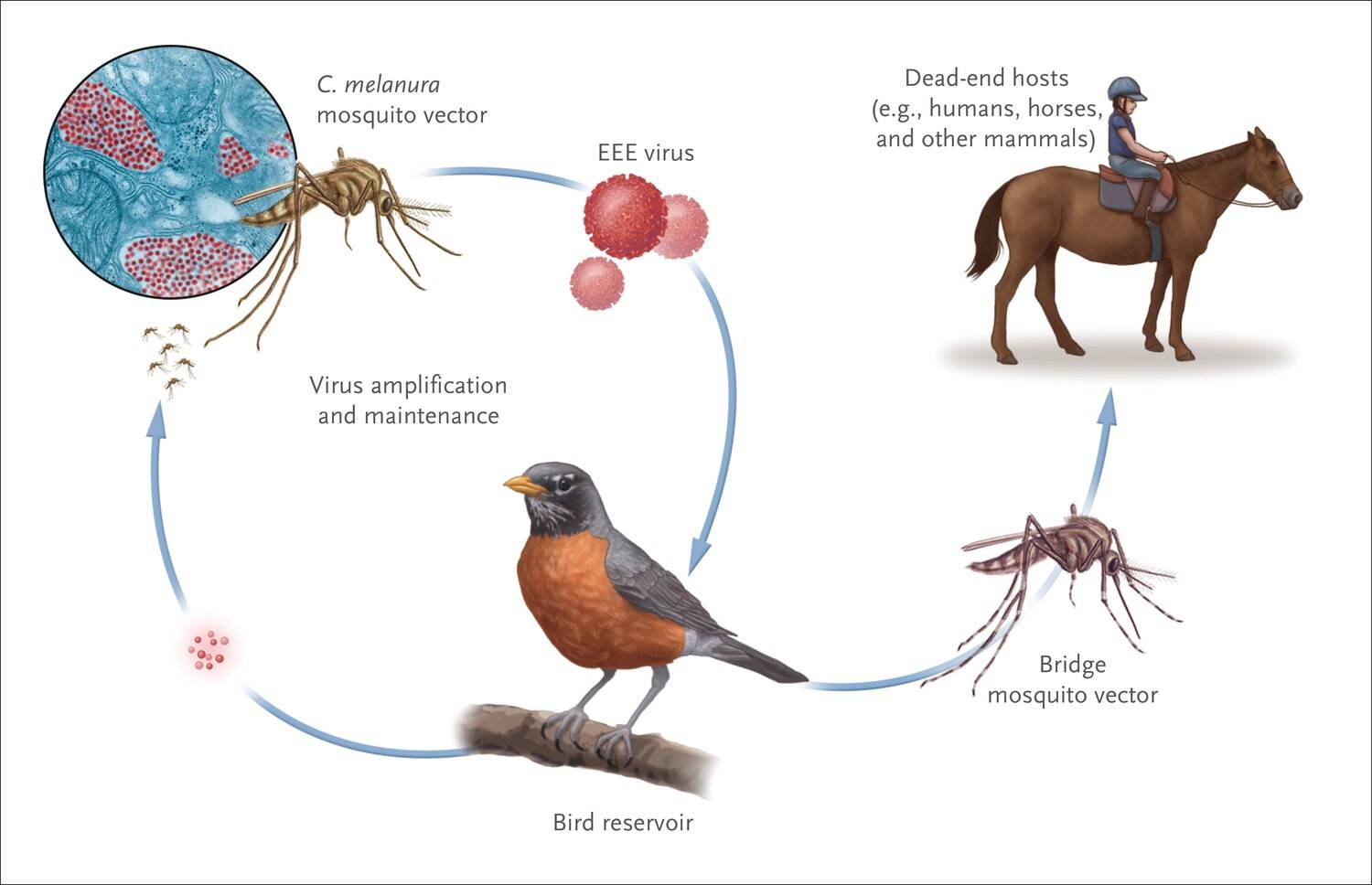 Figure 1. Transmission Cycle of Eastern Equine Encephalitis Virus (EEEV).
(Source: David M. Morens., et al. 2019.)
The transmission cycle of Eastern equine encephalitis virus involves mosquitoes and birds as hosts. The Culiseta melanura mosquito, which primarily bites birds, is responsible for spreading the virus among birds. The virus then multiples in the birds' bloodstream. Humans and equines become infected when they are bitten by mosquito vectors that have acquired the virus from avian reservoirs. People and horses are considered dead-end hosts because unlike birds, they don't develop high levels of virus in their bloodstream and cannot pass the virus on to other biting mosquitoes. Although in most cases EEEV results in a self-limiting illness, it can cause severe encephalitis with 30–75% mortality in humans, depending on age, and up to 90% in horses. Clinical manifestations may include pyrexia, emesis, respiratory distress, and focal neurological deficits. Death is rapid, within 3–5 days after infection, and 50–90% of survivors can have long-lasting neurological defects. EEEV was serologically distinguished from WEEV in 1933. Since 1964, the United States has documented at least 285 cases of EEEV. A cyclical pattern of EEEV cases has been observed in the United States, culminating in a recent peak in 2019. The Eastern Equine Encephalitis Virus (EEEV) continues to haunt regions across the Americas, while cases are most frequently reported in the eastern reaches of North, South, and Central America, the virus' reach extends far beyond these geographic boundaries.
At the molecular level, EEEV, like other alphaviruses, exhibits a quasi-icosahedral symmetry, characterized by 60 trimeric spikes composed of E1 and E2 glycoprotein heterodimers. These spikes play a crucial role in viral attachment and entry into host cells. While heparan sulfate has been implicated as an attachment factor, the specific entry receptor for EEEV remains elusive, suggesting a complex interplay of factors governing viral entry. Moreover, the neurovirulence of EEEV may be influenced by its interaction with heparan sulfate. The dynamics of EEEV entry into host cells remain a subject of ongoing investigation. Unlike many alphaviruses, where the E1 and E2 glycoproteins are the primary targets of neutralizing antibodies, the specific mechanisms by which EEEV evades the immune response require further elucidation. The enigmatic nature of EEEV underscores the urgent need for continued research to develop effective prevention and treatment strategies against this formidable pathogen.
 Figure 2. Entry and replication cycle of alphaviruses.
(Source: Hasan SS., et al. 2021.)
The E1 and E2 glycoproteins are the major structural proteins of the EEE virus. They are responsible for attachment to host cells, membrane fusion, and viral neutralization by antibodies. The E1 glycoprotein is a transmembrane protein with a fusion peptide that facilitates membrane fusion. The E2 glycoprotein is a surface protein that contains receptor-binding domains.
The E1 and E2 glycoproteins are arranged in a heterodimer complex on the surface of the virus. This complex is essential for viral entry and infectivity. Mutations in the E1 or E2 glycoproteins can affect viral replication and virulence.
No current United States FDA-approved vaccine exists for human use against EEEV, though there is one for equine use as well as one investigational vaccine primarily used for laboratory personnel that shows moderate immunogenicity9. Live-attenuated and formalin-inactivated vaccines utilized for alphaviruses have limitations due to side effects or lack of efficacy.
Creative Diagnostics is a leading provider of high-quality reagents and diagnostic tools for Eastern Equine Encephalitis Virus (EEEV) research. Our company offers a wide range of EEEV antigens, including recombinant proteins, peptides, and antibody panels, that can be used for various research and diagnostic applications.
References
Loading ......
