
Inquiry Basket
 Loading ......
Cyanine dyes are a class of synthetic dyes that have revolutionized fluorescence labeling in biotechnology. With their unique chemical properties and versatile applications, cyanine dyes offer enhanced brightness, stability, and spectral range for visualizing and quantifying biomolecules. Cyanines have proven useful in multiple fields, such as photography, biology, laser technology, and analytical chemistry.
Cyanine dyes belong to the polymethine group and are characterized by a conjugated system between two nitrogen atoms. This arrangement allows for efficient energy transfer, resulting in vibrant fluorescence. The cyanine molecule can exist in different forms, including streptocyanines (or open-chain cyanines), hemicyanines, and closed cyanines, each with distinct connectivity patterns. These structural variations enable tailoring of the dye's properties to suit specific applications, making cyanine dyes highly adaptable to diverse experimental needs.
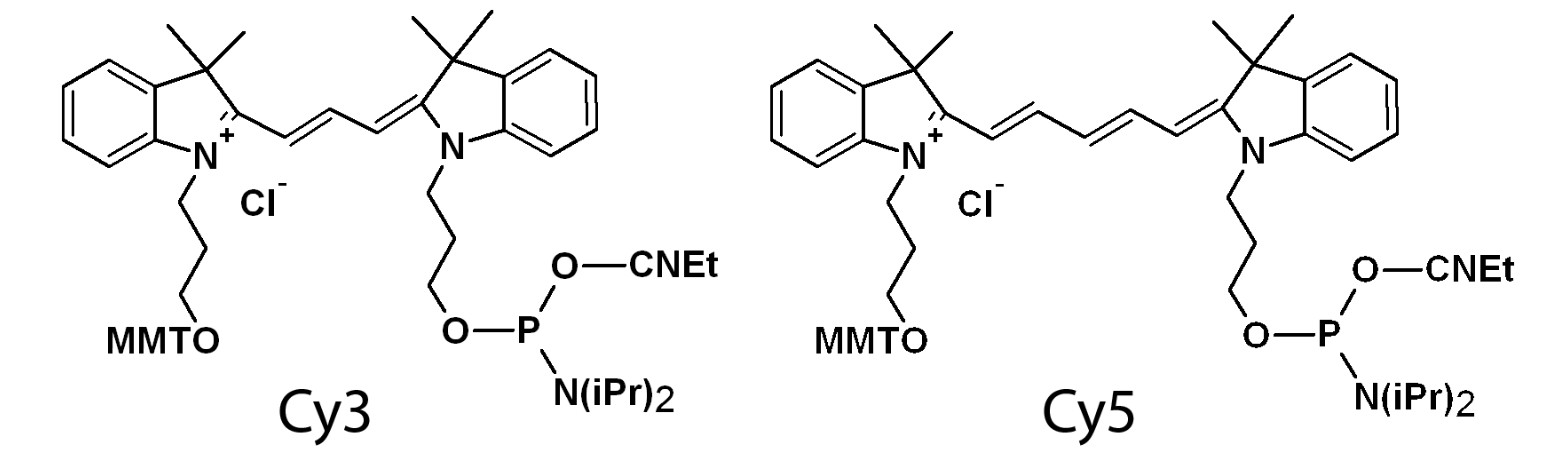 Figure 1. Molecular structures of Cy3 and Cy5.
(Source: Kretschy, N. et al., 2014)
Cyanine dyes are highly advantageous replacements for conventional dyes like fluorescein and rhodamines due to their brighter and more stable fluorescence properties. Among the commonly used cyanine dyes, Cy3 and Cy5 are particularly popular and are often combined for two-color detection purposes.
Cy3 is a widely used cyanine dye that emits a greenish-yellow fluorescence. It has an excitation wavelength of approximately 550 nm and an emission wavelength of around 570 nm. Cy3 is commonly employed in fluorescence-based techniques such as nucleic acid labeling, microarrays, and immunofluorescence assays. It is compatible with standard filters for Tetramethylrhodamine (TRITC) and can be easily detected by fluorometers, imagers, and microscopes. Its high molar extinction coefficient allows for visual detection on electrophoresis gels and in solution.
Cy5 is another popular cyanine dye known for its far-red fluorescence. It has an excitation wavelength of about 650 nm and an emission wavelength of approximately 670 nm. Cy5 offers excellent brightness and a high extinction coefficient, allowing for sensitive detection even at low concentrations. It has become a preferred replacement for far-red fluorescent dyes due to its compatibility with CCD detectors, which exhibit maximum sensitivity in the red region. Cy5 finds applications in various techniques, including nucleic acid labeling, protein labeling, microarray analysis, and in vivo imaging.
To differentiate between Cy3 and Cy5, scanners utilize diverse laser emission wavelengths (typically 532 nm and 635 nm) and filter wavelengths (550-600 nm and 655-695 nm) to avoid background contamination. This allows for easy color distinction and the quantification of Cy3 and Cy5 labeling in a single sample using multiparametric detection.
Cy3.5 is commonly used as an alternative to sulfoRhodamine 101. It offers similar fluorescence properties and is useful in applications such as nucleic acid labeling and fluorescent microscopy.
Cy5.5 is a near-infrared (IR) fluorescent dye with excitation and emission maxima at approximately 678 nm and 694 nm, respectively. Its emission falls within the near-IR range, which is advantageous for in vivo imaging studies and other applications where background interference is a concern. Cy5.5 enables deep tissue penetration and allows for non-invasive visualization of biological processes.
Cy7 is another near-IR cyanine dye commonly used in in vivo imaging applications. It has excitation and emission maxima at around 750 nm and 776 nm, respectively. Cy7 offers enhanced sensitivity in the near-IR range, enabling deep-tissue imaging with minimal background interference. Its invisible nature to the naked eye allows for highly sensitive detection and visualization of biological objects.
Sulfonated and non-sulfonated cyanines are two categories of cyanine dyes that differ in their solubility properties and applications.
Reference
Loading ......
