
Inquiry Basket
 Loading ......
Cell counting is a crucial step in cell culture. For most operations that require cell lines, such as transfection, cell fusion techniques, cryopreservation, and passage cultures, it is necessary to quantify the number of cells prior to the operation. Using the same number of cells in the culture will maintain optimal growth. This will standardize cell culture procedures and ensure reproducibility.
Creative Diagnostics will provide a basic protocol for the cell-counting hemocytometer operation. This will ensure cell counts accurately and efficiently.
If you use a glass hematocrit counter and coverslip, clean it with alcohol before use. Moisten the coverslip with water and place it on the hematocrit counter.
If you choose a disposable hematocrit counter, remove it from its packaging before use.
To count cells, completely suspend the suspension. Add an appropriate volume of cell suspension (20-200 μL) to a centrifuge tube before the cells settle. Add 0.4% Tyran Blue and mix gently. Incubate the mixture for 5 minutes at room temperature (15°C - 25°C).
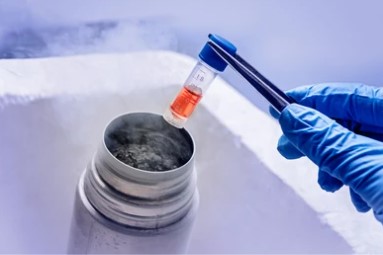 Fig 1. Sample suspension
Resuspend the cell mixture and add 10 µL of stained cells to the hematocrit chamber with a 20 µL pipette. If a glass hematocrit counter is used, ensure that the two chambers under the coverslip are gently filled. This is so that the cell suspension is drawn out by capillary action. If using a disposable blood cell counter, place the cell suspension in the holes of the counting chamber. Allow it to be drawn in by capillary action.
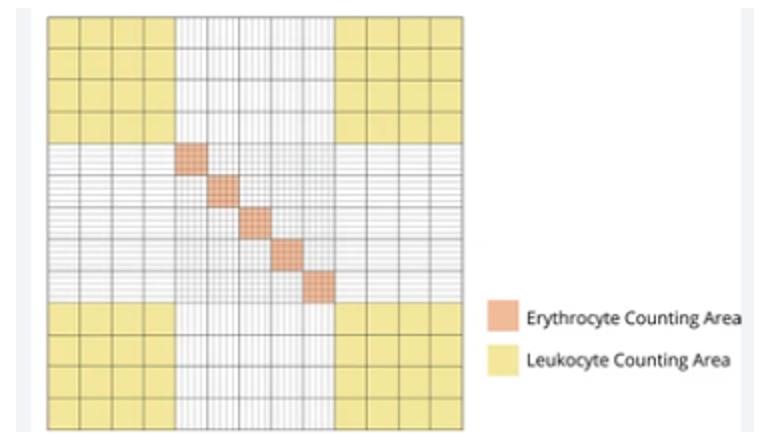 Fig 2. The hematocrit chamber
Note: Don't move the cover slip. Allow capillary action to draw in the sample.
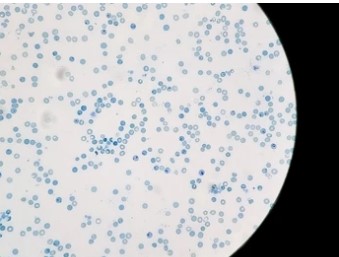 Fig 3. Observation of cells under the microscope
Place the blood cell count under a binocular light microscope. Set the microscope to 10x magnification and focus on the cells.
Analyze the cells in each of the four outer squares of the hematocrit counter. Include the cells at the bottom and left periphery, but exclude the right periphery of the cells at the top and left. Count the unstained live cells in a set of 16 squares (live cells do not absorb tissue blue). A system counts cells only if they are within a square or on the right or bottom border. Dead cells stained with Trypan Blue can also be used for a viability assessment if required.
By recording the number of live and dead cells for each set of 16 corner squares, estimated viability can be calculated. Cell viability can then be determined using the following equation:
Percentage of live cells = The number of live cells counted / total cells counted (live and dead) x 100
(1) Presence of air bubbles and dirt in the counting chamber
(2) Overfilling the counting chamber, allowing samples to flow into channels or other chambers
(3) Incomplete filling of the chamber Cells are not evenly distributed throughout the chamber
(4) Too few cells are counted. This can be remedied by centrifuging the cells, resuspending them in a smaller volume, and recounting.
(5) Too many cells count. This can be resolved by using a higher Tissue Blue dilution, e.g. 1:10.
Loading ......
