
Inquiry Basket
 Loading ......
In the biological control, anti-drug antibodies (ADAs) have become the leading method in modern medicine, with the possibility of using new methods for treating cancer, autoimmune disease, and infectious disease, as well as other disease. Nevertheless, the extent to which the commercial success in the commercialization of the biological system depends on the determination of the commercialization of the system of commercialization.
ELISA testing stands as a pivotal analytical method that influences the commercialization ecosystem. One of the most versatile immunoassay techniques, ELISA is widely used to quantify specific protein markers, antibodies, and other biological molecules. As a core component of biologic control methodologies, it plays a critical role in ensuring product quality. The functional activity of antibodies is of paramount importance, and their use as therapeutic standards is inherently safe when validated through rigorous ELISA-based assays.
A quantitative antigenic biochemical reaction using various antibodies, the basic principle of ELISA is to immobilize antigen or antibody on a solid phase (such as a microtiter plate), and then use two kinds of analytes in combination. In addition, the colorimetric reaction produced by the colorimetric reaction is proportional to the weight of the molecule.
 Figure 1. ADA ELISA assay procedure. (Du, Jialiang, et al., 2023)
In the process of biological control, ELISA has many applications, all-inclusive:
Antibodies to therapeutic proteins (antidrug antibodies, ADA) against monoclonal antibodies, fusion proteins and other biologics. Neutralizing or non-neutralizing ADA. Negative effects on pharmacokinetics (PK) and/or pharmacodynamics (PD).
 Figure 2. Anti-Drug Antibodies in the Biological Therapy. (Pizano-Martinez, Oscar, et al., 2023)
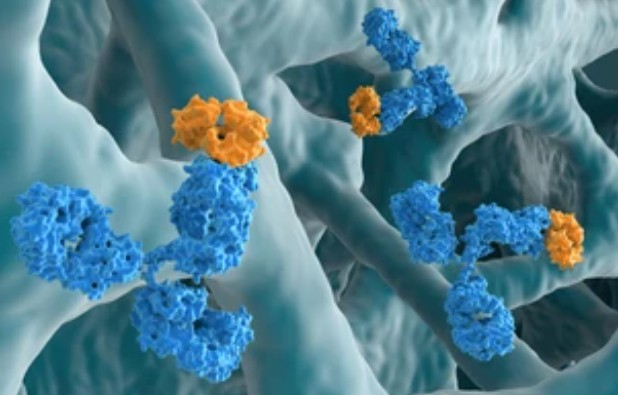
Anti-Drug Antibody (ADA) are the type of antibodies which appear in the blood of patients as a response to the presence of other antibodies. ADA formation is an important aspect of safety and efficacy of therapeutic antibodies and ADCs.

ADA Formation and its impact on ADC: ADA can be formed as a result of an ADC administration to patients with pre-existing antibodies against the antibody component ("linker"). Those antibodies can block the ADC, and therefore reduce its effectiveness, as well as cause adverse reactions. It is necessary to monitor ADA levels during ADC development and clinical trials. ELISA method allows to detect and measure ADA formation.

ADA in monoclonal antibody development
ADA formation may occur during the monoclonal antibody development. Patients may already have antibodies against the therapeutic antibody which will make its treatment less effective, or even lead to adverse reactions. ELISA method can be used to detect these antibodies to guarantee the safety and efficacy of the final product.
ADA in Clinical Trials: ADA levels are monitored during clinical trials to evaluate the safety of biologics. ELISA-based assays can be used to detect ADA formation and relate it to the results of clinical trials. This information is critical to ensure that biologics will be formulated and dosed optimally. ELISA solutions are tailored to meet the critical needs of modern biologics development, with a primary focus on anti-drug antibody (ADA) detection across a broad range of applications, including vaccine research, large molecule drug analysis, and advanced therapeutic modalities.
ELISA is widely used in all aspects of biopharmaceutical research and development:
ELISA is an immunoassay where antibodies (the detection antibody) are made to bind to an antigen (the therapeutic drug) immobilized on a solid surface. The mechanism for ELISA is as follows:
Immobilization of Antigen: the therapeutic drug is immobilized on a microtiter plate.
ELISA has many advantages for ADA detection, including:
Our line of ADA ELISA kits is designed to support the entire lifecycle of biologics development, from lead compound discovery to post-marketing surveillance. These solutions utilize innovative detection chemistry and proprietary antibody pairs to provide exceptional sensitivity and very low cross-reactivity, ensuring reliable data even in the most challenging sample types. Key products include:
| ELISA Kit | Application |
| Exendin-4 ADA ELISA Kit | Detection of ADAs against the GLP-1 receptor agonist Exendin-4 |
| Anti-Ramucirumab ELISA Kit | Quantification of antibodies against the anti-VEGFR2 mAb Ramucirumab |
| Semaglutide ELISA Kit | PK analysis and ADA screening for the GLP-1 analog Semaglutide |
| Chicken Salmonella Enteritidis IgY ELISA Kit | Avian antibody detection for vaccine development and veterinary research |
References
Loading ......
