
Inquiry Basket
 Loading ......
Clostridium difficile is an anaerobic Gram-positive bacillus that colonizes the intestines of healthy people and is an opportunistic pathogen. Normal intestinal flora can resist colonization and overgrowth of C. difficile, but in patients with long-term heavy use of antibiotics or other people with low immunity, C. difficile will overmultiply and release toxins, causing infectious diseases mainly intestinal pathological damage, namely C. difficile infection(CDI). The symptoms of CDI may develop from diarrhea to systemic infection such as fever, abdominal pain, abdominal distension, nausea and vomiting, and severe patients may develop pseudomembranous colitis. The serious complications include toxic megacolon, intestinal obstruction, intestinal perforation and shock, etc. CDI can be classified as mild to moderate, severe and severe with complications.
C. difficile produces various toxins that play a role in CDI, including toxin A (TcdA), toxin B (TcdB). At present, all toxigenic strains can secrete TcdB, but not necessarily produce TcdA. Both TcdA and TcdB inactivate Rho GTPases by enzymatic glycosylation of conserved threonine residues. This pathway leads to actin depolymerization and cell death, and triggers an inflammatory response that exacerbates tissue damage, causes diarrhea, and pseudomembranous colitis. Some strains also produce binary toxins encoded by genes cdtA and cdtB outside the pathogenicity determinant region on the chromosome, making C. difficile even more virulent.
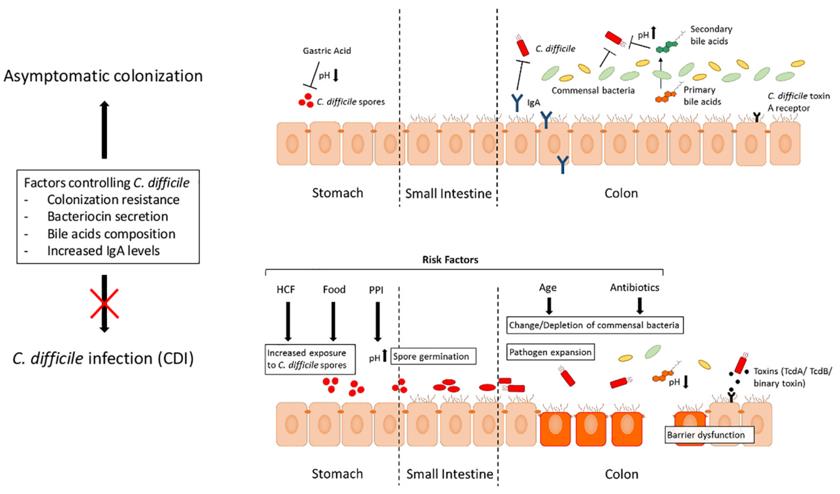 Fig. 1 Processes leading from asymptomatic C. difficile colonization to CDI. (Schäffler, H., & Breitrück, A. 2018)
Previously, toxin A + B EIAs was the most widely used diagnostic test, but its sensitivity was low. GDH is an enzyme produced by C. difficile in relatively large amounts compared with toxins A and B. Although GDH is sensitive, it is not as specific for CDI, because this enzyme is produced by both toxigenic and non-toxigenic organisms. Therefore, the GDH antigen and toxin A/B in the sample can be detected by commercial kits at the same time. If the two results are inconsistent, the tcdB gene can be detected by PCR to determine the presence of C. difficile in the sample.
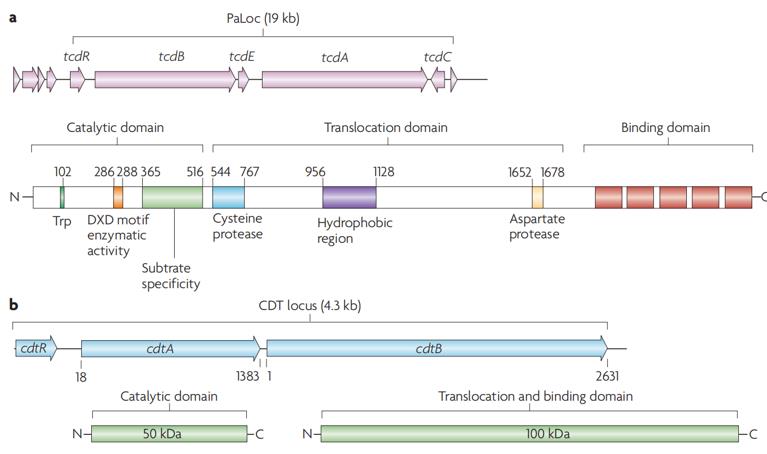 Fig. 2 Toxins produced by Clostridium difficile. (Rupnik, M.; et al. 2009)
Loading ......
