

Inquiry Basket
 Loading ......
In the field of life sciences and drug development, chemical proteomics, as a cutting-edge discipline integrating chemical technology and proteomic analysis, is playing an increasingly important role, especially in solving the key problem of off-target effects of small molecule drugs.
The basic principle of chemical proteomics is to use chemical probes or reactive molecules to specifically label proteins or their modification sites, and then detect the markers and analyze the related protein network through high-throughput methods such as mass spectrometry. Its core technologies are rich and diverse. Active group spectrum analysis (ABPP) can selectively capture the active sites of a certain type of enzyme to analyze the enzyme function; thermal proteomics analysis (TPP/CEM) studies the interaction between proteins and chemical small molecules based on specific technologies; limited hydrolysis mass spectrometry (LIP-MS) combines affinity enrichment and mass spectrometry analysis to study the affinity stability of drug targets; protein degradation targeted complex (PROTAC) induces protein degradation by designing small molecule probes, providing new strategies for drug development.
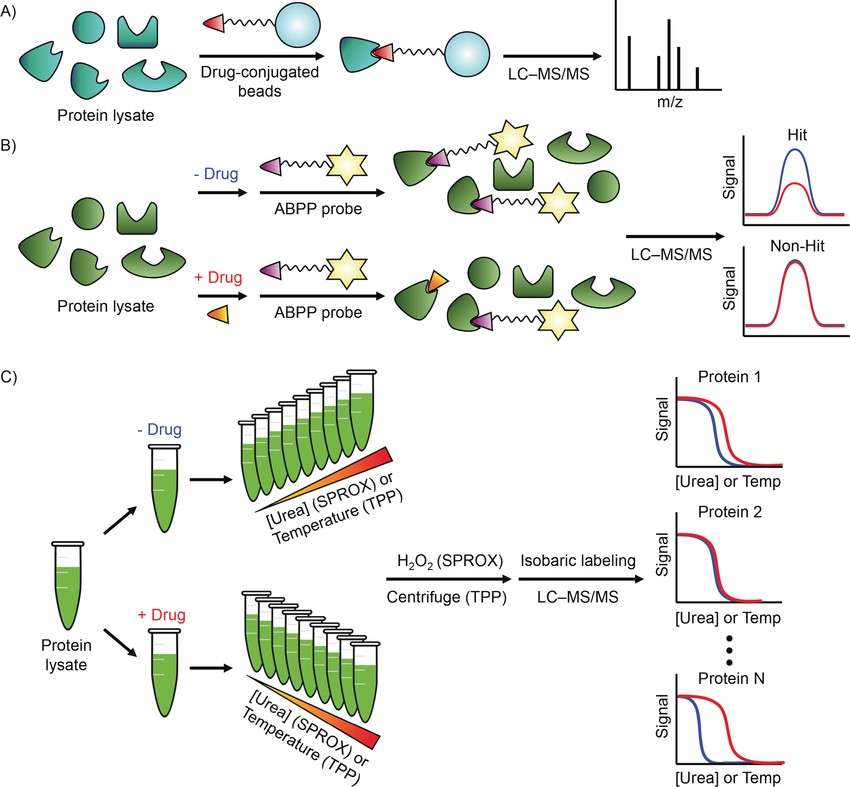 Figure 1. Chemoproteomic strategies for drug target identification. (Sources: Lu KY. 2020)
Chemical proteomics has a wide range of applications. This system enables drug development by identifying drug target proteins and their mechanisms of action while optimizing drug selectivity and activity; it reveals disease-related protein changes and provides molecular research clues during disease research; it supports basic biological research through protein interaction network studies and analysis of protein localization and function; and in environmental toxicology it examines chemical substance effects on organisms while screening new drugs and evaluating environmental pollutant toxicity.
Small molecule drug off-target effects occur when drugs attach to biological molecules different from their intended targets in the body resulting in unforeseen biological consequences. The occurrence of this phenomenon reduces drug effectiveness while increasing toxic side effects which compromises drug safety and effectiveness making it a key factor in the failure of numerous new drug research projects. Off-target binding creates toxic effects including liver toxicity and immunogenicity while diminishing drug selectivity and specificity and disrupting biological processes. The early detection and evaluation of off-target effects enables researchers to modify development strategies and optimize drug design thus minimizing resource waste in subsequent research stages.
Common technologies for off-target screening based on chemical proteomics include chemical probe combined with mass spectrometry analysis, activity-based protein analysis (ABPP), click chemistry and photoaffinity labeling technology, CETSA (Cell Thermal Shift Assay), quantitative chemical proteomics, covalent drug screening platform, and affinity-based chemical proteomics. All examined technologies demonstrate unique benefits and limitations. Chemical probes combined with mass spectrometry demonstrate high sensitivity and specificity but need high-quality probe design and face potential interference from background signals. The ABPP method enables drug-target binding assessment in physiological conditions but faces complex probe design challenges as well as certain limitations. The combination of click chemistry and photoaffinity labeling enhances probe penetration through cell membranes and specificity yet photoaffinity labeling faces challenges with nonspecific protein binding. CETSA operates with ease yet fails to detect certain targets because of insufficient thermal stability and false positive results. Quantitative chemical proteomics can differentiate direct from indirect binding interactions yet faces analytical challenges. Covalent drug screening platforms provide precise visualization of drug action networks yet their probe design complexity potentially alters drug activity. Affinity-based chemical proteomics can reveal the biological mechanisms and potential off-target effects of drugs, but probes may introduce nonspecific binding.
Drug off-target effects manifest through fluoroquinolones' mitochondrial damage, HDAC inhibitors' adverse reactions, serious adverse reactions from BACE inhibitors, and teratogenic effects from kinase inhibitor thalidomide. Chemical proteomics delivers fitting solutions for these cases through methods like photocrosslinking probe technology which identifies drug-protein binding sites precisely, quantitative chemical proteomics which produces target maps, thermal stability analysis (CETSA) which tracks drug influence on protein thermal stability, and affinity enrichment combined with mass spectrometry analysis which determines drug-protein interactions effectively while DARTS technology identifies drug binding to target proteins.
In summary, chemical proteomics technology provides comprehensive and accurate tools for the study of drug off-target effects, helps to deeply understand the mechanism of action of drugs, provides important support for safety assessment in drug development, and promotes drug research and development to a new level.
The selection of technology needs to be comprehensively judged in combination with sample type, target characteristics and research stage:
Dynamic analysis of living cells: CETSA or click chemistry technology is preferred because it can directly detect protein-drug interactions under physiological conditions (such as the verification of TNP-470 off-target effects in the case).
Membrane protein or post-translational modification research: Affinity-based chemical proteomics is recommended, and its probes can penetrate the cell membrane to capture membrane-bound proteins (such as fluoroquinolone drug mitochondrial damage research).
Early drug screening: The covalent drug platform is combined with quantitative chemical proteomics to achieve target verification and off-target warning at the same time (such as the off-target discovery of HDAC inhibitor MBLAC2).
Achieve early warning through multi-dimensional data integration:
Target network map construction: Use quantitative chemical proteomics to draw drug-protein interaction networks and identify high-abundance binding proteins (such as BACE inhibitors using TPP technology to discover cathepsin D off-target).
Dynamic modification monitoring: ABPP combined with metabolic labeling probes to track the effect of drugs on enzyme activity in real time (such as monitoring the activity of CRBN complexes in the study of thalidomide teratogenicity).
Artificial intelligence-assisted prediction: training machine learning models based on existing off-target databases to predict potential binding sites of small molecules (such as using AlphaFold to predict protein conformational changes).Targeted optimization of probe design and detection methods is required:
Probe penetration improvement: development of lipid-soluble photoaffinity probes (such as CiproP1 probes that penetrate bacterial membranes to locate mitochondrial proteins).
Membrane protein stabilization technology: combined with Nanodisc technology to maintain the native conformation of membrane proteins and improve the accuracy of CETSA detection (such as off-target research plans for GPCR drugs).
Cryo-electron microscopy: verification of probe labeling sites through structural biology (such as analysis of PROTAC degraders and target protein complexes).
It has been extended to the analysis of pollutant toxicity mechanisms and ecological evaluation of new drugs:
Heavy metal toxicity research: Use metal reaction probes to label metal enzymes (such as the mechanism of glutathione peroxidase inactivation caused by cadmium pollution).
Antibiotic ecological impact assessment: Use LIP-MS technology to detect the damage of antibiotics to the stability of soil microbial proteins (such as the proteolytic effect of holomycin on soil actinomycetes).
Nanoparticle toxicity screening: Develop oxidative stress response probes to evaluate protein oxidative damage induced by nanomaterials (such as titanium dioxide nanoparticle pulmonary toxicity research).
Standardized analysis processes and interdisciplinary collaboration need to be established:
Bioinformatics tools: Use MaxQuant+PDBE database to visualize protein interaction networks (such as HDAC inhibitor target map generation).
Multi-omics data integration: Combine transcriptome and metabolome data to verify off-target effects (such as multi-omics verification of mitochondrial damage of fluoroquinolones).
Clinical relevance assessment: Establish a causal association model between off-target proteins and adverse reactions (such as dose-effect analysis of MBLAC2 off-target and neurotoxicity).
Reference
| Target | Cat. No. | Product Name | Type | Host | Conjugate | Application | |
| Lomefloxacin | DAG049S | Lomefloxacin [KLH] | Synthetic | N/A | KLH | ELISA, LF | Inquiry |
| Tosufloxacin | DAG056S | Tosufloxacin [BSA] | Synthetic | N/A | BSA | ELISA, LF | Inquiry |
| DAG057S | Tosufloxacin [HRP] | Synthetic | N/A | HRP | ELISA, LF | Inquiry | |
| DAG058S | Tosufloxacin [KLH] | Synthetic | N/A | KLH | ELISA, LF | Inquiry | |
| Tenuazonic acid | DAG059S | Tenuazonic acid [KLH] | Synthetic | N/A | KLH | ELISA, LF | Inquiry |
| DAG060S | Tenuazonic acid [HRP] | Synthetic | N/A | HRP | ELISA, LF | Inquiry | |
| Sparfloxacin | DAG061S | Sparfloxacin [KLH] | Synthetic | N/A | KLH | ELISA, LF | Inquiry |
| DAG062S | Sparfloxacin [HRP] | Synthetic | N/A | HRP | ELISA, LF | Inquiry | |
| DAG063S | Sparfloxacin [BSA] | Synthetic | N/A | BSA | ELISA, LF | Inquiry | |
| PBDEs | DAG069S | Polybrominated diphenyl ethers [KLH] | Synthetic | N/A | KLH | ELISA, LF | Inquiry |
| DAG070S | Polybrominated diphenyl ethers [HRP] | Synthetic | N/A | HRP | ELISA, LF | Inquiry | |
| Phenylethylamine | DAG071S | Phenylethylamine [BSA] | Synthetic | N/A | BSA | ELISA, LF | Inquiry |
| DAG072S | Phenylethylamine [HRP] | Synthetic | N/A | HRP | ELISA, LF | Inquiry | |
| DAG073S | Phenylethylamine [KLH] | Synthetic | N/A | KLH | ELISA, LF | Inquiry | |
| Picolinate | DAG074S | Picolinate [BSA] | Synthetic | N/A | BSA | ELISA, LF | Inquiry |
| DAG075S | Picolinate [HRP] | Synthetic | N/A | HRP | ELISA, LF | Inquiry | |
| DAG076S | Picolinate [KLH] | Synthetic | N/A | KLH | ELISA, LF | Inquiry | |
| pefloxacin | DAG077S | pefloxacin [KLH] | Synthetic | N/A | KLH | ELISA, LF | Inquiry |
| DAG078S | pefloxacin [HRP] | Synthetic | N/A | HRP | ELISA, LF | Inquiry | |
| Pazufloxacin | DAG079S | Pazufloxacin [BSA] | Synthetic | N/A | BSA | ELISA, LF | Inquiry |
Loading ......
