
Inquiry Basket
 Loading ......
Bone is a dynamic organ undergoing perpetual renewal with crucial functions such as kinematic support, visceral protection, and regulation of hematopoiesis and mineral balance. It undergoes continual remodeling to sustain the homeostatic balance between bone-forming osteoblast and bone-resorbing osteoclast cells.
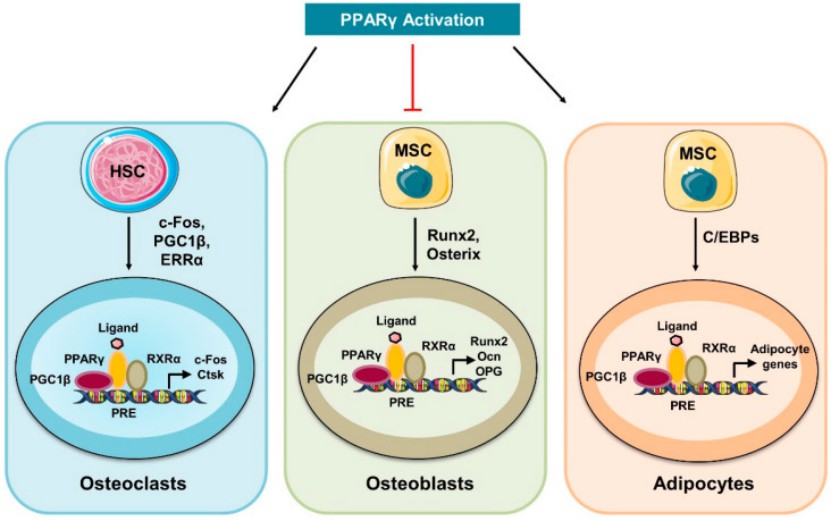
Fig. 1 Activation of PPARγ controls bone cell homeostasis
(Srivastava RK.; et al. Cells. 2022)
There are three types of bone cells are related to bone homeostasis: osteoblasts, osteocytes, and osteoclasts. Osteoblasts secrete proteins that initiate and regulate bone mineralization: osteonectin, osteocalcin, and hydrolases. They also secrete a protein, osteoprotegerin (OPG), which binds to RANKL and prevents osteoblast–osteoclast contact. The differentiation of osteoblasts is controlled by transforming growth factor (TGF-β gene β); the Cbfa 1 gene; and bone morphogenetic protein 7 (BMP7). BMPs comprise a family of 15 cytokines (such as BMP1, BMP1b, BMP2, BMP2A, BMP2B, BMP3, BMP4, BMP5, BMP6, BMP7, BMP8A, BMP8B, etc.), play an important role in bone repair processes, contributing to their growth after bone fractures and it also actively contribute to the maintenance of osteoclast homeostasis. Osteoclasts produce various cytokines, including insulin-like growth factor (IGF-1) and TGF-β to produce critical chemotactic gradients used to recruit osteoblasts to the bone remodeling site. Osteoclasts also produce OPG, inhibiting receptor activator of NF-kB (RANK) function, facilitating proper metabolic balance.
Some of cytokines significantly interfere with bone tissue metabolism, and the impact of them on bone occurs through disruption of the remodeling process and, in particular, increased bone resorption and/or impaired new bone formation. The main pro-inflammatory cytokines that negatively influence bone metabolism are Interleukin-6 (IL-6), Tumor Necrosis Factor-α (TNF-α), and Interleukin-1 (IL-1).
The main calcium-regulating hormones affect the bone supply of calcium and phosphorus and their formation and breakdown. There are three calcium-regulating hormones that serve an essential role in generating healthy bones:
Parathyroid hormone (PTH):supports calcium levels, and promotes both bone resorption and bone formation.
Calcitriol: formed from vitamin D by enzymes in the liver and kidney, which stimulates the intestines to absorb enough calcium and phosphorus.
Calcitonin:inhibits bone disintegration, prevent high levels of calcium in the blood.
GCs can increase the risk of fractures and thus inhibit bone growth. GCs increase bone resorption by stimulating osteoclastogenesis by increasing the expression of the RANK ligand and decreasing the expression of its decoy receptor, osteoprotegerin. Wnts/sclerostin are important mediators of changes in RANKL/OPG expression.
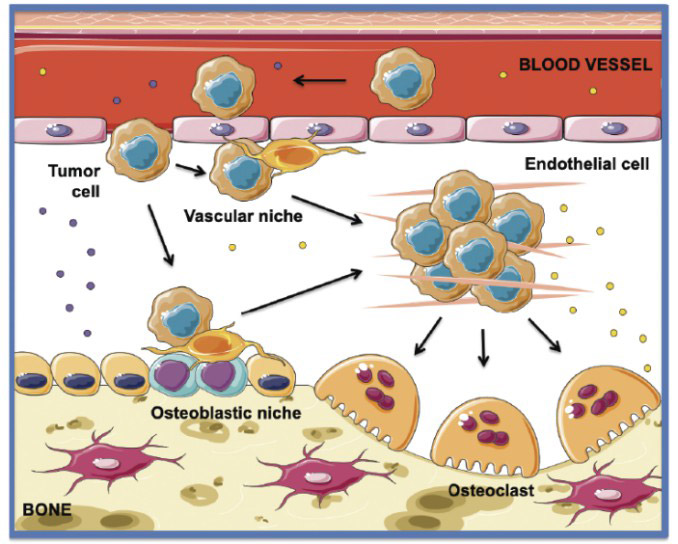
Fig. 2 Mechanisms of Bone metastasis
(Clézardin P.; et al. Physiol Rev. 2021)
Osteoporosis is marked by the accelerated deterioration of bone tissues due to the dysregulated balance of osteoblast and osteoclast cells. Osteoporosis causes the bones to become brittle and fragile due to tissue loss, weakening the bones at specific sites (e.g. hip, spine, wrist, and so on) and causing them to break easily. Various biomarkers are used to monitor bone metabolisms such as CTX-I (bone resorption marker) and PINP (bone formation marker).
Osteomalacia, sometimes called rickets, causes weak or softened bones in children from a lack of sufficient calcium or phosphorus. Osteomalacia is most commonly caused by a severe vitamin D deficiency. Therapies for osteomalacia entail receiving sufficient vitamin D and calcium, which are both needed to harden and increase bone strength and to treat any underlying conditions that may be causing the condition.
Obesity is a serious health concern affecting various organs of the body including bone tissue. A study in mice shows that high-fat diet (HFD) along with increasing the osteoclast precursors also enhances the bone resorptive activity in osteoclasts determined by the augmented levels of osteoclastogenic factors such as the tumor necrosis factor (TNF), RANKL, and PPARγ.
Biochemical markers of bone formation include bone alkaline phosphatase (BALP), which is an enzyme localized at the plasma membrane of osteoblasts, and procollagen I carboxy-terminal and amino-terminal propeptides (PICP and PINP, respectively), which are cleaved during the processing of type I collagen. In breast and prostate cancer, serum concentrations of PINP were found significantly increased in patients with bone metastases. BALP were also associated with bone metastasis.
Creative Diagnostics offers a series of materials related to bone metabolism biochemical markers. Our antibodies cover a comprehensive range of targets and can be applied to multiple platforms to support your project development.
References
Loading ......
