
Inquiry Basket
 Loading ......
In the realm of biotechnology and molecular biology, the efficient removal of nucleic acids from samples is crucial for accurate analysis and the production of high-quality biopharmaceuticals. Benzonase, a potent enzyme renowned for its ability to degrade DNA and RNA, has emerged as a vital tool in biomedical research.
Benzonase, also known as a broad-spectrum nucleic acid enzyme, is derived from Serratia marcescens, a viscous bacterium. It consists of two subunits, each with a size of 26 kDa. This enzyme belongs to the class of non-restrictive endonucleases and is renowned for its remarkable ability to degrade various forms of DNA and RNA. It can efficiently break down single-stranded, double-stranded, linear, circular, natural, and denatured nucleic acids without specific base recognition, resulting in 5-monophosphate oligonucleotides ranging from 3-8 bases.
Benzonase exhibits remarkable stability and digestion activity across a wide range of conditions, including 6 M urea, 0.1 M Guanidine HCl, 0.4% Triton X100, 0.1% SDS, 1 mM EDTA, and 1 mM PMSF. This versatility makes it an ideal choice for numerous scientific research applications as well as in the vaccine, protein, and polysaccharide pharmaceutical industries. By removing nucleic acid residues from samples or products, Benzonase enhances sample purity and improves the biological efficacy of the final product.
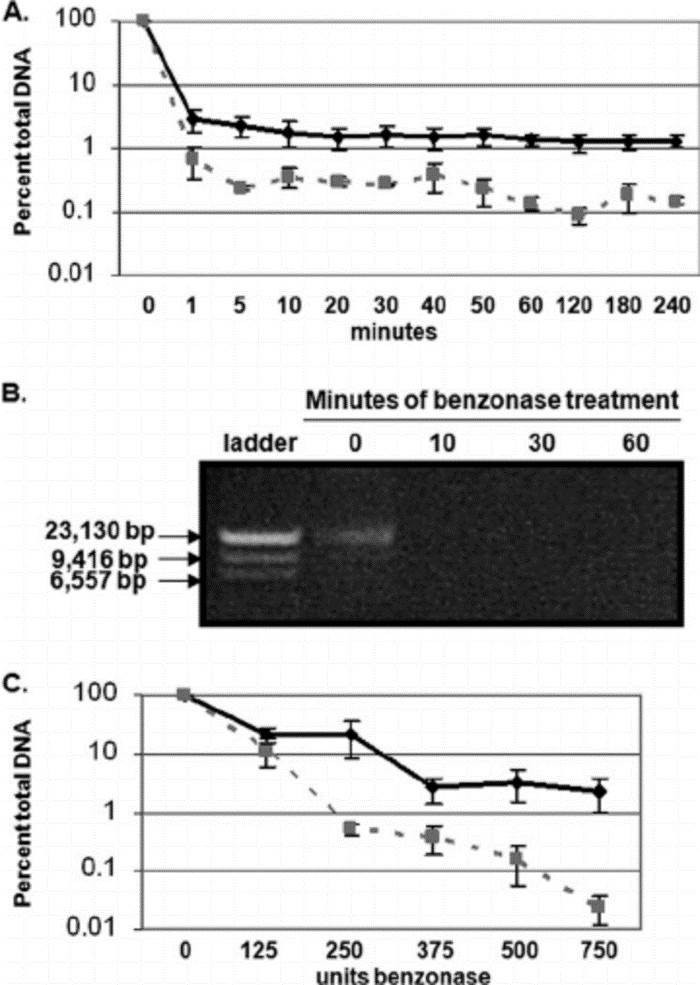 Figure 1. Effectiveness of benzonase in digesting viral and cellular nucleic acids.
(Source: Conway, M. J. et al., 2009)
Biopharmaceutical products, such as vaccines, proteins, and polysaccharides, require stringent control over nucleic acid content to ensure product safety and efficacy. Regulatory authorities impose strict limits on the nucleic acid levels in these products. By efficiently degrading DNA and RNA, irrespective of their form or sequence, Benzonase eliminates the risk of nucleic acid-induced immunogenicity or other adverse effects. This enzymatic treatment not only ensures compliance with regulatory requirements but also enhances the biological efficacy of biopharmaceutical products, leading to safer and more effective therapies.
Cell lysis is a crucial step in various research protocols, including protein extraction and downstream purification. However, the released nucleic acids can significantly increase the viscosity of cell lysates, impeding subsequent processes and reducing protein yield. By adding Benzonase to cell lysates, researchers can effectively reduce viscosity, improving the flow properties of the lysate. This viscosity reduction not only facilitates filtration, especially during ultrafiltration steps, but also enhances separation efficiency in downstream chromatography processes. As a result, researchers can achieve higher protein yields and obtain purer protein samples for further analysis or downstream applications.
Cell culture-derived products, such as virus-like particles (VLPs), viral particles, and inclusion bodies, often encounter challenges associated with nucleic acid contamination. Nucleic acids can adhere to the surfaces of these particles, altering their size, charge, or aggregation behavior. By selectively degrading nucleic acids, Benzonase prevents their interference with the characteristics and quality of cell culture-derived products. This enzymatic treatment ensures the preservation of desired properties, such as particle size and charge, facilitating downstream purification processes. As a result, researchers can achieve higher purification yields and obtain purer products for subsequent analyses or applications.
In biochemical analysis techniques like ELISA, chromatography, two-dimensional electrophoresis, and footprinting analysis, the presence of nucleic acids in protein samples can negatively impact resolution and recovery rates. By treating nucleic acid-containing protein samples with Benzonase, researchers can achieve higher resolution, reducing background noise and improving signal-to-noise ratios. This enzymatic treatment also enhances the recovery of proteins of interest, maximizing the efficiency of downstream analytical procedures. These advancements in sample preparation contribute to more accurate and reliable results in biochemical analysis.
DNase enzymes are categorized into two main types: DNase I and DNase II. DNase I cleaves double-stranded DNA to produce polynucleotides with 5' free ends, while DNase II generates polynucleotide strands with 3' free ends or overhangs. DNase I requires cofactors like Ca2+, Mg2+, or Mn2+ for optimal activity and can cleave DNA independently on each strand. In contrast, DNase II functions at an acidic pH and requires divalent metal ions for activity.
Benzonase and DNase are both nucleases used in molecular biology techniques, but they differ in their substrate specificity and cleavage capabilities. The key difference lies in the type of nucleic acid they degrade. Benzonase is capable of cleaving both DNA and RNA, while DNase specifically degrades double-stranded DNA. Their substrate specificity and cleavage characteristics make them useful in different molecular biology applications, such as nucleic acid purification, protein analysis, and removal of template DNA. Understanding the differences between Benzonase and DNase allows researchers to choose the appropriate enzyme for their specific experimental needs.
Reference
| Target | Cat. No. | Product Name | Expression System | Tag/Conjugate | Application | |
| Dnase | DAG-WT1280 | Recombinant DNase B | E. coli | N/A | Enzymatic determination | Inquiry |
| DNASE2 | CDBP5387 | DNASE2 blocking peptide | N/A | Unconjugated | IB | Inquiry |
| CDBP1030 | Human DNASE2 blocking peptide | N/A | Unconjugated | BL | Inquiry |
| Target | Cat. No. | Product Name | Size | Species Reactivity | Application | Detection Sample | |
| Benzonase | DEIA-JY2103 | Benzonase® ELISA Kit | 96T | N/A | Quantitative | Intermediates, semi-finished products and finished products of various biological products. | Inquiry |
| DNA | DEIA-BJ2428 | Mouse Anti Deoxyribonucleic Acid Antibody ELISA Kit | 96T | Quantitative | Serum, plasma, cell culture supernatants, body fluid and tissue homogenate | Inquiry | |
| DEIA1696 | Human dsDNA IgG ELISA Kit | 96T | Human | Semi-quantitative | serum | Inquiry | |
| DNASE1 | DEIA-BJ231 | Human DNASE1(Deoxyribonuclease-1) ELISA Kit | 96T | Human | Quantitative | Serum, plasma, tissue homogenates, other biological fluids | Inquiry |
| DEIA-FN409 | Rat Dnase1 (Deoxyribonuclease-1) ELISA Kit | 96T | Quantitative | serum, plasma, cell culture supernatants, tissue homogenate | Inquiry | ||
| DEIA-CL026 | Human deoxyribonuclease I (DNase-I) ELISA Kit | 96T | Quantitative | serum, plasma, tissue homogenates | Inquiry | ||
| DEIANS026 | DNase I ELISA Kit | 96T | N/A | Quantitative | Inquiry | ||
| Dnase | DEIA3335 | Human DNASE2(Deoxyribonuclease-2-alpha) ELISA Kit | 96T | Human | Quantitative | Serum, plasma, tissue homogenates and other biological fluids | Inquiry |
| DEIA6105 | DNase Activity IgG ELISA Kit | 96T | Human | Quantitative | serum, EDTA plasma | Inquiry | |
| DEIA-BY008 | DNase Ⅰ ELISA Kit | 96T | N/A | Quantitative | biological fluids | Inquiry |
Loading ......
