
Inquiry Basket
 Loading ......
In the field of life science research, antibodies play a crucial role as powerful tools for detecting, isolating, and visualizing specific antigens. However, the reliability and accuracy of antibodies have been a subject of concern in recent years, and the cross-reactivity and variability of antibodies have led to the "reproducibility crisis" or "antibody crisis". To address these issues, Creative Diagnostics is committed to providing highly validated antibodies that ensure specificity and accuracy in various applications.
Antibody specificity refers to the ability of an antibody to selectively bind to its target antigen without cross-reacting with unrelated molecules. Accurate and reliable research outcomes heavily rely on the specificity of antibodies used in various experimental techniques such as western blotting, immunocytochemistry, immunohistochemistry, immunoprecipitation, and ELISA. The potential consequences of using non-specific antibodies include false-positive or false-negative results, misinterpretation of data, and wasted time and resources.
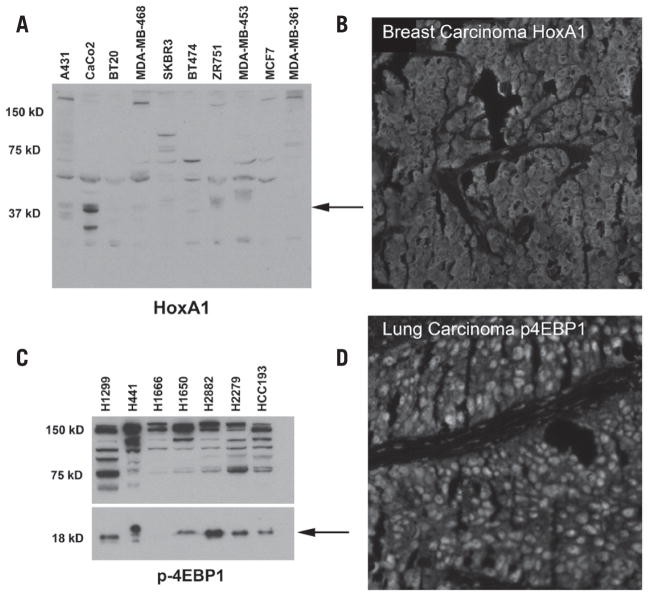 Fig. 1 Examples of non-specific antibodies for HoxA1 and phospho-4EBP1. (Bordeaux J, et al., 2010)
Creative Diagnostics employs a rigorous validation process to ensure the specificity of our antibodies. Here, we discuss several key methods used for antibody specificity validation:
References
Loading ......
