
Inquiry Basket
 Loading ......
Antibody–drug conjugates (ADCs) are therapeutic products where a monoclonal antibody is linked to a pharmacologically active drug (a small molecule), forming a conjugate. Pharmacokinetics (PK) is the study and characterization of the absorption, distribution, metabolism, and excretion (ADME) time processes of drugs. Unlike small molecules and antibodies, the PK of ADCs is very complex because ADCs consist of several components. Not only the PK of the monoclonal antibody needs to be considered, but also the PK of the cytotoxic molecule and the physical and chemical properties of binding. Analytes commonly used to characterize the PK characteristics of ADC drugs include binding antibodies, total antibodies, binding effector molecules, free small molecule toxins, and their analogs. The PK reflected by different analytes has different contents and significance, and overall constitutes the whole picture of the metabolism of ADC drugs in the body. The investigation of pharmacokinetics of ADCs is vitally significant in both preclinical and clinical studies. ELISA is an important method for ADC PK research, and anti-loading antibodies are one of the tools.
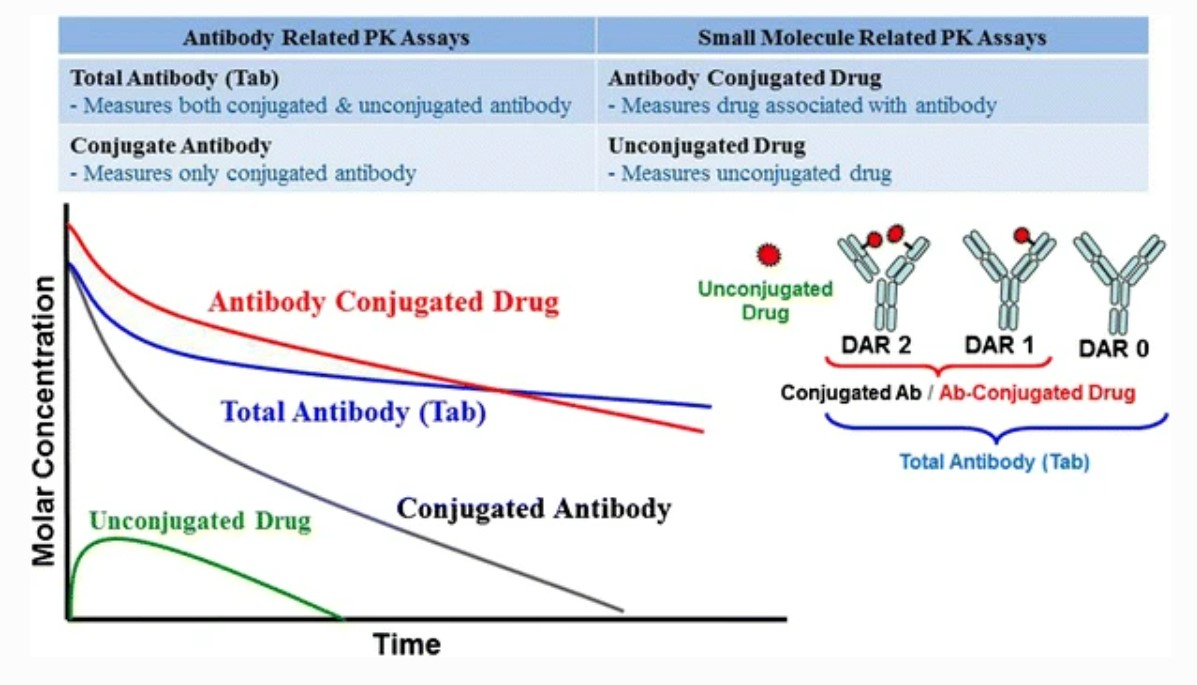 Fig.1 Pharmacokinetic profiles of different analytes. (Kamath, A.V., Iyer, S. Preclinical Pharmacokinetic Considerations for the Development of Antibody Drug Conjugates. Pharm Res 32, 3470–3479 (2015).)
Creative Diagnostics developed a portfolio of ELISA kits for the quantitative detection of conjugate antibodies targeting commonly encountered payloads such as MMAE, SN38, DM1, and so on. These kits enable highly sensitive monitoring of the conjugate antibody concentration in serum and plasma, with high reproducibility and inter-batch consistency in the test results. They provide excellent tools for PK studies of ADCs.
Loading ......
