









Inquiry Basket
 Loading ......

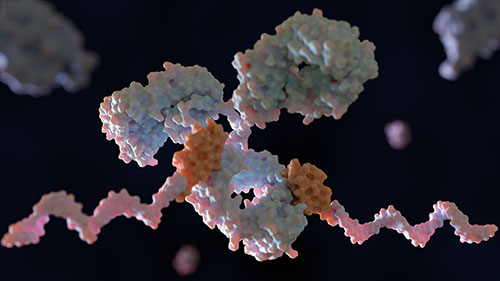
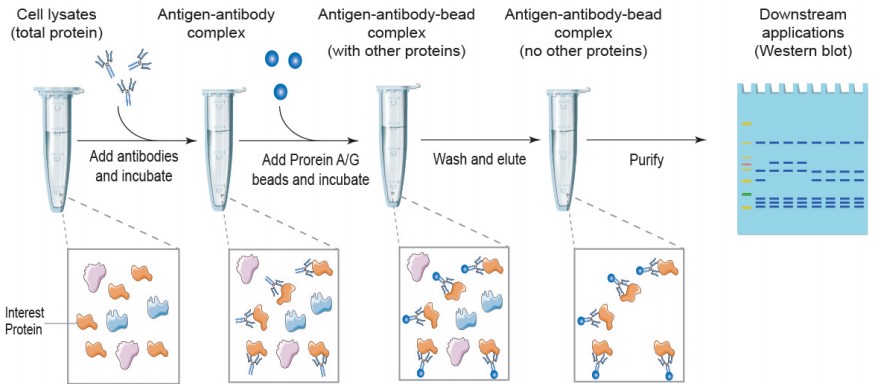
IP is an experimental procedure involving binding by antigen-antibody specific binding to purify and enrich the target protein or protein complex from complex samples. With antibodies bonded to the target protein, and the immunocomplexes captured by solid-phase supports (magnetite beads, agarose beads) IP can enable us to monitor protein expression, modification, activity, and interactions.
Creative Diagnostics has several powerful antibodies available for IP experiments. Such antibodies are well known for their extreme specificity, background noise reduction and binding affinity, which enable targeted proteins to be detected and richly enriched in experiments. We offer several types of monoclonal and polyclonal antibodies from multiple sources to suit various research requirements.
They are also species reactivated (such as human, mouse, rat, and others), which means that these antibodies can be used in all types of biological material. The IP antibodies from Creative Diagnostics are not just efficient in IP but also WB, IHC, ELISA and IF applications with consistent experimental results. We’re focused on providing scientists with the best tools to push biomedical research forward and make their experiments work and remain reliable.
Depending on the research objectives and experimental needs, IP technologies can be subdivided into the following types, each of which targets a different biological problem.
| Type | Purpose | Key Features | Application Scenarios |
| Individual Protein IP | Separate and purify a specific protein from complex mixtures | Can identify proteins with antibodies-antigen reactions; solid supports on agarose beads or magnetic beads; detect post-translational modifications and protein interactions. | Western blot, mass spectrometry, studying protein interactions. |
| Co-Immunoprecipitation (Co-IP) | Identify and analyze protein-protein interactions | Captures the target protein along with its interacting partners while preserving the natural state of the protein complex. | Mass spectrometry, Western blot, functional assays to confirm binding partners or identify new interacting proteins. |
| Chromatin Immunoprecipitation (ChIP) | Analyze protein-DNA interactions and identify specific binding sites | Selectively enriches specific DNA-binding proteins and DNA targets so that gene regulation and epigenetic change can be investigated. | Looking into transcription factor ligase binding, histone modifications and gene regulation. |
| Ribonucleoprotein Immunoprecipitation (RIP) | Identify RNA sequences associated with specific RNA-binding proteins | A technique based on antibodies that separates RNA-binding proteins and their related RNA, enabling the identification of mRNA and non-coding RNA. | Real-time PCR, microarray analysis, and sequencing to study RNA-protein interactions and modifications. |
| Tagged Protein IP | Isolate and purify proteins labeled with specific peptide tags | Utilizes antibodies that bind to the tags for efficient separation; can employ various types of beads or resins for experimentation. | Used extensively in Western blotting, mass spectrometry and protein purification. |
Creative Diagnostics can provide you with immunoprecipitation services.
Creative Diagnostics can help you develop better Co-IP services.
Creative Diagnostics offers standard ChIP assays as well as optimized ChIP procedure to meet your research needs. Click here to learn more .
Creative Diagnostics offers RIP services with microarray (RIP-chip/rRIP-chip) and sequencing (RIP-seq) to search for RNA molecules attached to the RBP of interest.

Thiel
Wide range of applications
The UC10-4B9 monoclonal antibody reacts with mouse CD152, also known as the cytotoxic T lymphocyte antigen-4 (CTLA-4).
Bertolini
Great monoclonal antibody
Excellent! CD247, also known as CD3Z (T-cell surface glycoprotein CD3 zeta chain), belongs to the CD3Z/FCER1G family.
Saraiya
Success the first time
This HSPB1 monoclonal antibody is highly recommended.
Bidhuri
The DAG-IC106 performs very well
This isotype control reduced the specific staining of the background, thus confirming that the primary antibody was available.
01
Prioritize antibodies that have been validated for IP, as they are proven to effectively recognize the target protein.
02
Monoclonal Antibodies
Polyclonal Antibodies
03
Choose an antibody from a host species that fits your experimental design.
04
Use beads (e.g., Protein A, Protein G, or Protein A/G) that match the host species and subclass of the antibody.
05
The IP antibody should recognize exposed epitopes on the target protein and exhibit high affinity for them.
06
For low-expression proteins or lacking suitable endogenous antibodies, use tagged constructs (e.g., FLAG, HA) with corresponding antibodies for IP.


Sample Preparation
Antibody Selection and Usage
Experimental Workflow
Controls
Bead Selection
Elution and Detection
Capture and detection antibodies should be from different species to avoid masking the target proteins by the heavy chain (~50 kDa) or light chain (~25 kDa) signals of the captured antibodies in Western blot.
| Feature | Agarose Beads | Magnetic Beads |
| Binding Capacity | High (porous structure) | Moderate (non-porous surface) |
| Background Noise | Higher (pre-washing required) | Lower (minimal pre-washing) |
| Ease of Use | More complex (centrifugation) | Easier (magnetic separation) |
| Incubation Time | Longer | Shorter |
| Sample Volume | Large | Small to medium |
| Automation | Not compatible | Compatible |

Creative Diagnostics is a "One stop" antibody solutions provider serving the pharmaceutical, biotech, diagnostic and university research organizations around the world.
Tell us how we can support your project
Loading ......
