


Inquiry Basket
 Loading ......
Immunoassay is a biochemical method that identifies and quantifies unknown analytes (protein, lipid, nucleic acid etc.) in solution (serum, urine etc.) using antibody-antigen reactions. There are many different formats and variations of an immunoassay, but the key point is still specific antibody-antigen recognition.
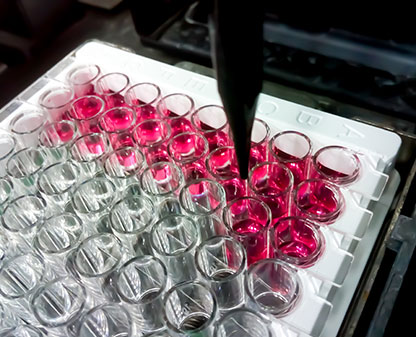

As a leading manufacturer and supplier of antibodies, Creative Diagnostics provides the most suitable antibodies for your immunoassay and ELISA. All of antibody products are well-validated with abundant quality control data in comprehensive applications.
Which can be adsorbed onto solid surfaces for use in sandwich ELISA.
Conjugated with enzymes or fluorescent labels for target molecule detection and quantification.
High-affinity antibody pairs optimized for sandwich ELISA.
Matched antibody pairs refer to sets of antibodies which are known to be capable of detecting different epitopes on the same protein antigen, so they can be used together for the capture and detection of a single antigen in a sandwich ELISA or related immunoassay.
Our matched pairs are distinctive:
Browse all Matched Antibody Pairs by the initial capital letter >
Designed for the detection of hormones, drugs, and other small-molecule compounds.
Anti-small molecule hapten antibodies enable the detection of small molecules using robust and rapid immune detection technologies, such as ELISA, LFIA and IHC/IF. Either raised against endogenous small molecules (amino acid metabolites, lipids, saccharides, nucleotides, steroids, ...) or exogenous compounds (drug and pesticide residues, chemical pollutants...), anti-hapten antibodies constitute attractive detection tools not only in the field of human health, for diagnostic and therapeutic applications, but also in areas such as food safety and environmental monitoring.
Combining 15 years of experience in the development of small molecule antibodies, Creative Diagnostics holds a specific expertise in the design of antibodies for Immunoassays and ELISA. Based on our capacities in antigen design, we developed high quality small molecular antibodies against a variety of targets.
Can't find what you're looking for? Submit the online inquiry form or contact us, our experienced professionals will contact you as soon as possible!
Immunoassays employ a variety of different labels to allow detection of antibodies and antigens. Labels are typically chemical-linked or conjugated to the desired antibody or antigen.
According to the difference of label and signal detection strategy, immunoassay can be classified as the following types:

While some kind of label is generally employed in immunoassays, there are certain kinds of assays which do not rely on labels. Instead, employ detection methods that don't require the modification or labeling the components of the assay. Surface plasma resonance (SPR) and quartz crystal microbalance (QCM) are two typical label free methodologies.

Surface plasma resonance is the resonant oscillation of conduction electrons at the interface between a negative and positive permittivity material stimulated by incident light. It is essentially the mass of analyte bound to the substrate film of the sensor chip that changes the index of refraction that can be measured in various ways. No labeled reporter molecule is needed. Because the changes in SPR occur rapidly and can be monitored in real time, binding reaction kinetics can be studied.

Quartz crystal microbalance based on the converse piezoelectric effect. The mass deposition on the electrode surface is proportional to the resonance frequency of the substrate crystal. If we immobilize capture antibody on the electrode surface of QCM chip and flow the analyte, the binding process of antibody and analyte could be measured by the detection of frequency change without any label of antibody or antigen.
According to the difference of the antigen immobilizing strategy, the antibody labeling strategy, and the type of antibody-antigen reaction (direct recognition or competition), ELISA can be presented in a variety of formats. One can choose an optimal ELISA format flexibly according to the requirements.
This is the simplest form of ELISA. Here an antigen is attached passively to a plastic solid phase by a period of incubation. After a simple washing step, antigen is detected by the addition of an antibody that is linked covalently to an enzyme. After incubation and washing, the test is developed by the addition of a chromogen/substrate whereby enzyme activity produces a color change. Color development is read after a defined time or after enzyme activity is stopped by chemical means at a defined time. Color is read in a spectrophotometer.
Direct ELISA is useful for qualitative or quantitative antigen detection in a sample, antibody screening, and epitope mapping since only one antibody is involved. There is no secondary antibody with cross-reactivity and the assay can be performed in less amount of time. However, the Immunoreactivity of the primary antibody might be adversely affected by labeling with enzymes. The labeled primary antibody is not commonly used, so labeling primary antibodies for each specific ELISA system is necessary when use direct ELISA.
The indirect detection method adds a labeled secondary antibody for detection on the basis of direct ELISA and it is the most popular ELISA format. Antigen is passively attached to wells by incubation. After washing, antibodies specific for the antigen are incubated with the antigen. Wells are washed and all bound antibodies are detected by the addition of anti-species antibodies covalently linked to an enzyme. Such antibodies are specific for the species in which the first antibody added were produced. After incubation and washing, the test is developed and can be read.
Similar to direct ELISA, indirect ELISA is useful for antibody screening, epitope mapping, and protein quantification. The secondary antibody serves to enhance the signal of the primary antibody, which makes it more sensitive than direct ELISA. However, it also produces a higher background signal and potentially decreases the overall signal.
The sandwich ELISA is one of the most useful immunoassay formats and it is designed for detection of soluble antigens. There are two forms of this ELISA depending on the number of antibodies used. The principle is the same for both instead of adding antigen directly to a solid phase, a capture antibody is immobilized to the solid phase to capture antigen.
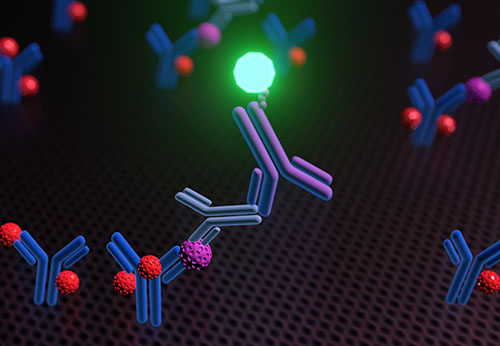
For direct sandwich ELISA, capture antibody is attached on the solid phase. After washing away excess unbound antibody, antigen is added and is specifically captured. The antigen is then detected by a second enzyme labeled antibody directly against the antigen. This type of assay is useful where a single species antiserum is available and where antigen does not attach well to plates.
For indirect sandwich ELISA, the antigen is detected with a second unlabeled antibody. This antibody is in turn detected using an anti-species enzyme labeled conjugate. It is essential that the anti-species conjugate does not bind to the capture antibody, therefore the species in which the capture antibody is produced must be different. The same considerations about the need for that at least two antigenic sites allowing the “sandwich” are relevant. The advantage of this system is that a single anti-species conjugate can be used to evaluate the binding of antibodies from any number of samples.
The systems described above are the basic configurations of ELISA. All of these can be adapted to measure antigens or antibodies using competitive or inhibition conditions.
Each assay described above requires pre-reaction of reagents to obtain optimal conditions. These optimal conditions are then challenged either by the addition of antigen or antibody. As the amount of free antigen (antibody) in solution increases, the amount of antibody (antigen) that will bind to the immobilized substrate decreases. After washing step, chromophore substrate is added to generate signal (color change or light). The signal change caused by challenging with antibody/antigen reveals the information about the competitive antigen/antibody.
Loading ......
