

Inquiry Basket
 Loading ......
Flow cytometry (FC) is a biological technique for the high-speed, cell-by-cell quantitative analysis and sorting of single cells or other cellular particles in suspension by detecting a labeled fluorescent signal. The technique can be used for continuous multi-parameter analysis of individual cells flowing through an optical or electronic detector. It provides rapid measurements of Coulter resistance, fluorescence, light scattering, and light absorption. This is done to quantify many critical parameters such as cellular DNA content, cell volume, protein content, enzyme activity, cell membrane receptors, and surface antigens. These parameters are used to separate cells of different types to obtain a pure cell population for biological and medical research.
Flow cytometry antibodies label specific proteins on or within cells for detection and quantification. These antibodies are conjugated to fluorescent dyes, which emit light upon laser excitation. The fluorescence intensity helps determine cell characteristics like size, shape, and composition.
Fluorescent labeling is essential for analyzing targets in flow cytometry. This is done using fluorophore-conjugated antibodies (directly or via secondary antibodies). Antibodies bind to specific proteins, allowing researchers to measure protein levels or activity across cell types, disease states, and conditions. Multiple antibodies can label multiple targets simultaneously without interference, though limitations arise from distinguishing signals. Reliable, validated antibodies and fluorophores are critical for successful experiments.
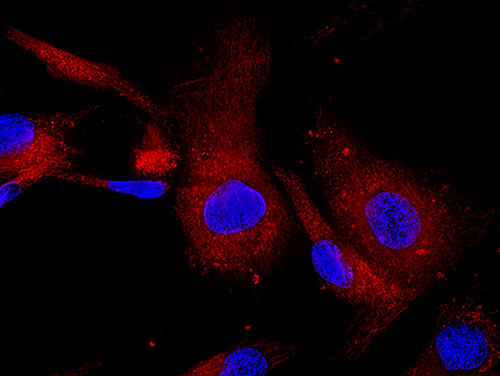
Protein fluorophores like GFP are widely used because they can be encoded by DNA. By fusing GFP DNA to a target protein’s sequence, cells produce self-fluorescent proteins, enabling direct analysis of protein location and quantity in vitro and in vivo. GFP can also be selectively expressed in specific cell types or under stimuli, making it ideal for tracking and sorting specific cells.
In direct labeling, fluorophores are covalently attached to antibodies, providing a direct readout of the target protein’s presence via fluorescence. Direct flow cytometry simplifies experiments, enabling the use of multiple antibodies simultaneously.
Indirect labeling uses secondary antibodies conjugated to fluorophores to detect primary antibodies. This method amplifies signals, as multiple secondary antibodies can bind to one primary antibody, but it requires extra steps and careful species matching to avoid cross-reactivity.
Direct flow cytometry is generally preferred for its simplicity, ability to use multiple antibodies simultaneously, and efficient collection of cellular data. Indirect methods are useful when signal amplification is necessary.
As a leading manufacturer and supplier of flow cytometry antibodies, Creative Diagnostics offers a wide range of products for intracellular and extracellular targets. Our portfolio of flow cytometry antibodies includes unconjugated or conjugated antibodies to A lexa Fluor®, R-PE, APC, PerCP, and tandem dyes.
Search all the antibodies for Flow Cytometry >
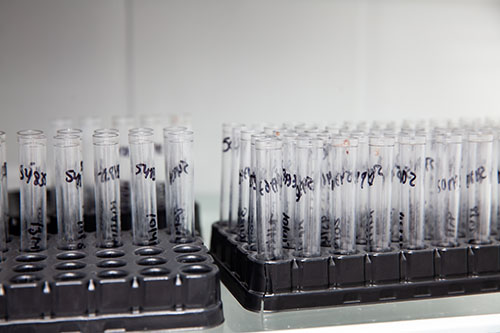
The first step is to prepare the cell sample to be tested. This may involve the isolation of cells from a tissue sample, the collection of blood cells, or the collection of cultured cells. The sample should be properly processed and prepared to ensure accurate analysis of the flow cytometer cells. If cells in the tissue are to be detected, the tissue must first be dissolved as a single-cell suspension.
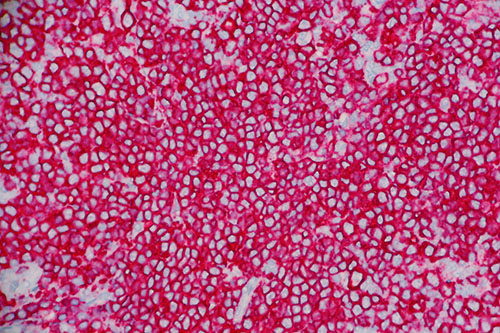
Flow cytometry uses fluorescent dyes to label molecules on the surface or inside cells. The choice of the appropriate marker depends on the type of cell you are interested in and its purpose. Commonly used markers include fluorescent dyes, antibodies, and fluorescent proteins. Labeled cells can be analyzed according to surface markers or internal molecules.
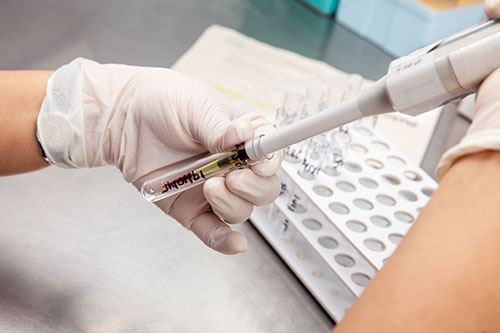
The labeled cell sample is loaded into the flow cytometer. Cell samples are injected into the flow cytometer as a suspension. The flow rate needs to be controlled during sample injection to ensure that individual cells pass sequentially through the laser beam of the flow cytometer.
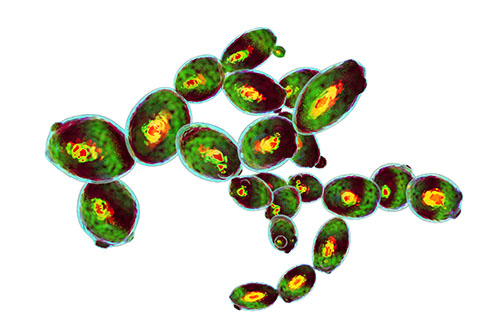
In a flow cytometer, cells scatter or emit fluorescence after being irradiated by a laser beam. The flow cytometer measures these light signals simultaneously and converts them into digital data.
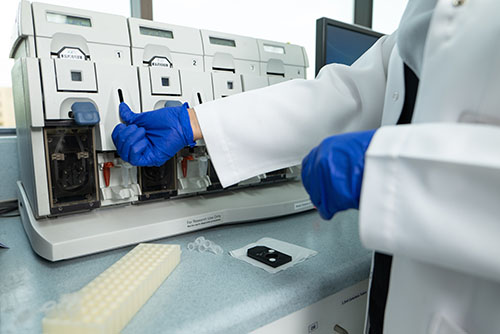
The properties of the light reflected by the cell can provide information about the cell's size and shape. Scattering signals can be classified as forward scattering (FSC) and side scattering (SSC).
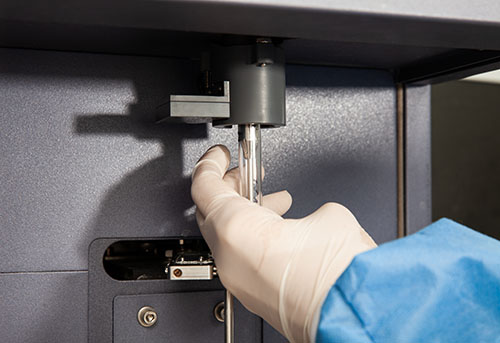
By laser excitation, a fluorescent marker emits a fluorescence signal of a specific wavelength. The flow cytometer detects fluorescence signals at different wavelengths to determine the presence or absence of the marker in the cell. It also determines its expression level.
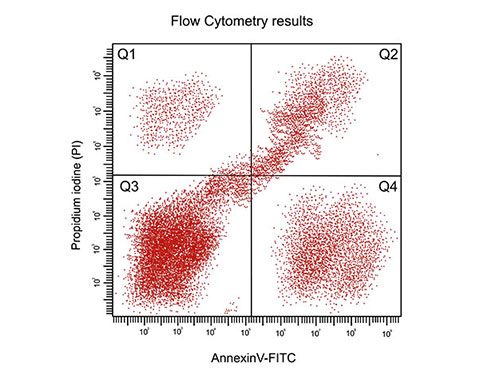
The flow cytometer generates a lot of raw data. This data can be exported and used for subsequent analyses. Data analysis software allows cells to be counted, sorted, and compared. Histograms, scatter plots, and other graphs can be plotted to present and interpret the data.
01
Single-cell suspension preparation is key to flow cytometry analysis. If cell clumps are encountered, they should be filtered through a 300-500 mesh cell sieve before testing on the machine.
02
Specimens should be fixed and cryopreserved promptly after collection. Bleeding and necrotic tissue should be avoided when taking fresh specimens from surgical excision or biopsy needle aspiration specimens.
03
Attention should be paid to the removal of dead cells and debris from immunofluorescent specimens, requiring that impurities, debris, and clumps of overlapping cells should be<2% in each sample, especially when sparse cells or cell subpopulations are measured, otherwise the increased non-specific fluorescence of these cells will interfere with the immunofluorescence assay.
04
Cell samples should be collected to ensure sufficient cell concentration. Generally, 5 x 10⁵/ml to 1 x 10⁶/ml of cells per sample are required. For sample analysis of tumor cell DNA heteroploidy, at least 20% of tumor cells should be present (heteroploidy accounts for more than 1/5 of the main peak before the heteroploidy peak can be confirmed).
Flow cytometry has a variety of methods and applications in a wide range of disciplines. Flow cytometry is used exclusively in research for a variety of reasons, for example:
Loading ......
