



Inquiry Basket
 Loading ......

Antibodies in ChIP experiments are of critical importance, since they guarantee the precision of the protein-DNA collision with least background. Specificity, sensitivity and reproducibility of antibodies directly influence the reproducibility of ChIP. The antibodies offered by Creative Diagnostics range from monoclonal to polyclonal to recombinant for ChIP applications. These tested antibodies give scientists powerful new platforms to further research on gene regulation and epigenetics.
Histone modifications antibodies are important for epigenetic repair and metabolism of chromatin. These antibodies react to multiple types of post-translational histone changes in the shape of chromatin and gene expression.
To study gene regulation, you need antibodies against transcription factors. These antibodies bind to transcription factors specifically, and can be monitored with ChIP. They identify transcription factor binding and activity to reveal how genes are expressed and what happens inside the cell.
| BCL11A | FOXA1 | POLR2A | Ubiquitin |
| CBX1 | IRAK1 | SALL4 | AHR |
| CHD7 | KDM4A | SMARCA2 | HMGB1 |
| DNMT1 | MAPK3 | TBP | ESR1 |
| EP300 | NRF1 | TCOF1 | KAT2B |
Learn more about IP Antibodies
Creative Diagnostics offers ChIP services along with comprehensive downstream analysis. Click here to learn more.
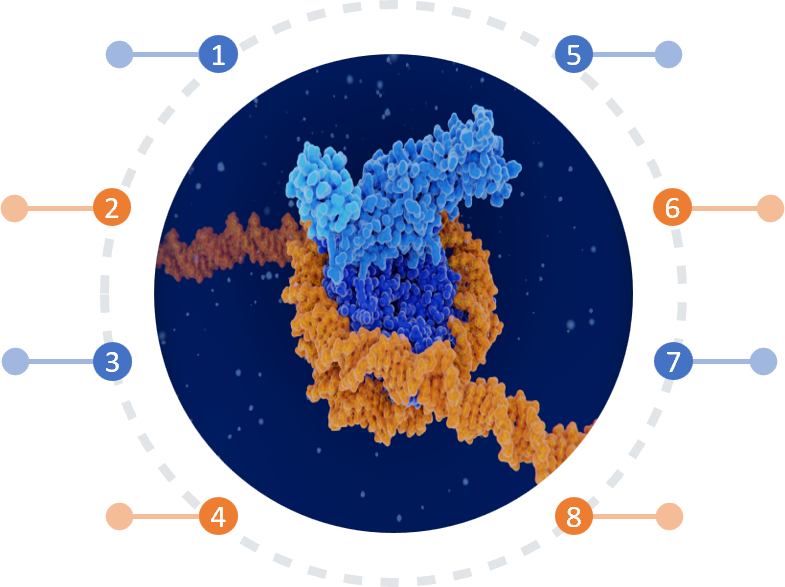
ChIP is an interaction study of proteins with DNA. The basic idea is to attach targeted proteins and the DNA fragments attached to them with specific antibodies. These DNA strands can be analysed to discover where proteins are bound on the genome, and what they are doing to regulate.
The ChIP procedure typically consists of cell fixation to destabilize protein-DNA complexes, extraction and fragmentation of the chromatin, immunoprecipitation with antigens, DNA purification, and PCR or sequencing of the enriched fragments of DNA.
Gene Regulation Studies
Identification of transcription factors and co-regulators bound to promoters or enhancers
Drug Development
Assessing the effects of drugs on specific protein-DNA interactions
 Applications
Epigenetics
Investigating histone modifications and their impact on gene expression
Disease Mechanism Research
Understanding abnormal protein-DNA interactions in diseases like cancer
| Antibody Type | Characteristics | Advantages | Disadvantages |
| Monoclonal Antibodies | Recognize a single epitope on the target protein. Produced from a single cell clone, ensuring uniformity. |
|
|
| Polyclonal Antibodies | Recognize multiple epitopes on the target protein. Derived from the serum of immunized animals. |
|
|
| Recombinant Antibodies | Engineered antibodies produced in vitro using synthetic genes, allowing for controlled characteristics. |
|
|
Antibody Specificity
Ideally, you should choose antibodies that have been confirmed by ChIP or ChIP-seq

Power to Identify Epitopes After Cross-Linking
The antibody will need to recognize epitopes cross-linked as they exist
Literature Support and Validation Data
Prioritize antibodies that have been reported in literature or provided with validation data for ChIP by the supplier
In the lab you can use monoclonal and polyclonal antibodies which have different benefits. Monoclonal antibodies are very effective in targeting specific epitopes with high accuracy but may experience cross-linking reactions. In contrast, polyclonal antibodies, produced by multiple B cell lines, can recognize various epitopes on a single antigen, which often results in enhanced detection capabilities and stronger overall signals. The choice of these antibodies needs to be determined by the purpose of the specific experiment.
Include a negative control without antibody (mock IP) and positive controls that are known to enrich specific regions. Additionally, use negative controls for regions expected not to show enrichment.
Be sure the antibody goes directly to the target protein and does not cross react. The antibody may also be confirmed for specificity in other tests (e.g., Western blot or immunofluorescence) before ChIP.
If the signal is weak, consider optimizing cross-linking duration, chromatin shearing conditions, or increasing the antibody amount. Ensure that washing steps effectively remove non-specific bindings as well.
When the ChIP-grade antibodies are not available, there may be some IP or IHC approved antibodies, which must first be validated as specific.

Creative Diagnostics is a "One stop" antibody solutions provider serving the pharmaceutical, biotech, diagnostic and university research organizations around the world.
Tell us how we can support your project
Loading ......
