Background
Erythrocytes have been identified as vital modulators of the innate immune system. Despite the absence of nucleus and inabilities to perform transcription and translation, erythrocytes can bind to a wide range of inflammatory molecules, including chemokines, nucleic acids, and pathogens. Anti- Red Blood Cells Antibody recognizes red blood cells that is indispensable in impurity cleansing of blood products and assist diagnosis of RBCs affected autoimmune diseases. Creative Diagnostics has developed a group of antibodies that detect RBC can be used in several scientific applications, including Agglutination, Immunohistochemistry, Flow Cytometry, Functional Assay and Western Blot.
Autoimmune Diseases
Autoimmune Hemolytic Anemia (AIHA) is caused by autoantibodies that react with red blood cells (RBCs) resulting in predominantly extravascular hemolysis in an FcR and/or complement-dependent manner. AIHA is historically divided into three groups, warm AIHA, cold agglutinin disease, and mixed type AIHA. Warm type AIHA is typically mediated by IgG with about 40% of cases accompanied by complement activation. Cold agglutinin disease is IgM mediated with complement activation always occurring due to robust complement activation produced by IgM-binding to erythrocytes. In mixed type AIHA, IgG and IgM anti-erythrocyte antibodies are present and complement is activated. In AIHA, anti-erythrocyte antibodies can activate the classical complement pathway via C1, the first component of the cascade. The alternative pathway can also potentially serve as a positive feedback loop to escalate complement activation initiated by the classical pathway. The direct antiglobulin (direct Coombs) test establishes the diagnosis and may suggest the cause.
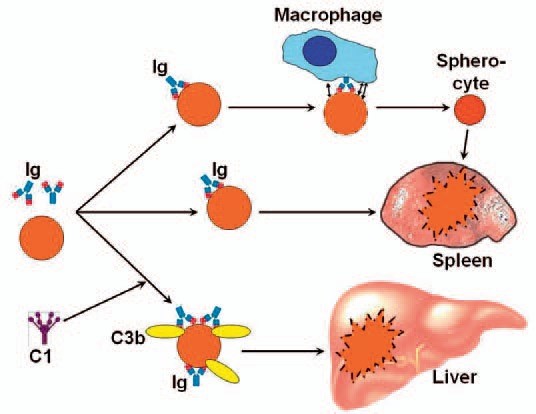 Fig. 1 Erythrocyte destruction in warm-antibody mediated autoimmune hemolytic anemia
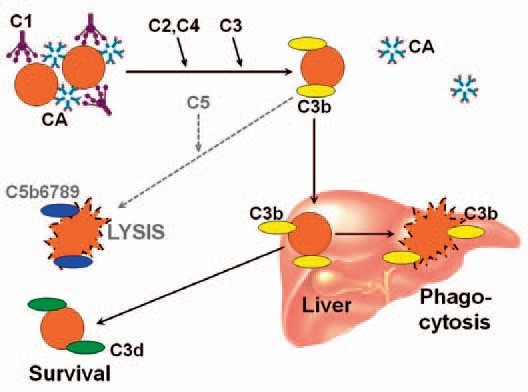 Fig. 2 Complement-mediated hemolysis in cold agglutinin disease (CAD) and cold agglutinin syndrome (CAS)
RBC Antibodies Applications
1. AIHA Diagnosis
Autoimmune hemolytic anemia is diagnosed by detection of autoantibodies with the direct antiglobulin (DAT) test. wAIHA patients whose DAT were either IgG+/C3+ or IgG+/C3-. The result C3+/IgG- typically occurs in cold agglutinin disease (where the antibody is most commonly an IgM). Complement activation on RBCs can be detected by C3d-direct antiglobulin test. However, DAT cannot distinguish between C3b-mediated extravascular hemolysis, C5b-C9-mediated intravascular hemolysis and C5b-C8-mediated eryptosis, and is also not suitable to estimate the strength of hemolysis. Functional hemolytic assay is needed for assessing the function of the classical or alternative pathway.
2. Assessment of the functional integrity of complement pathways
Hemolytic assays are used for assessing the function of the classical (CH50) or alternative pathway (AH50). In these assays, activation of the classical pathway is initiated by antibody-coated sheep erythrocytes, while rabbit, chicken or guinea pig erythrocytes are employed to induce activation of the alternative pathway due to a protective effect of their erythrocyte membrane on C3b.
- Classical pathway
SRBCs coated with antibodies, such as purified IgM or mixed with IgG to the Forssman antigen, initiate activation of the classical pathway. Ethylene glycol bis-amino tetraacetate (EGTA) can block the hemolysis of SRBCs via the classical complement pathway. - Alternative pathway
RaRBCs, which are spontaneous and potent activators of human alternative pathway (APC), are used to induce activation of the alternative pathway. For example, fresh normal human serum in EGTA buffer can cause more than 90% hemolysis of unsensitized RaRBCs.
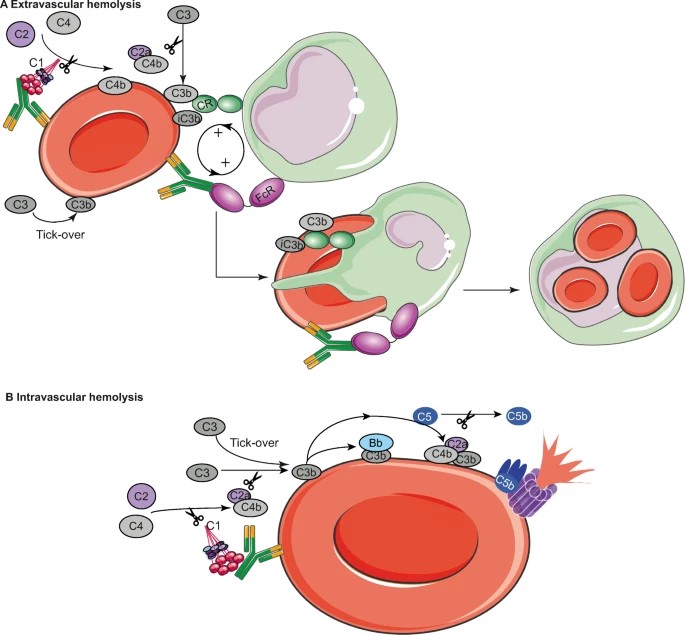 Fig.3 Mechanisms of extravascular and intravascular hemolysis
3. Cell Washing/RBC Depletion
Accessing pure samples of viable cells is integral to effective clinical treatments and biomedical research initiatives. Red blood cell (RBC) contamination in blood samples can impact the test results during downstream analysis. For instance, in flow cytometry applications, RBC contamination can interfere with the viability dye of the target cells being analyzed, causing inaccurate viability measurements. Red blood cells also contribute to blood sample degradation by releasing harmful by-products that accumulate as the blood is stored over time, resulting in a loss of essential performance functions and overall cell viability due to oxidative stress. RBC antibodies can be used in cell washing to protect the integrity and quality of blood sample by depleting red blood cells. Another common utilization of cell washing procedures is blood processing within blood banks. Cleansing the blood of red blood cells and platelets enables samples to maintain their oxygen-carrying and clotting abilities essential to transfusion success, thereby allowing for longer storage periods.
<

 Loading ......
