
Inquiry Basket
 Loading ......
Flag-tag is a commonly used epitope or peptide tag that contains 8 amino acids (aa) and has the sequence motif NH2-DYKDDDDK-COOH (Asp-Tyr-Lys-Asp-. Asp-Asp-Asp-Lys). The sequence contains an enterokinase cleavage site (DDDDK). Cleavage by enterokinase removes the Flag-tag from the Flag-tagged protein.
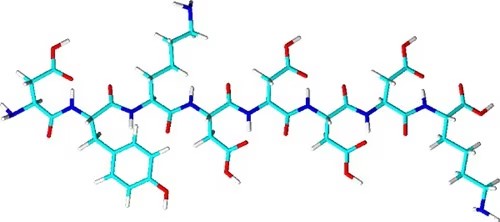 Fig.1 Structure of the Flag-tag octapeptide
The FLAG tag is commonly used in conjunction with antibodies in protein pull-downs to study protein-protein interactions. The FLAG tag may be inserted at the N terminus, the N terminus preceded by a methionine residue, the C terminus, or internal positions of the target protein. Because of its hydrophilic nature, the FLAG tag is commonly found on the surface of a fusion protein, which makes it more available as an epitope for binding to antibodies. In addition, the high hydrophilicity and small size of the FLAG tag tend to interfere less with protein expression, proteolytic maturation, antigenicity, and function.
The FLAG tag has become an important tool for detecting, localizing and purifying expressed recombinant proteins, enabling the recombinant Flag-tag fusion protein can be analyzed by various means including ELISA, immunofluorescence (IF), immunoprecipitation (IP), protein purification, and Western blotting (WB), etc. In addition to 1x Flag-tag, 3x Flag-tag is also commonly used. The increased length of the 3x Flag-tag increases the affinity of the anti-Flag antibody/affinity reagents. 3x Flag-tag is often used in tandem purification and protein purification. However, 3x-Flag-tag is longer than 1x Flag-tag and has more charged amino acids that may potentially interfere more strongly with the protein of interest and may influence the protein expression. For detection in Western blot, 1x Flag-tag should be sufficient.
Creative Diagnostics offers high quality antibodies specific to FLAG tag that can be used in qualitative or quantitative detection, intracellular localization as well as purification of Flag tag fusion expressed proteins. Fluorescent and enzyme-conjugated versions of our FLAG Tag antibodies are also available for your added convenience.
View our list of FLAG tag antibodies
Creative Diagnostics offers both position sensitive and insensitive anti-FLAG-tag antibodies, such as clone 4E11 (M1) calcium-dependent binding to the FLAG epitope occurs only to the N-terminal FLAG-tag, while some others are position-insensitive.
| Cat. No. | CSC-L-H3074 | DPAB-LX007 | CABT-L1031 | CABT-L6431Z | |
| Product name | Mouse Anti-Flag monoclonal antibody, clone 4E11 (M1) | Mouse Anti-Flag monoclonal antibody, clone M2 | Mouse Anti-Flag monoclonal antibody, clone N3 | Humanized Anti-Flag monoclonal antibody, clone B14 | |
| Applications | WB, IP, ELISA, IF | WB, IB, IP, ICC/IF, ELISA, FC, Electron microscopy | WB, IP, IHC, IF, ICC | WB, IB, IP, ICC/IF, ELISA, FC, Electron microscopy | |
| Key Features | Position-Sensitive | Position-Insensitive | Position-Insensitive | Position-Insensitive | |
| Specificity | N-terminal Flag tag | + | + | + | + |
| Met-terminal Flag tag | - | + | + | + | |
| C-terminal Flag tag | - | + | + | + | |
| Internal Flag tag | - | + | + | + | |
 Fig. 2 Western blot analysis of FLAG tag using CABT-L1272
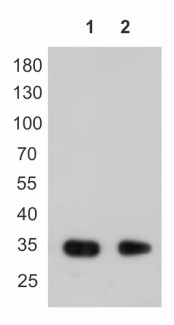 Fig. 3 Western blot analysis of FLAG tag using DMABB-JP103
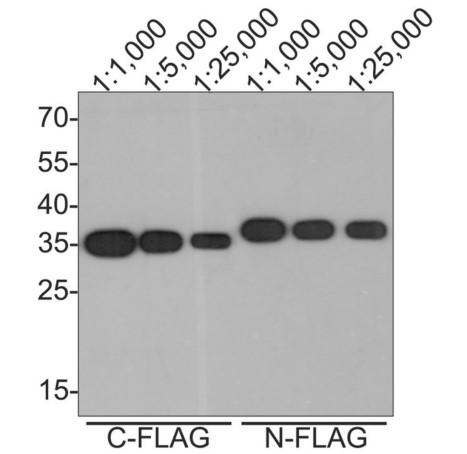 Fig. 4 Western blot analysis of FLAG tag on different lysates with Unconjugated DMABT-Z59505 at different dilutions.
 Fig. 5 Flow cytometry analysis using DMABT-Z59505 at 1:100
 Fig. 6 Immunofluorescence staining of HeLa cells transfected with Flag tagged by Claudin 18.2 (C-terminal) using DMABT-Z59514 at 1:250
 Fig. 7 Immunofluorescence staining of Flag tagged protein in HCT116 using DMABB-JP103
Loading ......
