Affinity tags used to improve the production of recombinant proteins can be roughly divided into purification and solubility tags. Affinity tags include enzymes, protein domains, or small polypeptides and most of which bind with high specificity to a range of substrates, such as carbohydrates, small biomolecules, metal chelates, antibodies, and so forth, to allow rapid and efficient purification of proteins. While the solubility tags enhance the proper folding and solubility of a protein, they are frequently used in tandem with an affinity tag to aid purification.
Affinity tags and their features
Expression of recombinant protein in Escherichia coli (E. coli) or mammalian cells as a fusion protein with neighboring affinity tag is one of the most popular methods for purification of protein or protein complex. Affinity tags are artificial polypeptides which were usually grafted either onto the N- or C-terminus of a target protein through inserting the cDNA sequence which encoded the tag peptide into a matching open reading frame of the target protein. In addition to facilitating the purification of recombinant proteins, affinity tags can also enhance the yield, solubility, and even folding of the target partners.
Hexahistidine tag. The hexahistidine tag (6× His-tag) is the most frequently used affinity tag for protein enrichment. His-tagged proteins can be purified easily by the chelated metal ions as affinity ligands. The 6× His tag has several merits, including a smaller size, absence of electric charge, low levels of toxicity, and immunogenicity.
Maltose-binding protein. The maltose-binding protein (MBP) was one of the affinity tags to be used for the purposes of overcoming problems associated with the expression and purification of fusion proteins. Generally, recombinant proteins tagged with MBP can alleviate toxicity and improve expression level and protein solubility.
Glutathione S-transferase. The glutathione S-transferase (GST) tag is another well -established affinity tag based on the strong affinity of GST for immobilized glutathione. The GST tag is best suitable for use in prokaryotic expression because GSTs are a family of multifunctional cytosolic proteins that are present in eukaryotic organisms but generally not found in bacteria.
Calmodulin-binding peptide. The calmodulin-binding peptide (CBP) tag was invented to purification of recombinant protein from bacteria based on high affinity for calmodulin with nanomolar affinity at physiological conditions in the presence of calcium.
Chitin-binding domain. The chitin-binding domain (CBD) from Bacillus circulans consists of 51 amino acids, which is commonly used as tags for affinity purification of recombinant proteins in combination with self-splicing inteins in bacterial systems.
FLAG tag. The FLAG tag is a hydrophilic octapeptide epitope tag that was introduced to purify fusion proteins. It is likely to be located on the surface of a fusion protein because of its hydrophilic nature and therefore is more likely to be accessible to antibodies.
S-tag. The S-tag system is based on the specific binding between 15-amino acids S-tag and S-protein, both of which are derived from pancreatic ribonuclease A (RNaseA). Any protein fused with the S-tag can be conveniently purified, detected, and even quantified.
HA tag. HA tag comes from human influenza hemagglutinin (HA) corresponding to amino acids 98-106 and is a strong immunoreactive epitope making it popular to isolate, purify, detect, and track the protein of interest.
c-Myc tag. The c-Myc tag originates from the c-myc gene product. The recombinant protein tagged with c-Myc tag can be recognized by a well-known high-affinity 9E10 antibody.
Table 1: Common widely used affinity tags for purification of recombinant proteins
Fig 1. Schematic illustration of the N-terminal tagged fusion protein.
(Source: Anal Methods Chem. 2013)
Combinatorial Tagging Strategy
Protein complexes and protein-protein interactions constitute the functional bases of the life activities within the cell. TAP-tagging, which employs two sequential affinity purification steps, can significantly reduce the chance of contaminants retained in the eluate. Double-affinity tag is an efficient approach for the purification protein complexes under native conditions. As a powerful tool to separate interacting protein complex, TAP-tagging strategy is widely used in the studies of protein interaction networks. The combination of TAP technique with mass spectrometry (MS) has been widely adopted as a highly efficient method to identify and characterize the components of protein complexes.
The adoption of tag in TAP strategy needs to carefully determine according to the advantages and disadvantages of various tags and the characteristics of a target protein. To choose an effective combination, it is normally necessary to consider the abilities of the tags to improve the yield, enhance the solubility, and facilitate the purification of their fusion partners. Additionally, if affinity tags have the potential to interfere with structural or functional studies, the fused tag must be removed from the bait protein as follows.
Removal of Affinity Tags
In theory, it cannot be excluded that affinity tags, especially those with large size, may have the potential to interfere with the structure and function of the proteins. If this circumstance happens, measures should be made for removing them. Any affinity tag, whether small or large, can be easily removed by introducing a specific protease recognition sequence between the tag and target protein. The small-size tags such as 6× His, FLAG, and CBP usually do not need to be removed for downstream applications following purification. Removal of the tag without using a protease is also feasible by introducing a protein element with self-splicing capacity into a variety of tag-based purification systems.
References
Zhao X, Li G, Liang S. Several affinity tags commonly used in chromatographic purification. J Anal Methods Chem. 2013; 2013:581093.

 Loading ......
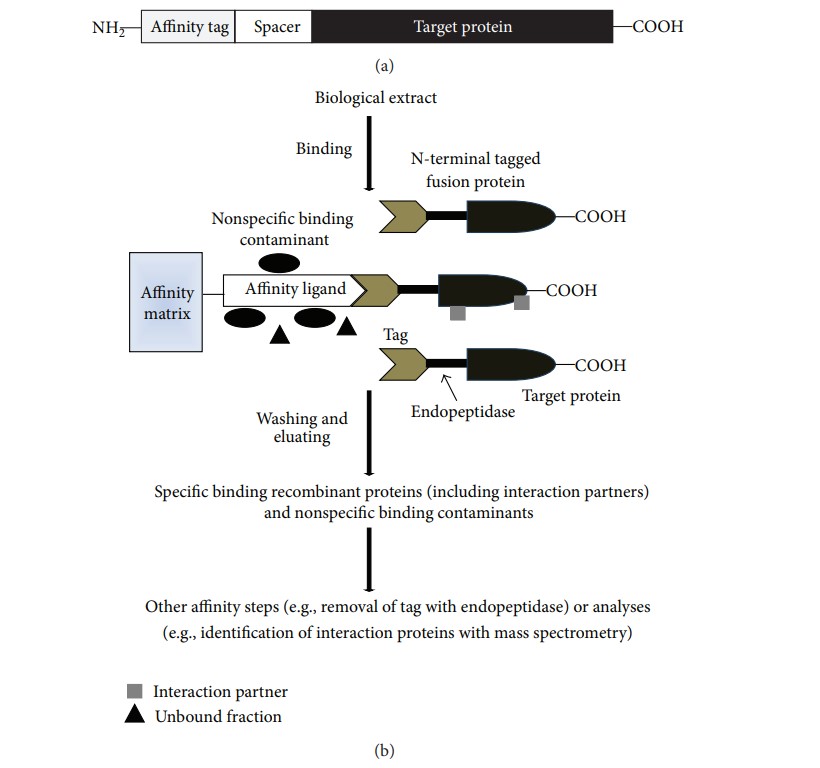 Fig 1. Schematic illustration of the N-terminal tagged fusion protein.