

Inquiry Basket
 Loading ......
A monoclonal antibody ("mAb") is a very specific antibody that can attach to a very small antigen epitope, and it is produced by one B cell clone. This antibody is cloned from the same source cell so it is "monoclonal". Monoclonal antibodies are made by cloning a monoclonal cell clone with tumor cells to generate hybridoma cells, cloning and extracting and purifying the antibody they produce.
Find the right antibody from Creative Diagnostics
In addition, Creative Diagnostics also offer High quality secondary antibody products
Non Fluorescent Conjugates
| Aspect | Monoclonal Antibodies Advantages |
| Specificity | High specificity for target antigens, reducing off-target effects. |
| Reproducibility | Consistent quality and performance across different batches. |
| Purity | High purity due to controlled production processes. |
| Versatility | Can be engineered for a wide range of applications (diagnostics, therapy, research). |
| Scalability | Can be produced in large quantities using standardized protocols. |
| Therapeutic Potential | Targeting capability, as they can be used against cancer, autoimmune disorders, and infections. |
| Reduced Immune Response | Humanized or human monoclonal antibodies minimize immune responses. |
| Binding Affinity | Strong and specific binding to target antigens. |
| Customization | Can be modified (e.g., conjugated with drugs, toxins, or radioisotopes) for targeted delivery. |
| Regulatory Approval | Established regulatory frameworks for clinical approval and use. |
1970s
The Birth of Monoclonal Antibodies
1975: Köhler and Milstein's Groundbreaking Discovery
1976: First Hybridomas and mAb Production
1980s
From Discovery to Commercialization
1984: Nobel Prize in Physiology or Medicine
1980s: Early Commercial Applications
1980s: Early Commercial Applications
1990s
Expansion into Therapeutics
1990: The First Humanized mAb
1997: FDA Approval of Rituximab
1998: First Fully Human mAb Approved
2000s
Growth of mAbs in Medicine
2002: FDA Approval of Herceptin (Trastuzumab) for Breast Cancer
2006: The Emergence of Biosimilars
2009: Monoclonal Antibodies in Infectious Disease
2010s
Advanced Therapeutics and New Modalities
Bevacizumab (Avastin) for Cancer
2013: PD-1 Inhibitors Revolutionize Cancer Immunotherapy
2014: Approval of Adalimumab (Humira) for Rheumatoid Arthritis
2020s
Next-Generation mAb Therapies
2020: Monoclonal Antibodies for COVID-19
2021: Regulatory Approvals for Cancer and Rare Diseases
2021: Regulatory Approvals for Cancer and Rare Diseases
It starts with validation and cloning the sequence that was handed over by the customer.
The antigen to be expressed is generated by transfecting the recombinant plasmid into E.coli (or other expression vector).
Inoculation of animals (mostly mice) with pure antigen.
B cells meld with myeloma cells (cancerous plasma cells that proliferate to death) into hybrid cells called hybridomas. This fusion is usually carried out with polyethylene glycol (PEG) or by electrofusion. Hybridomas fuse the antigen-producing power of B cells with myeloma cells’ infinitude of expansion.
The hybridomas chosen are cloned, generating lots of cells, all with the same monoclonal antibody. These hybridomas are cloned and in vitro cultured (usually in serum-free media) to generate large amounts of the antibody. Other ways of generating antibodies are by producing antibody molecules through mice’s ascites.
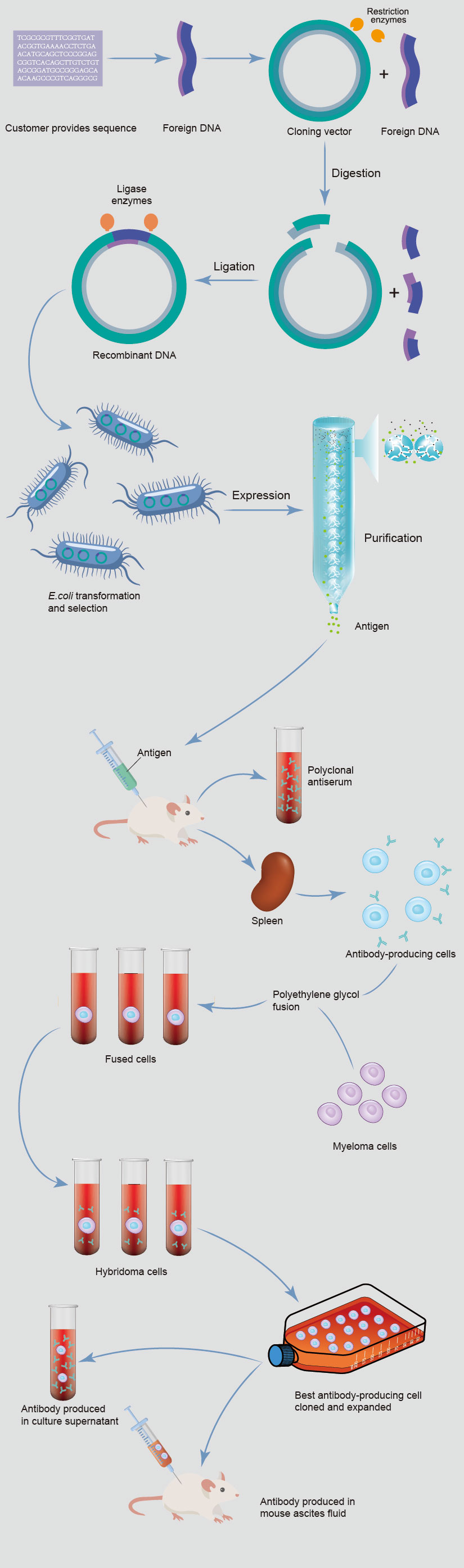
Cloned foreign gene is inserted back into the plasmid by enzyme digestion and ligation to create a recombinant target gene plasmid.
Protein is then purified by a mixture of protein purification processes.
When an animal is immunised, its spleen is taken. There are B cells in the spleen that create certain antibodies. Such B cells are separated for processing.
In the process of fusion, they make living hybridomas and non-living cells. The next step is to pick only hybridomas that release the antibody you want. This is usually done with the hypoxanthine-aminopterin-thymidine (HAT) selection medium to only produce hybridomas (unfused cells don’t survive in this medium). Extending hybridomas are then cloned to make single cell colonies.
After hybridomas are created, they are tested for the monoclonal antibody of interest. This is achieved by ELISA, flow cytometry or WB test depending on the type of antigen and antibody. The most affine and specific antibodies in hybridomas are chosen for expansion.
| Application | Description | Example Uses |
| Therapeutics | Affective as medicines for different disorders because they are very specific and regulate the biological pathways. | Cancer, Autoimmune disease, Infectious disease. |
| Diagnostics | Used in diagnostic testing to look for certain antigens or biomarkers. | Pregnancy Tests, HIV, COVID-19 Rapid Antigen Test, disease ELISA Kit. |
| Research | Biomedical research tools of the trade to investigate proteins, cells and molecular pathways. | Western blot, flow cytometry, immunoprecipitation, immunohistochemistry. |
| Imaging | Coupled to imaging agents for diagnosis and cellular tracking (via in vivo tracker). | Radiolabelled antibodies on PET scans, tissue fluorescence scans. |
| Targeted Drug Delivery | Mixt with drugs, toxins or nanoparticles to get treatments right into the cells. | Antibody-drug combination (like Trastuzumab emtansine for HER2-positive breast cancer). |
| Cell Sorting | Employed in methods like flow cytometry to purify certain cell populations according to surface labels. | Immune cell subtypes separation, stem cell isolation, cancer cell detection. |
| Neutralization | Used to kill the pathogens or neutralize poisons by attaching to them and disabling their interaction with host cells. | Anti-venom of snakes, monoclonal antibodies to viruses such as Ebola or Zika. |
| Biosensors | Add to biosensors to detect molecules. | Diabetes glucose meters, ambient biosensors. |
| Prophylaxis | Put in preventative therapy to shield vulnerable people from disease. | RSV in premature infants. |
Monoclonal antibody (mAb) therapy is a big development in modern medicine, especially when it comes to treating cancer, autoimmune disease and infectious diseases. Such lab-created molecules target specific antigens on pathology-ridden cells, to precisely intervene. By bindng to these antigens, mAbs can prevent cell proliferation, get immune cells to attack the diseased cells, or release cytotoxic agents into the damaged cells. They are very specific and less damaging to normal cells, making them more effective for therapy.

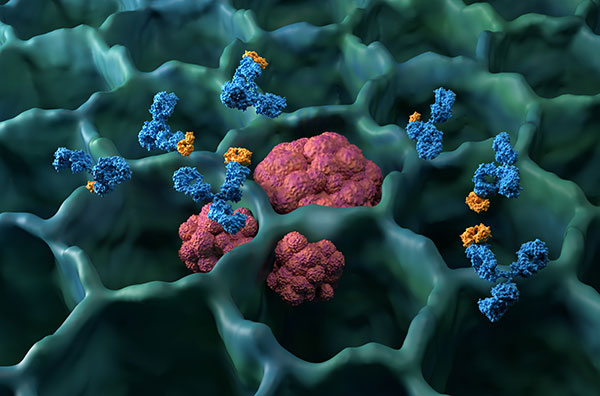
As effective as monoclonal antibody therapies are, they suffer from production costs, immune side effects and resistance by target cells. Biotech is trying to fix these problems, and products such as bispecific antibodies and antibody-drug conjugates are adding versatility and potency to mAb therapies. As the work goes on, we want to make these treatments more accessible and more individualised, so that they will benefit a wider population of patients.
Generally, include 4 types:
Murine antibodies: completely mouse antibodies.
Chimeric antibodies: part mouse, part human.
Humanized antibodies: mainly human, but with small amounts of mouse elements.
100% human antibodies, usually generated using phage display methods.
Target antigen: You pick the target antigen.
Immunization: Now you immune an animal (usually a mouse) by antigen.
Hybridoma Generation: Then you mix the mouse’s B-cells with cancer cells (myeloma cells) to make hybridomas.
Screening and choice: Then you get the hybridomas producing the antibody you need.
Cloning and expansion: When you get your perfect hybridomas, you clone them and produce more of them.
Cleaning: You then isolate the monoclonal antibodies from the culture solution.
Purity, affinities and specificity: The antibodies are purified, screened and confirmed.
Production and scale-Up: If necessary, you increase the production to more.
If we are looking to guarantee that the monoclonal antibodies are safe and efficient, then we need quality control.
These include: Purity analysis (e.g., by HPLC or SDS-PAGE).
Comparison with affinity and specificity analyses (ELISA, surface plasmon resonance).
Sterility testing so there isn’t any contamination.
Endotoxin testing to verify that antibodies don’t contain harmful endotoxins.
The general order of humanizing monoclonal antibodies is like this:
Choice of parent antibody: Mouse monoclonal antibody against an antigen is chosen.
Name of the antibody sequence: Sequencing software will tell you the order of heavy and light chains of the mouse monoclonal antibody.
Making humanised antibodies: Mouse antibody CDRs are rebuilt as human antibody FRs. These CDRs are where antibodies go to find and attach antigens. The CDRs of mouse antibodies are generally retained in human antibodies, but the structure and constant regions are also derived from human antibodies, to ensure antigenicity is low.
Genetic engineering: The cloned antibody genes are used through molecular biology to be released as expression vectors in mammalian cells.
Expression and manufacture: Vectors are transfected into mammalian cell lines (CHO cells, etc.) for antibody expression and manufacturing. They can be fermented and cultured in cells and extracted human monoclonal antibodies.
Purification and characterisation: Human antibodies are purified in several ways (protein A affinity chromatography, ion exchange chromatography, gel filtration chromatography). After that, they are further described with affinity, specificity, stability and functional testing to be sure that the humanized antibodies do not lose their functions and properties of the original antibodies.
In vitro and in vivo testing: The activity and safety of humanized antibodies is assessed in cell cultures and in animals to test their utility in humans.
In the process described above, mouse monoclonal antibodies can be humanised and made less immunogenic in clinical practice and more therapeutically effective.
Loading ......
