Contents of Kit
1. SORB MT Microtiterplate : 12 break-apart 8-well snap-off strips coated with Adenovirus antigens; in resealable aluminium foil.
2. SAM DIL IgG Sample Dilution Buffer: 1 bottle containing 100 mL of phosphate buffer (10 mM) for sample dilution; pH 7.2 ± 0.2; coloured yellow; ready to use; white cap; ≤ 0.0015% (v/v) CMIT/ MIT (3:1).
3. STOP SOLN Stop Solution: 1 bottle containing 15 mL sulphuric acid, 0.2 mol/L; ready to use; red cap.
4. WASH SOLN 20x Washing Buffer (20x conc.): 1 bottle containing 50 mL of a 20-fold concentrated phosphate buffer (0.2 M), pH 7.2 ± 0.2, for washing the wells; white cap.
5. ENZ CONJ Conjugate: 1 bottle containing 20 mL of peroxidase labelled antibody to human IgG in phosphate buffer (10 mM); coloured blue; ready to use; black cap.
6. SUB TMB TMB Substrate Solution: 1 bottle containing 15 mL 3,3',5,5'-tetramethylbenzidine (TMB), < 0.1 %; ready to use; yellow cap.
7. CAL C Positive Control: 1 vial containing 2 mL control; coloured yellow; ready to use; red cap; ≤ 0.02% (v/v) MIT.
8. CAL B Cut-off Control: 1 vial containing 3 mL control; coloured yellow; ready to use; green cap; ≤ 0.02% (v/v) MIT.
9. CAL A Negative Control: 1 vial containing 2 mL control; coloured yellow; ready to use; blue cap; ≤ 0.0015% (v/v) CMIT/ MIT (3:1). Controls are calibrated in arbitrary units against internal quality control specimens, since no international standard reference is available for this assay.
10. 1 Cover foil
11.1 Instruction for use (IFU)
12.Plate layout
For potential hazardous substances please check the safety data sheet.
CMIT: 5-chloro-2-methyl-4-isothiazolin-3-one
MIT: 2-methyl-2H-isothiazol-3-one
General Description
Adenoviruses are double-stranded DNA viruses of about 70-90 nm lacking an envelope. The capsid contains 252 capsomeres and shows icosahedral symmetry. The capsomeres consist of hexons, pentons and fiberprotein trimers which are responsible for the induction of group- and type-specific antibodies.
For the first time adenoviruses were isolated in 1953 from tonsils and adenoid tissue by Rowe. More than 80 adenoviruses are known at present. 47 out of them are pathogenic for men. They cause several diseases of different organic systems, mainly eyes, pharynx, respiratory and gastrointestinal system. Adenovirus infections are common and frequent. Most infections appear during childhood. They pass of latently so that the virus can still be detected in tonsils after two years. It is excrete via saliva and faeces. Gate to body are mouth, nasal pharynx and conjunctiva of the eye. Most infections pass off without symptoms. Around 5 % of all coughs and sneezes of children are caused by adenoviruses. Epidemics may occur in populations crowded together, for example acute respiratory disease in military groups, pharyngoconjunctival fever in swimming pools, and epidemic keratoconjunctivitis in medical facilities. Infection of hospitals and swimming pools gratify special demands on hygienics.

Infection or presence of pathogen may be identified by:
• Cell culture
• PCR
• Serology: e.g. by ELISA
• Virus isolation
TGFβ links EBV to multisystem inflammatory syndrome in children
Goetzke, C. C., Massoud, M., Frischbutter, S., Guerra, G. M., Ferreira-Gomes, M., Heinrich, F., von Stuckrad, A. S. L., Wisniewski, S., Licha, J. R., Bondareva, M., Ehlers, L., Khaldi-Plassart, S., Javouhey, E., Pons, S., Trouillet-Assant, S., Ozsurekci, Y., Zhang, Y., Poli, M. C., Discepolo, V., Lo Vecchio, A., … Mashreghi, M. F.
Applications: ELISA
Reactive species: Human
"Abstract: In a subset of children and adolescents, SARS-CoV-2 infection induces a severe acute hyperinflammatory shock termed multisystem inflammatory syndrome in children (MIS-C) at four to eight weeks after infection. MIS-C is characterized by a specific T cell expansion and systemic hyperinflammation. The pathogenesis of MIS-C remains largely unknown. Here we show that acute MIS-C is characterized by impaired reactivation of virus-reactive memory T cells, which depends on increased serum levels of the cytokine TGFβ resembling those that occur during severe COVID-19. This functional impairment in T cell reactivity is accompanied by the presence of TGFβ-response signatures in T cells, B cells and monocytes along with reduced antigen-presentation capabilities of monocytes, and can be reversed by blocking TGFβ. Furthermore, T cell receptor repertoires of patients with MIS-C exhibit expansion of T cells expressing TCRVβ21.3, resembling Epstein-Barr virus (EBV)-reactive T cell clones capable of eliminating EBV-infected B cells. Additionally, serum TGFβ in patients with MIS-C can trigger EBV reactivation, which is reversible with TGFβ blockade. Clinically, the TGFβ-induced defect in T cell reactivity correlates with a higher EBV seroprevalence in patients with MIS-C compared with age-matched controls, along with the occurrence of EBV reactivation. Our findings establish a connection between SARS-CoV-2 infection and COVID-19 sequelae in children, in which impaired T cell cytotoxicity triggered by TGFβ overproduction leads to EBV reactivation and subsequent hyperinflammation."
Article snippet: Serum IgG-antibody levels against HSV-1 (*), HSV2 (*), EBNA1 (*), CMV (*), HHV-6 (*) and AdV (Creative Diagnostics, DEIA2382) and serum IgM antibody levels against HSV-1/2 (*), EBNA1 (*), CMV (*), HHV-6 (Creative Diagnostics, DEIABL57) and AdV (Creative Diagnostics, DEIA1767) were measured in first serum samples obtained from patients according to manufacturer’s manuals. 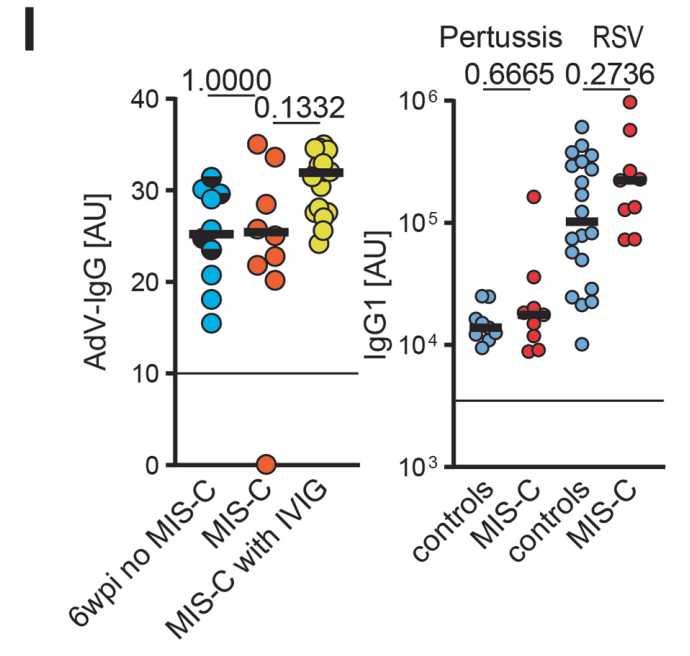 Figure 1. For anti-AdV IgG, we detected no difference between patients with MIS-C and controls.

 COA
COA





 Loading ......

 Publication ()

